Oka is more than a Cheese

If only I could return to the days when God was my guardian, when his fire blazed above me and guided me through the dark – to the days when I was in blossom and God was a hedge around me. 

 Heaven’s Coast, Mark Doty

I am sitting in my kitchen having breakfast. Sunlight shines on the paper box on the table. It’s only a cheese box but beautifully designed and suitable for putting little keepsakes in, the way an imaginative child might. The picture of L’ Abbaye d’Oka graces the lid, mustard coloured, advertising the 125th anniversary of this cheese, which belongs, no longer to the monks who first made it, but to Quebec’s Agropur company .

Inside the box is a wrapped small wheel of cheese which I can now buy at big chain supermarkets like Loblaws or FreshCo. I slice a thick wedge and lay it on top of my warm toast; I put it in my mouth, tasting the tangy semi-soft cheese, savouring each mouthful, followed by a sip of café au lait from my favourite blue and white bowl, reminiscent of the colour of azulejos.

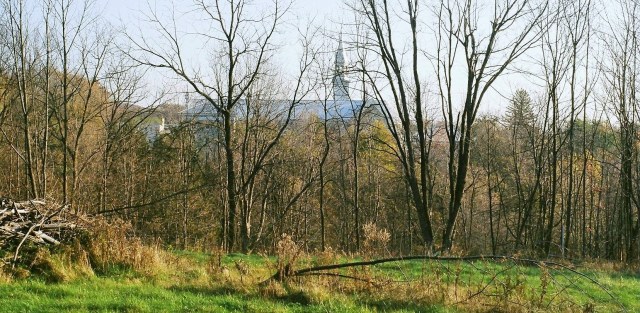
But the box containing the wheel of cheese is much more than a disposal, biodegradable item to place in my recycling bin. The mass produced box, showing an abbey which no longer exists, is a tangible sacramental which awakens my memory of the Abbaye Cistercienne d’Oka, known in the beginning of its foundation as La Trappe of Oka or the Cistercian Abbey of Notre-Dame du Lac; and which we, who went there, simply called Oka.

Throughout most of my adult life I had journeyed to Oka, the home of French Trappist monks whose founders had come from the Abbaye de Bellefontaine, in France, in 1881. There I made many retreats over the years until the monks sold the monastery and moved to a more remote part of Quebec.

The first time I went to Oka was in the late 1970’s with Joy, Janet, and Vladimir, the group of friends who introduced me to the Cistercian monastic life close to the Ontario-Quebec border. The drive along the Trans-Canada highway 401 east of Toronto became highway 40 as we entered Quebec towards the easy-to-miss exit to the small town of Hudson from where we took a small ferry across the Ottawa River and into the small town of Oka. The monastery was only a few miles up the road.

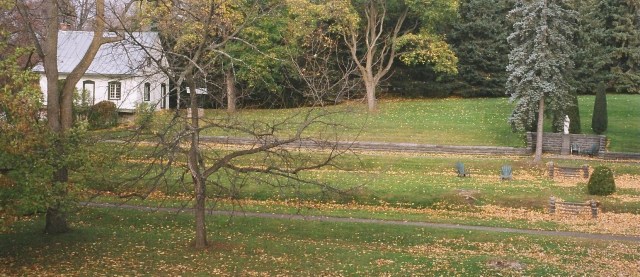
It was Thanksgiving weekend and the colours on the trees were vibrant reds and yellows; and the moment I saw the abbey, I was like a joyful child approaching Disneyland. For me, discovering the monks was a profound connection to a spiritual world I had imagined and craved for but, until then, had only read about, especially through the writings of Thomas Merton, the most prolific and influential monk-writer of our times. I had been inspired by his autobiographical The Seven Storey Mountain, and had already devoured some of his other  books before I set foot in the monastery: Contemplative Prayer, The Silent Life, The Wisdom of the Desert, Contemplation in a Word of Action.

In those days, Oka cheese was served in abundance at the guest-house and I would eat big slices of it with my toast and coffee in the morning, but the cheese was still available at lunch and dinner, so guests could have cheese all day long.

After that first visit, I returned many times over the decades, not because of the cheese but because at Oka I had found a spiritual home. It has been a place where I had been touched by grace.

I often went alone, seeking the solitude and peace I so desired (and still do), walked the fields and the nearby forest and sometimes met with Father Benedict, who would take me to the monks’ private fields and orchards, where he would be gracious to me with his words of wisdom and holy guidance. I would meet with him each time I visited and, every time, his presence alone filled me with healing.

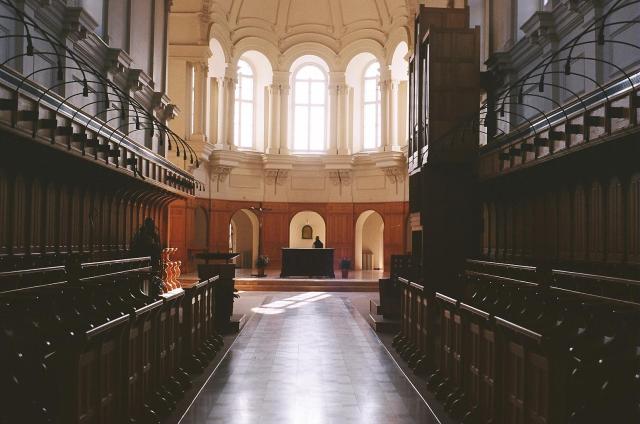
I would also get up in the darkness of night and quietly make my way to be with the monks in the dark womb of the church, lit only by candlelight, for four am Vigils; I followed their ancient monastic timetable of prayer throughout the day, listened to the bell announcing Lauds, Terce, Sext, None, Vespers. It’s a daily monastic rhythm that ends with Compline, in the semi-dark church at nightfall, with the chanting of the Salve Regina, still in Latin, and the blessing of the Abbott as the monks, double-filed, processed past him with a bow and then disappeared into their private enclosure while the retreatants went back to the guest house for the Grand Silence and sleep.

Other times, I returned to Oka with a friend. When we arrived at the abbey, the rule of silence prevailed, and we ceased to talk to each other, except in sign language during meals or happenstance meetings along a corridor, when our eyes did most of the talking; and if we needed to relay a more complex message, we would slide little notes to each other under our doors.

With Alan (how young we were that summer, and how was I to know then that I would lose my best friend by his early 30’s), we joined the monks in the fields and picked strawberries and vegetables. Once, the monks left us alone to pick weeds in their private cloister. There was such joy in our youth, barely in our twenties and in love with the monastic way but, strangely, never enough to want to join. The lure of the world was too strong, and our visits to the monastery were only breaks from everyday life and a time to rejuvenate the soul.

Later, with Jim, during my university years, we learned of John Lennon’s death on our way back to civilization, as no news of the outside world had come to break the silence and peace of our retreat during the cold early December of 1980.

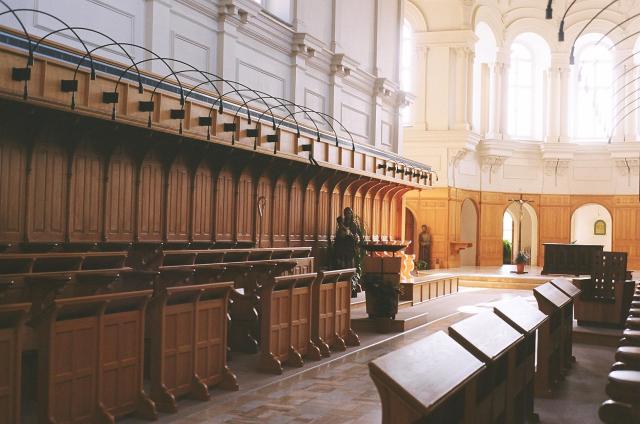
And with Richard, attending the funeral of a monk, Père Denis Cyr, who laid on top of a simple wooden catafalque in the nave of the church between the choir-stalls, embodying peace. His brother monks passed by him during the Offices of the day, touched him with their fingers as they glided by to their seats, kept vigil with him, and went on with their liturgical life without a hint of sadness. At Compline, a young monk played classical guitar to the chanting of the Salve Regina while the light of a candle in front of the statue of the Virgin flickered. The following morning, Le Dernier Adieu, we processed to the cemetery behind the church and there was much peace as we later went back to the routine of the monastic day.

Over the years, whenever I experienced a spiritual crisis or a moment of loss, like when my father died, I would take the train to Montreal and then a commuter train to Deux-Montagnes, ending in a long taxi ride to the guest house entrance. It may seem like a very cumbersome way to get there, but it was worth it. Once I arrived, I always felt safe, at home.

Interestingly enough, in the early 1980’s, it was easier to travel to Oka. I could take a bus from Montreal’s Henri-Bourassa Metro station that would stop along the way in small towns like Ste-Dorothée, St-Eustache, St-Joseph du Lac, and be dropped off in front of the abbey’s gate. But then bus service stopped and, coincidentally, so did my visits for a while.

When I finally returned, in the 2000’s, the church and the guest house had been renovated but still felt like a welcoming haven for my weary soul. I continued to visit more frequently until the last time, in 2007. By then I already knew that the monks would be leaving soon for their new monastery in Saint Jean de Matha. The reasons for their move had to do with the decline in the size of the monks’ population, and also because the region of Oka had become more urban over the years, disturbing the silence and solitude needed for their monastic life.

On that last visit, on the last day of the retreat, November 1, Feast of All Saints, Fr. Bruno invited me to participate in the celebration of the Mass by asking me to carry the chalice in procession during the offertory. I walked up the nave, passing all the monks in their choir stalls with trembling reverence, honoured for being made to feel one of them for a few moments. I remained with the monks around the altar facing the congregation until the end of Mass. Afterwards, I thanked Fr. Bruno for such a gift. “You can be a little brother for a while,” he said with a smile that made me feel that I belonged to this community of monks I had known for so many years.

Oka is where I walked with God and where I felt God’s embrace. It’s were some of my closest friends shared that walk of grace with me and, at the end of each visit, when it was time for me to go, I would sit in the silence of the church to say goodbye to God, and feel such a pull, like a magnet, enticing me to stay until the taxi arrived to take me away.

I still eat Oka cheese very often and, sometimes, the taste of it in my mouth brings back the comfort of the silent presence of God I experienced at Oka. It’s a silence I miss, now that it’s gone.

Posted in Uncategorized | 4 Comments

Visiting My Self in the Museu da Emigração Açoriana

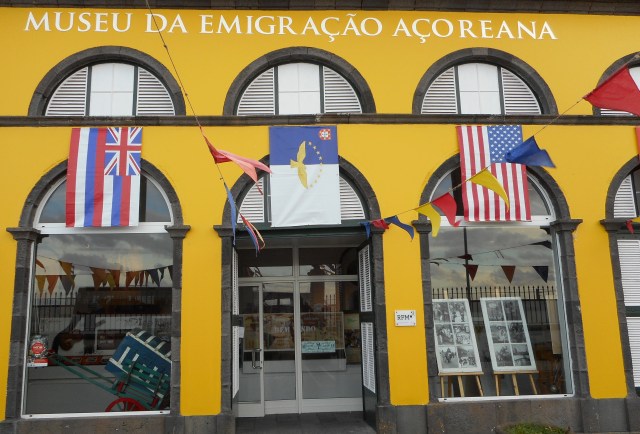
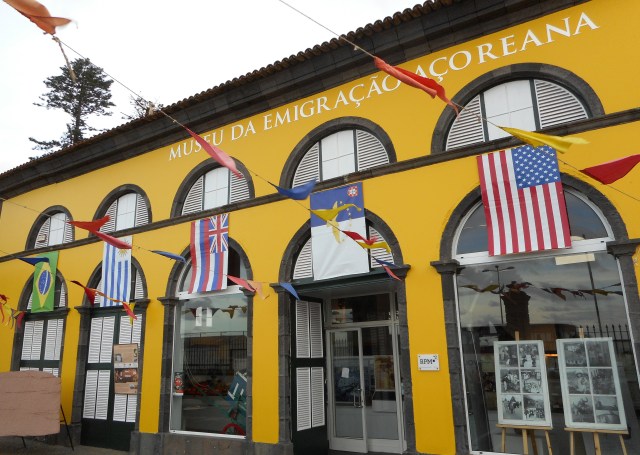
It’s been two years since I visited the Museu da Emigração Açoriana in the town of Ribeira Grande, on the island of São Miguel, in the Azores. But I haven’t forgotten how that visit made me feel and what emotions it evoked for me as I reflected on my own journey of immigration.

I was there accompanied by a busload of participants from the 26th Colóquio da Lusofonia held in Lomba da Maia. The group consisted of diverse people interested in the literature and culture of the Azores, some for whom Portuguese was not their first language. But because of their love for the Azores, they have become champions and promoters of the culture, and seem to identify as strongly with the islands as much as those who were born there. Often, the discovery of an ancestor from the islands is enough to connect them to their heritage. Others came from mainland Portugal, and some from as far away as Brazil and East Timor. Finally, there were local writers, teachers, and poets who live on the islands.

Each of us, I assumed, had a different experience and relationship with the world of immigration, either because we had been immigrants ourselves or were touched by the lives of others: families and friends who had left the islands for other places.

It had already been a long day of touring, with stops at a tea plantation (Chá Formoso), and a liqueur factory (Mulher do Capote), when we arrived at the immigration museum, where a reception that included local delicacies and drink awaited us. That day, I was seeing the island from the perspective of an insider who had become an outsider after I left at the age of nine for Canada.

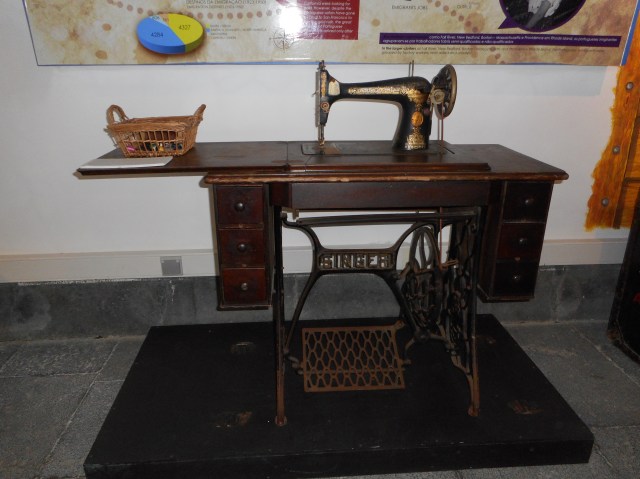
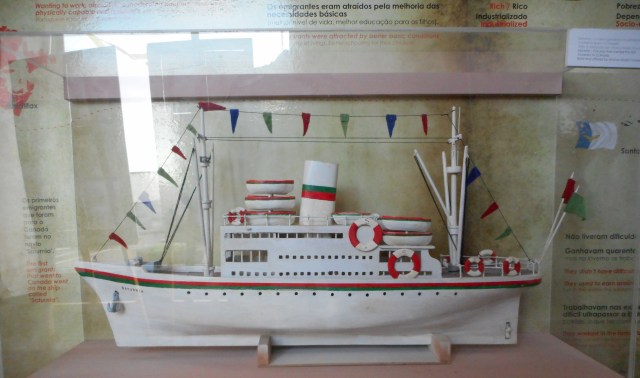
Although most of the group continued to be tourists walking about the museum, looking with curiosity at display cases and artifacts, I stopped feeling like a tourist and instead found myself to be a living artifact escaped from the glass case depicting the immigrant life of those who went to Canada.

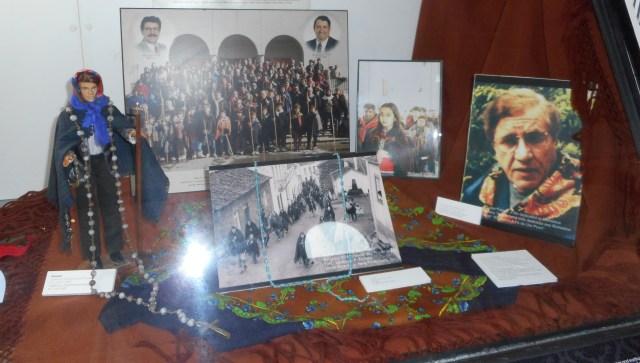
I was surprised to see under the glass cover a photograph of someone I knew: Senhor António Tabico, a prominent Luso-Torontonian who organized Romarias from Toronto to São Miguel each year to participate in the ancient island tradition of men wandering the island in holy pilgrimage during Lent. He also owned an Azorean restaurant in Toronto, O Tabico, where my family gathered for celebrations over the years, including my parents’ 50th wedding anniversary. Although he passed away in 2013, I can still hear his deep voice and laughter and good natured disposition when he would come over to our table to greet my father, a friend of his, patting him on the back and recalling shared memories.

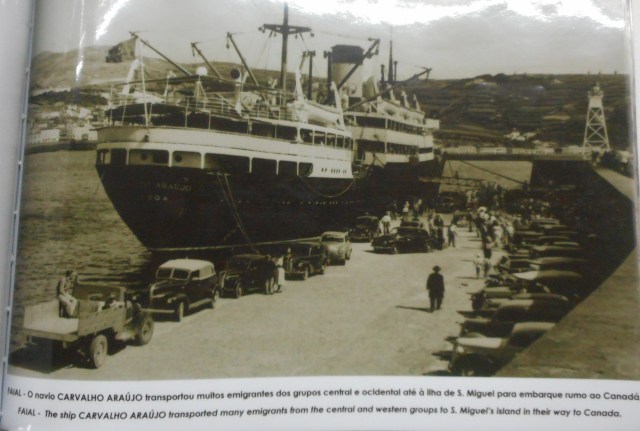
I remembered this and more as I leaned over the glass cover to witness the preservation of my living history. I was aware of the others in the room looking at the display, curious about what they saw, but Senhor Tabico was just another photo to them, as were also the hundreds of other immigrants who were encased in photographs showing them leaving for the United States, Canada, and other parts of the world. Senhor Tabico’s photograph, however, was the link to my life in Canada, beyond the glass case, a part of my living history.

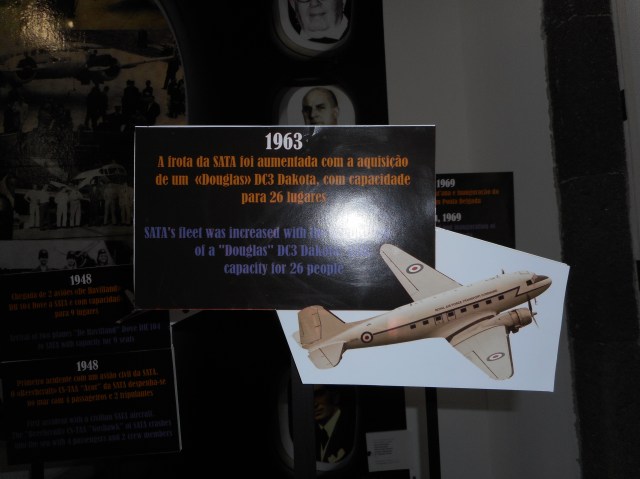
I was also captivated by photographs of the history of SATA airplanes because I had most assuredly boarded one of these early models when I had left the island as a little boy. I could almost see myself again inside the tiny airplane that had taken us from our island to the island of Santa Maria before boarding the large jet that took us across the ocean to Canada.

I saw a barrel-container sent from someone in the United States to family back home and it reminded me of the container we once received full of clothes, toys, and canned peaches, sent by my father, who was already in Canada. The excitement and awed mystery I felt in seeing, touching, smelling, and tasting these foreign treasures made tangible for me the  world where my father and other family members had already gone to live.

Old letters, passports, and other mementos and artifacts, lovingly preserved in this museum, painfully and profoundly disturbed my sense of belonging and living in the real world rather than there, enclosed and preserved as a long ago participant in the immigration experience of my people.

I am sure my feelings were not that unique and that anyone else who has experienced immigration would feel the same, if they saw their lives’ history encased in glass.

I walked out of the museum feeling a deep void inside myself and a sadness, too, as if I had just visited a self I used to be but who died a long time ago. I’d rather forget those artifacts and those photographs documenting the lives of people like me; documenting me! Yet these images haunt my present-time and remind me that I will always carry with me the knowledge of where I came from and how I was made to leave my place of origin in order to have a better life elsewhere in the world.

We continue to live at a time of great immigration, which should not come as a big surprise, because human history has always been one of constant immigration. Perhaps the history of Azorean immigration, mostly to escape poverty and, at one time, even during my youth, the colonial wars before the revolution of 25 de Abril, is mild compared to the heart wrenching stories of the lives of the current waves of immigrants who are fleeing war-torn countries and seeking asylum in the USA, Canada, and other parts of the world. How can I compare my experience of feeling torn apart as a child, when I left the island I called home, to the reality of thousands upon thousands of Syrian children, for example, who have witnessed the destruction and horrors of war in ways that I never did?

I think about these children when I see them on the television news and I wonder how they will survive and reimagine themselves in their new world of freedom. I wonder if, in the eyes of a child, the horror of being torn apart and having to leave your childhood home is, at the core, just as horrific to the psyche, regardless of the incidentals that tore you apart, be it poverty or the destruction caused by war.

And how does the memory of home, your first home in the world, shape your future life?

I recently saw Our Man in Tehran, a documentary by The New York Times correspondent Thomas Erdbrink about modern day Iran. One of the segments shows a teenage girl of Iranian background, but born in the USA, who had gone to Iran to visit remaining family. She felt immediately at home in Iran and would  had gladly given up her North American freedoms for the chance to live in a place that haunted her dreams.

Her mother and sisters could not understand her irrational desire of wanting to go back to the place they had fled from persecution and war. But she found that the geographical location was somehow embedded in her DNA as something stronger, deeper, beyond the chaos of war and politics: a connection with the undefiled ancient beauty of her culture and her place in it.

Perhaps the desire to go back home is nothing more than an attempt to satisfy the illusion born out of  that old wicked saudade the Portuguese claim as uniquely theirs. But the Portuguese, I have come to realize, aren’t the only ones who feel the longing and absence for something lost. There are words in different languages that also capture the essence of saudade.  Ultimately, everyone who longs to return to their home of origin, even when the safety of that home is no longer there, is a victim of saudade. I say victim, because saudade can deceive us into reinventing a past that is all glory and easily forgets the suffering experienced.

And yet, we do need a little of saudade to keep us emotionally sane. You can continue to sift through memories and hold on to what was good, even as you forge ahead into a new life. This, I think, we all share, all of us who have experienced immigration as part of the human journey on this planet.

The Museu da Emigração Açoriana exposed me to old wounds but also provided me with healing comfort, weaving the past to the present and beyond, with the assurance that immigrants always carry on.

Posted in Comunidades

Posted in Uncategorized | 1 Comment

A Walk Through the York Regional Forest

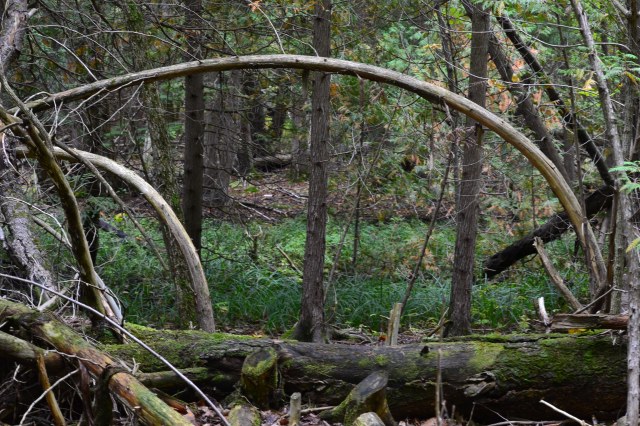
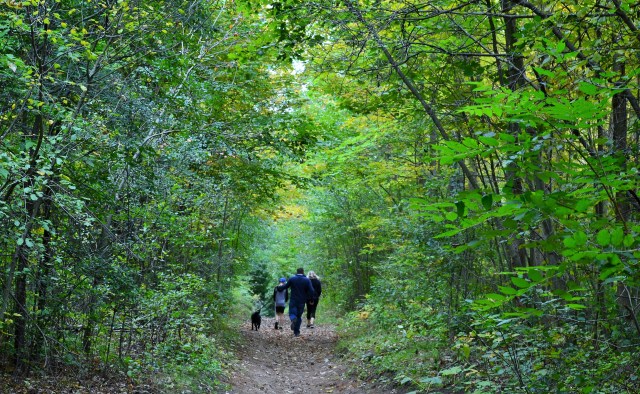
About a 45-minute drive northeast of Toronto you will be able to experience the York Regional Forest’s vast network of meandering trails and streams. You can go there for long walks, horseback riding, mountain biking, snowmobiling and, above all, rest and solitude.

It is easy to lose yourself in the vast maze of trails that can take you far and away, allowing your mind to wonder, lost in the beauty of tall trees and plant life surrounding you.

Getting lost on these beautiful nature trails is good for the soul, especially if you surrender to the journey and let go of the need for mobile apps/maps to guide you. Simply trust that you will get to where you need to go and eventually you will return to where you need to be.

Posted in Uncategorized | 3 Comments

A Memory of Yellow

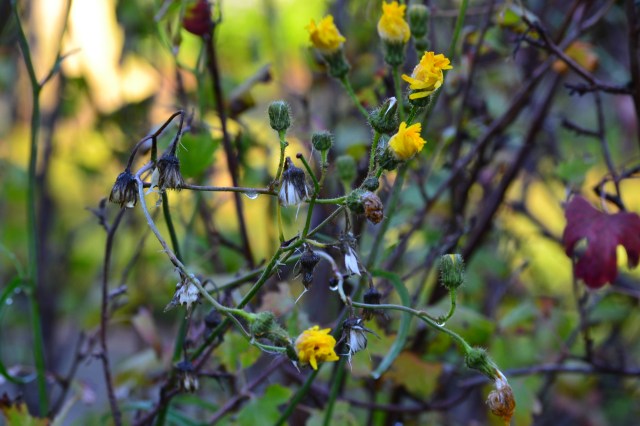
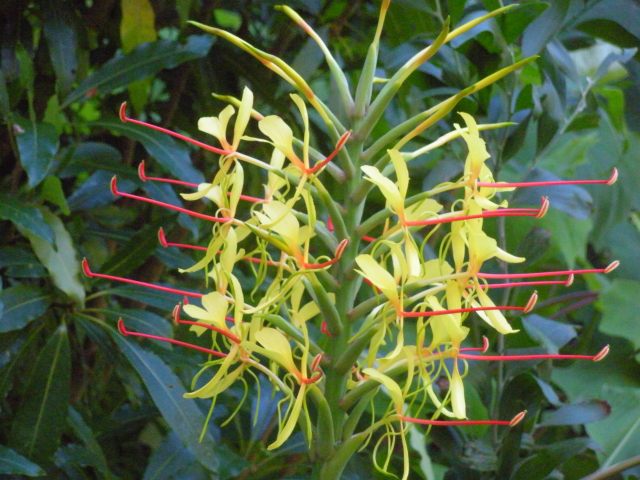
Summer has officially ended in Toronto, but the summer-long yellow flowers at Rosetta McClain Gardens remain, stubbornly clinging to their beauty in exaggerated movement and ebbing life, ignoring the signs in the cooler air that politely hint to them that it’s time to let go.

I feel a strange longing while gazing at these yellow flowers and, for a moment, I am curious about my persistent fascination with their colour of yellow. What does yellow represent to me? The reason eludes me, but I need to know, and intuition leads me to search for it through photographs taken in previous visits to the Azores around this time of the year. And sure enough, there they are:  flores amarelas.

Posted in Uncategorized | 2 Comments

Reading in Rosetta McClain Gardens

To be able to read in a garden is a joy. I wish I could be more like the Reader in my photograph, absorbed in the beauty of words while surrounded by the beauty of flowers, waterfall and stone.

Whenever I try to read in Rosetta, or in any other garden for that matter, I find the sights and sounds of nature around me so wonderfully distracting that I can’t focus on the words on the page. So I surrender and read the flowers and the trees and the view instead.

I wonder what my Reader is reading. If I could only let the flowers just be background and not demand my attention, I would sit in the garden and lose myself in Hanya Yanagihara’s A Little Life, a novel just as beautiful and intense as the flowers.

Posted in Uncategorized | 1 Comment

Lake Ontario September Light

And God said, “Let there be Light.”  I wonder if God, when creating light, already divined how beautiful it would look during September of 2018 over Lake Ontario.

Posted in Uncategorized | 7 Comments

A TTC Token for My Toronto
When did Toronto become “the six”? And how can a number take away from me the city I have loved since the age of nine when I came to Canada from the Azores. Toronto is a city I got to know intimately-well in my soul, where I felt comfort walking in its old alleyways and excitement in the bustling aliveness of its busy streets. “The six” has taken away my Toronto and replaced it with something unfamiliar. Just like the Sony Centre erased the Hummingbird Centre, while the Hummingbird Centre erased the original O’Keefe Centre; and the Rogers Centre erased the SkyDome. “The six” is as alien to me as the awkwardly changing Toronto Transit Commission (TTC).
The TTC, with its streetcars, buses, and subway trains, has allowed me to explore the city from west to east and north to south like an artery pumping life throughout the urban landscape. This is how I started to imprint on Toronto. I learned how to navigate the city and then walk to destinations like High Park, The Beaches, Harbourfront, Allen Gardens, Little Italy, Little India, and Little Portugal – where I used to live – all for the price of a token!

In the 1970s, I used to love getting on a streetcar, the 1940s version, known as the Red Rocket! These gorgeous old streetcars would clack heavily as they moved along College Street all the way from High Park in the west to Main Station in the east. On Sunday mornings, I’d pretend to go to church but instead I’d stand at the corner of Brock and College, eagerly waiting for the streetcar that would take me on the long ride back and forth. The streetcar would show me various neighbourhoods and I would anticipate how the city changed after Yonge Street continuing east, down to Gerrard and then up again – the houses and people looked so different! It was fascinating to think that all this difference was still my city.

On these Sunday mornings in summer, the windows would all be opened, and when the streetcar moved, a cool breeze would caress my face, my arm dangling out to feel the wind against my skin. I could hear the constant clanging of the warning bell at each stop; I’d watch the driver sell tickets and provide change from long silver tubes. He would give directions to people, smile, and offer transfers, like the one I kept safely in my hand.

Over the years the old streetcars were replaced by newer shiny models and we all thought how cool Toronto was getting – so world class! But now even these newer streetcars have been replaced with overly-long, fortress-like” Low Floor Light Rail” Bombardier-built cars, that are overtaking the streets with their bulk, their sealed windows and intimidating look. The first time I hopped on one, ready to deposit my token in the ticket box, there wasn’t one to be seen anywhere. I stood there, surprised, as if I had just been transported to a city I had never visited. I couldn’t even see the driver. Was the streetcar driving itself? For the first time, I felt like a stranger in my own city.

I avoided the Spadina streetcar line after that, preferring to walk up to the subway station from Queen Street rather than face the embarrassment of not knowing how to use the new Presto system with its bright green card and beeping machines. Soon, I had to bypass subway entrances where the familiar collector was no longer present in now abandoned collector’s booths. I now have to walk around to entrances where there is still a collector, a TTC concession catering to the stubborn Torontonian who refuses, like me, to move on to the new system. Subway turnstiles have been removed one station at a time and I am now forced to exit by the replacement version, pushing my way through plastic paddles that beep aggressively and slap your body on the way out.

The Presto Card sometimes doesn’t work, either because the little green box is down or because someone doesn’t have enough money left on the card to get the okay beep after tapping on the tap screen. I once watched a man on the bus who got a honk when he tapped his card because it had no money left on it and he sat all the way into the station terminal trying to transfer money from his iPhone, without success. I like to see people who still drop a token, a ticket, or cash in the remaining drop boxes. But I know it’s only a matter of time before the TTC will ban my way of paying to get around the city, my city, and only allow me on if I pay the new way, but is it “The Better Way”?

Toronto, the six, has become a chaotic mess where almost every neighbourhood has become a construction site with the building of new condos and impossibly tall high rises in the downtown core. Fortunately, when I need to get away from all this change and noise, there are still places in the city to go for peace and quiet and a sense of the familiar. Toronto is known as “A City Within a Park,” and I love to walk the maze of parklands and gardens that like a system of veins and blood vessels pump life into Toronto.

For now, my token can still take me everywhere in this vast land that I will always call Toronto. I will continue to cherish the clanging of the old streetcar rides of my youth, and I’ll keep my Toronto preserved in memory, like an old friend who moved away but is still a part of me.

Posted in Uncategorized | Leave a comment

Visiting Solitude at a Lake in Northern Ontario

Many Canadians who live in Ontario are privileged to have a cottage experience at one of the thousands of lakes spread out throughout this great province. Many cottages are on lakes only several hours away from Toronto but others can take five or more hours of driving to reach.

In summer, the Friday-night-drive from the city to “cottage country” is a ritual many people do in order to have a few days of fresh air, swimming and boating. They also sit around camp fires at night roasting marshmallows while stars shine above, sharing barbecued meals of hot dogs and burgers, in a secluded setting surrounded by a variety of evergreen trees with either a big or a small lake in front of each cottage. Many families stay for the entire summer, until Labour Day Weekend, when the kids have to return to school in September. Summer is also the time for inviting friends who do not have cottages to come for a few day’s stay.

As grateful as I am for an invitation, a cottage visit for me is not so much about visiting my friends as it is about connecting with nature in a way that I can’t in the city. And, on those rare occasions that I get to go, I mostly look forward to visiting the solitude I encounter there while everyone is still asleep or busy entertaining, and I awkwardly excuse myself so that I can be at the lakeside on my own.

There is a special lake I particularly enjoy visiting. It’s intimately small and narrow, sheltered by trees and a few scattered cottages, where I feel surrounded, wrapped in a rare kind of nature, as raw and primal as the day God made it.

I go quietly on my solitary walks down to the dock from the cottage, first thing in the morning, while the lake surface is still and shrouded in mist rising from the water like incense wafting up to Heaven. My bare feet feel the coolness of a soft pine needle path. Silence becomes sound by the intermittent plop of a frog coming up for air, a fish jumping up to catch a fly or a mosquito, a crow cawing as it flies above the tree tops. A family of loons glides by silently on the water, stopping at intervals while the parent loons dive below the surface to catch a fish, swim over to their two little ones waiting for their breakfast, too lazy to fetch their own meal, and showing a sense of entitlement in their aloofness, just like their human counterparts. The sight brings a smile to my face and I watch them until they are out of sight.

I then put on a life-jacket, with the reverence of a priest putting on his stole before Mass, a sacramental conduit to grace, for without it, I could not be in the deep waters of the lake unaided. This simple floating device of foam allows me to fall into the water as if I am entering God’s womb, and after the initial splash sound of body hitting warm liquid, there is absolute silence again. I remain as still as I can in the water so as not to disturb it with my moving arms and body. I gaze in awe at puffs of fog lifting over a pearl-white sun hanging above the line of fir trees. The sun reflects on the glass-like surface of the water, and I can cup my hands and have the illusion that I am cradling it.

A loon calls in the distance. It’s a melancholy sound that rises up and echoes in the air with sharp longing, and I recognize the meaning of the word saudade in it. A lonesome call that penetrates my being and stills my breathing so that I can better hear it. Sometimes, the loon shrieks in laughter, sounding like a crazy Looney Tunes character, which breaks the solemnity of the loon’s otherwise serious being.

I don’t want to ever leave the warmth of the lake, my head bopping above it, shrouded in the mist, caressed by the water that leaves my skin supple and fresh and with a cleanness that no soap can achieve. The water hydrates my parched soul from months and even years of tired living, of tension and anxiety, frustration, anger, loss, and the angst of the search for meaning. Suddenly, the calmness around me is deeply intensified and I incline my ear to hear the unexpected hushed whisper of wind moving through the trees. The sound takes away all the pent-up emotions I have been carrying inside of me for so long and my spirit feels light again – new born.

Eventually the mist disappears and the sky is crisp blue with white clouds hanging above the row of trees, reflecting the blue and the white on the lake surface. The sun changes to golden yellow, bringing clarity and definition into everything that a moment ago had been hazy and shrouded in mysticism. It’s time to start the day.

I force myself to swim away from the water, dripping as I make my way up to the dock again. I sit for a while, shivering because the air is cooler than the water, until I feel my skin dry, except for my feet which continue to touch the water, unwilling to let it go.

I hear a voice calling me from the cottage. Coffee is ready, but I don’t rush to get back. I stay a bit longer, until I am satisfied that the loons have stopped calling, and only then do I reluctantly walk up to say good morning to my friends, not because I don’t want to be with them, but because I had to leave the lake behind.

With gratitude to Marcia and Jeanno.

Posted in Uncategorized | 2 Comments

Misty Yellow Morning at Rosetta McClain Gardens

Rosetta McClain Gardens by Lake Ontario on a very foggy and humid August morning:

Posted in Uncategorized | 6 Comments

When is a Lake an Ocean?

Lake Ontario, view from Warden Beach

I am drawn to water, which most people find normal given that I grew up a few kilometers in-land from the Atlantic Ocean. But the truth is that I did not even learn how to swim until I came to live in Toronto.

When I was a little boy, going to the beach was not an option. I remember one stifling hot and humid summer’s day when a neighbour asked my mother if I could join her children on a day’s trip to the praia. My mother, of course, said no. And I had to resign myself to watching them walk down the street on their way to this place which I could not even imagine in my mind, having never set foot on a beach! All I knew was that it was a very hot, infernal-like place, or so my mother led me to believe!

It was considered a very low-brow thing to do back in the 1960’s when social status dictated much of what you could or could not do in the big city of Ponta Delgada on the island of São Miguel. It was vergonha (shameful, disrespectful) to go to the beach or even to have a suntan. My maternal grandmother prided herself in having milky white smooth skin and a lack of wrinkles to the end of her life – proof that she had stayed away from the sun.

I must have been 12 years old when my cousins and I joined a beginner’s swim class at the indoor pool of the “Parque dos Italianos,” the name the Portuguese had for Toronto’s Trinity-Bellwood’s Park in the 1970s, a place where families gathered on Sunday afternoons. None of us had known how to swim because we had all been born in the Azores, and even though my cousins came from the countryside, surrounded by ocean, it was too wild and rocky for swimming. Only fisherman dared go out into the big waves to make a living. Other than them, most people had a fear and reverence for the power of water that could drown you during an unexpected storm or crashing wave and so they stayed away from the powerful ocean below the villages.

So we learned how to swim in chlorinated water and it was delightfully adventuresome for us to do something so daring without our parents’ knowledge. I don’t think they knew what we were up to that summer because if they did, I am sure our mothers would have come screaming to save us from killing ourselves in the pool water! In those days we had so much freedom that we were like little adults living our lives in the streets of Toronto – all because we spoke English and our parents did not. This was our advantage and privilege although at times the adults in our lives must have felt inadequate parenting in this new land.

Despite those swim lessons, I have never been a strong swimmer and I always wear a life jacket when swimming at a cottage-by-the- lake during the quintessential Ontario summer holiday season. I was only introduced to cottage life (or “camp” as they say in Northern Ontario) in adulthood, thanks to Anglo friends, and I am to this day grateful for any opportunity to plunge myself in the deep waters of placid, smooth and murky lakes, with the sound of loons in the distance.

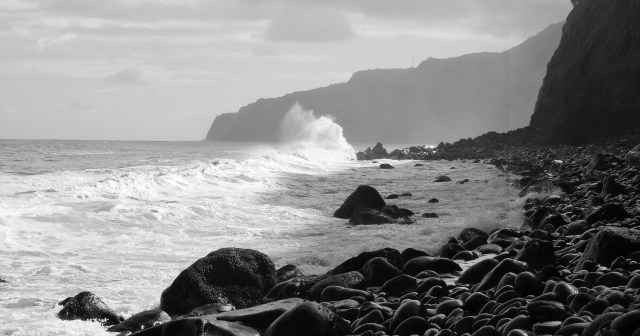
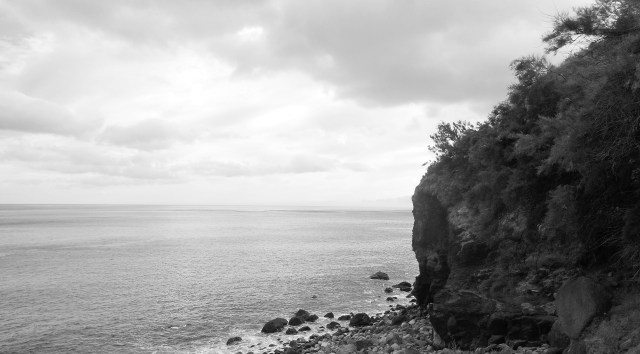
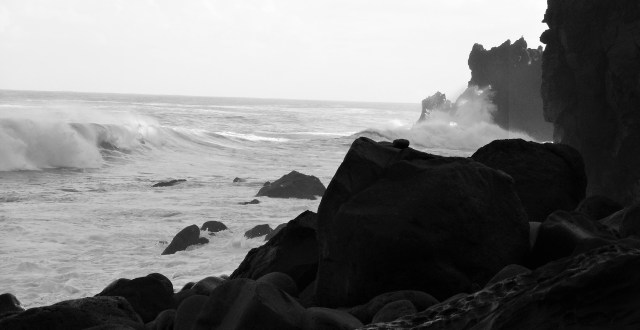
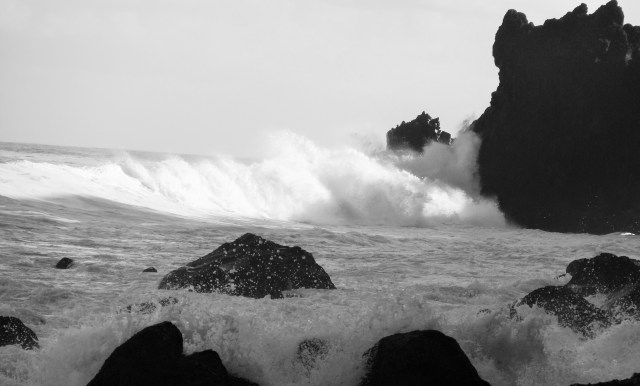
Closer to home, I am always full of awe when I gaze out at the voluminous ocean-like Lake Ontario that sometimes swells with waves trying to fool me into believing that it’s an ocean. I also feel the same awe when I visit the Azores and sit by the ocean, overwhelmed by the powerful high waves that recede and crash into the rocky shore.

The feeling or nostalgia for water is so fluid in my mind that I can’t distinguish between the experience of being mesmerized when I look out into Lake Ontario or the Atlantic Ocean: both have their own unique way of making waves and moving water based on the rhythms of the wind or interaction with the lake bed or ocean floor.

But the love and fascination I feel for water is not saudade for a childhood memory, since I never sat by the ocean in those days; instead I think it stems from a desire and longing to be near water as I intuit what it might have been like had I been allowed to join my friends at the beach that summer’s day of long ago.

All photos of Lake Ontario taken at Warden Beach

Posted in Uncategorized | 9 Comments