Let it be…protecting Toronto’s eastern shoreline

Toronto is a vast city built along the north shore of Lake Ontario where an ever growing number of high- rise buildings are filling in the skyline in the downtown core and spreading out like an unchecked virus across the 45 kilometers of shoreline that stretch east and west of the downtown core, creating a sort of sky fortress against nature. Despite this invasion, Toronto remains a place with a vast system of parkland, ravines and nature trails that meander discreetly throughout the city like a complex nervous system. Often, in surprising and unexpected moments of urban life, you come across a portal to another world: For example, if you take the subway to Old Mill Station, you will see a river that eventually heads down to the lake with a path where you can walk and explore underneath the hidden canopy of trees.

There are many similar delightful entry points throughout the city that will take you into a world of trees and flowers and water: from Queen’s Park surrounded by a constant flow of cars; to High Park where you can see cherry blossoms in the spring; to Tommy Thompson Park where you can look back to the cityscape with wonder in your eyes; to paths along the Lower Don River which you can observe from above as you ride the subway, bike, walk, or drive across the Prince Edward Viaduct bridge.

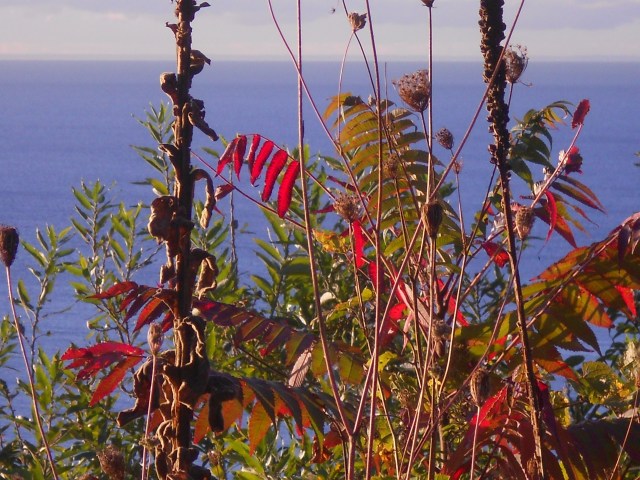
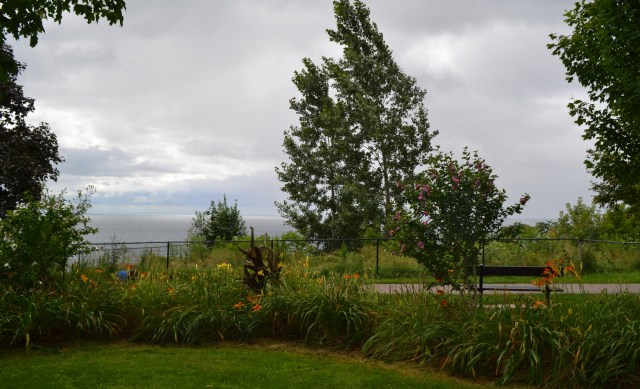
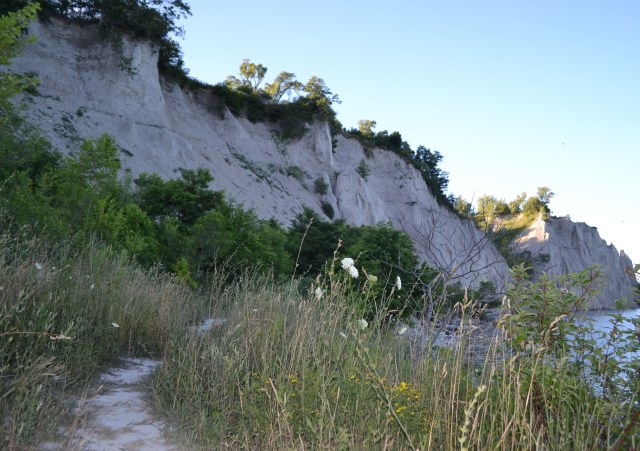
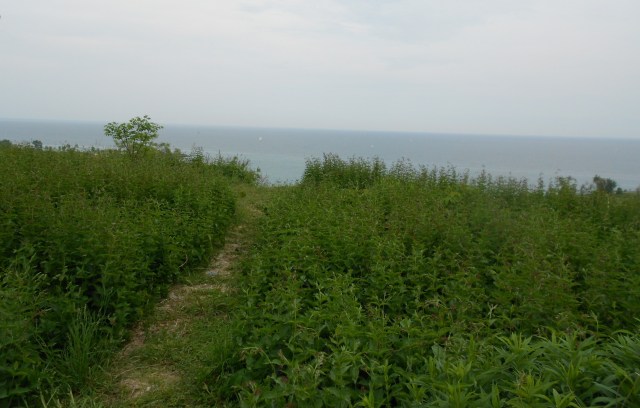
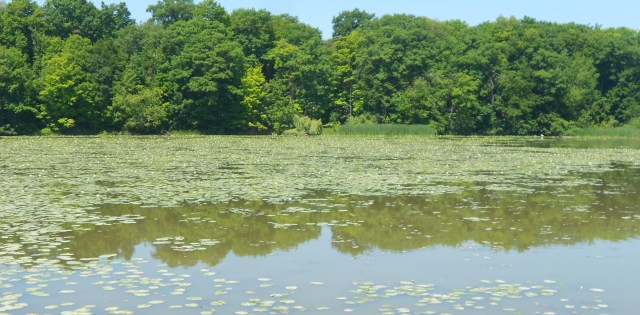
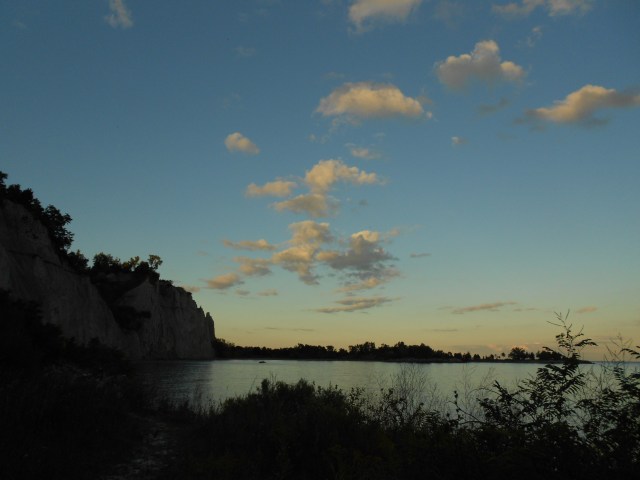
Although there are many wonderful places to connect with nature throughout the city, there is a special place, starting about 10 kilometers to the east of the city, just beyond the Eastern Beaches’ long boardwalk, south of the ever-busy, Kingston-Road corridor where you can still enter an unspoiled and magical place along the shoreline of Lake Ontario, a delicate testament to the wonderful geological heritage that defined the former City of Scarborough and enriches the abundant variety of natural spaces throughout the city. There is a collection of diverse parks and ravines running along to the Scarborough Bluffs that will make you think that you have somehow arrived in cottage country but without having to leave the city boundaries.

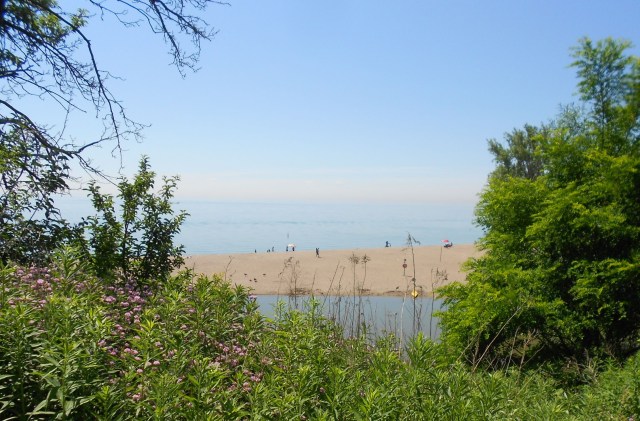
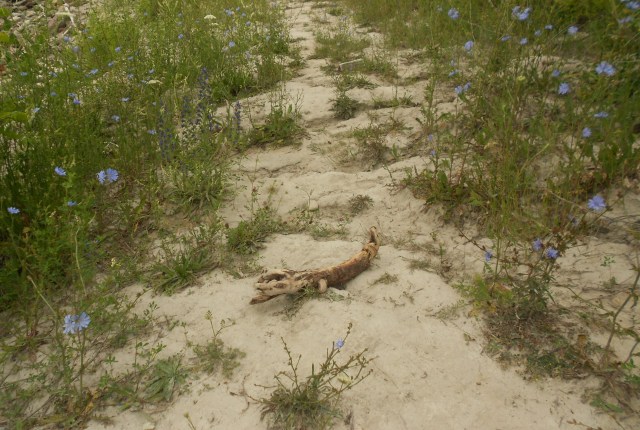
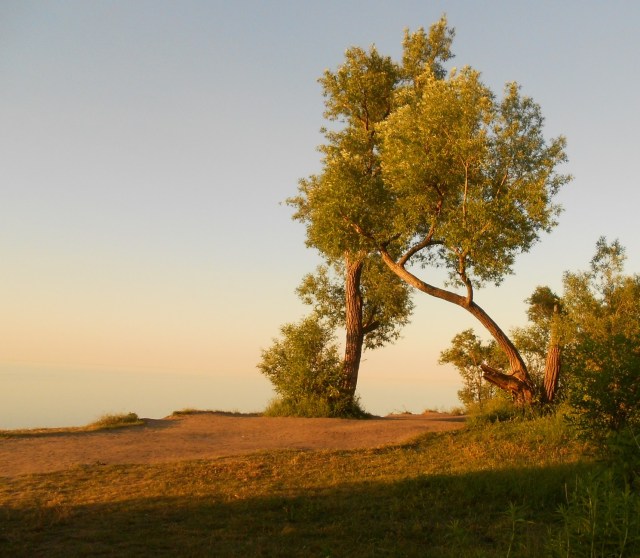
I have the privilege of calling these Scarborough Bluffs my home – this stretch of land that I invite you to visit. Let me show you the hidden beauty that’s here waiting for you to see, to experience, to feel, to make your soul smile; but come gently, come in a whisper, come quietly and you will be amazed by the sight of ancient land and lake, go east as far as the Guild Inn and further on to the Rouge Valley. Let your feet walk upon the sands of the one remaining natural shoreline of Grey Abbey  and East Point beach. Feel the grains tickling between your toes, run your hand through the lapping waves rushing to shore, hear the wind in the breeze rustling the leaves on the trees, look out into the distance and perhaps, if it’s a clear day, you might even see Niagara Falls on the far shore of Lake Ontario!  Wait in stillness for deer shyly passing by, if you come early enough; or stay for the sunset.

Come and be rejuvenated by nature’s beauty, rest awhile, take it all in, but when it’s time for you to return back to your urban dwelling, don’t take the sand away, leave it all as you found it so that the birds and the wildlife and lake will remain as they are, forever beautiful.

Leave as quietly as you came, look back with Portuguese saudade, already missing that which you have not left.

Come visit again when your urban soul feels the need for a little more of that sand and wind and cliffs and primordial nature. Bring your friends; show them how easy it is to escape the bustle of the vibrant city, leaving it behind for a while to connect with something so rare and beautiful, yet so close by that you don’t need to fly away or travel for hours to get there; right here, co-existing on the edge of your busy world, so much of it no further than a TTC bus stop away! But always come back with the anticipation of taking your shoes off as you let the sand pumice your feet and your spirit refreshed by the sight of the lake and sounds of the waves.

The Scarborough Bluffs is a treasure within the City of Toronto. Unwrap it gently, enjoy it, but don’t exchange it for something less worthy. And if it’s not to your liking, politely decline the gift, but leave it untouched for others who, I know, will gladly accept and, more importantly, love it for what it is and not for what it could be. In the future if those who have the power to create change have their way, and are allowed to pave the paths into roads, that will forever change the feel and look of a beautiful shoreline that does not need improvement.

I feel hope in knowing that there’s a Friends of the Bluffs group  and other dedicated citizens working tirelessly to defend and protect this little bit of paradise for all to enjoy.  I worry that their voices and protests will not be heard loud enough by those in authority who believe that more paved roads along the shore will make it better and more accessible to everyone. It may do so, in theory, but at the cost of changing and destroying the very same place that brought you here in the first place.

Let it be. It’s just a few kilometres of shoreline left to be kept in perpetuity as a gift for generations to come. There is room in the city for everyone and everything, and we must preserve a natural world for those who, when tired of the concrete and noise of the city core, want to take time to come and experience a beautiful part of the city that deserves our respect and good stewardship.

Which path will you choose?

Posted in Uncategorized | 6 Comments

Birch Cliff is my Home

Artwork created by the students of Wexford Collegiate School for the Arts


I moved to Birch Cliff Village fifteen years ago. At the time it felt like I was going very far away from Toronto. I still remember when I was younger and took the bus out to Victoria Park and Kingston Road to visit my cousin, who lived just a few blocks outside the city. When I watched the bus turn back, I really felt what it meant to be leaving the city as I walked across the street to the Scarborough side. I never dreamed that one day I would be living farther east of Victoria Park, beyond the Hunt Club, slightly east of Warden. I might as well have gone to a remote Ontario town, as far as I was concerned.
I had lived most of my younger life in the centre of Toronto. Later, when I graduated from university, I moved slightly east to my first apartment. A few years after, I moved farther east, this time to East York. That move was the first time I felt as though I had left the security of the city I loved, and I experienced an inner panic at going to live so far away. My next move took me even farther east. Over the span of a decade I acclimatized myself to living away from the core of the city, but I promised myself that this was the farthest I would ever move.

But as with any promises we make to ourselves, a few years later I broke it when I moved yet farther east, to a small unknown (to me, that is) pocket called Birch Cliff Village.  I had to redefine and broaden my definition of the city border once again.  Luckily, amalgamation had made us all one big city, so it was a relief to know that no matter how far I had moved, I was still legitimately living in Toronto.

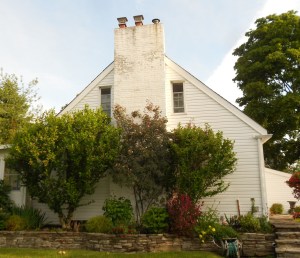
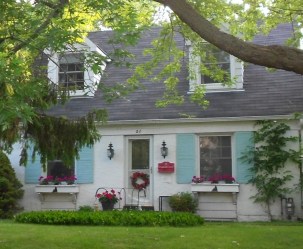
But it was love at first sight: the spaciousness of houses, one from the other; the sprawling lawns and cottage-like homes on tree-lined streets; the nearness to the Bluffs, so mysterious and wonderful; the lake view within a few steps of my street.

The people then were primarily very white, whiter than I had been accustomed to seeing in the inner city. Still, we were made to feel right at home from the start (perhaps it helped that my partner is Anglo-Saxon) and people were kind and welcoming, as they still are, with their hellos and willingness to stop you on the street and chit-chat; we’ve developed those casual neighbourly friendships so important when you live side by side. Meanwhile, over the years, as people move out and others move in, I am beginning to see diversity in the neighbourhood.
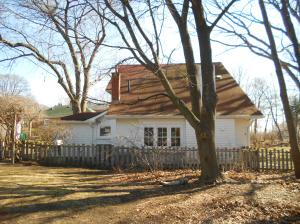
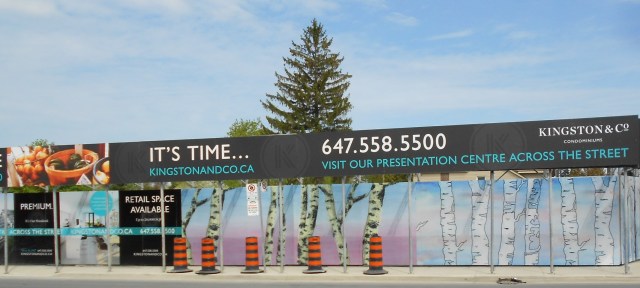
Recently, I have noticed a rapid change in our neighbourhood. We now have condominiums going up and signs for others soon on the way. With each house that gets sold, I already know that it’s going to come down. It’s a boring and sad prediction, but the truth is that these houses get torn down every time: Beautiful, quaint, charming, tasteful, aesthetically pleasing cottages and bungalows that turn into brick rubble with one swoop of a bulldozer and get replaced with dull, bland, mass-produced houses. These are not to my taste.

In fairness, there are exceptions. I can think of a modern, architecturally pleasing-to-the-eye house that, although different from the older houses around it, fits in splendidly and harkens to what can be considered good progress rather than dull, thoughtless, utilitarian, unimaginative construction.   I’m not against the new, just the bad taste. And now that I think about it, I recall a couple of other new houses that I welcome into the mix.  So there is some hope after all.
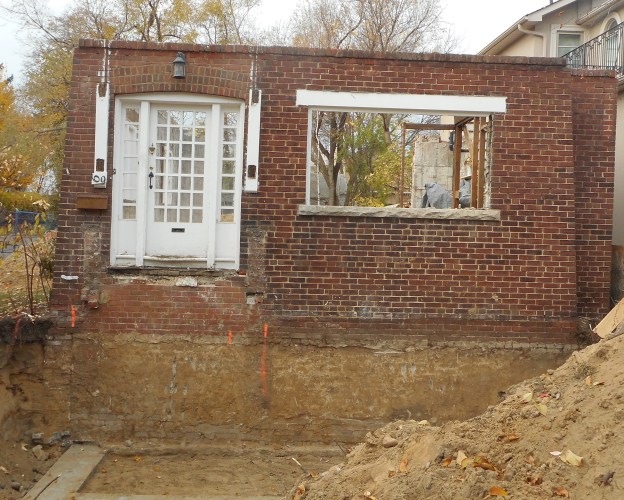
Change is inevitable and I am not against it, but I would like it to be good. What is happening in our area is a ripple-effect spreading east from the big city, where so many of our older buildings are torn down or have only their façades remain in a feeble attempt to appease the preservationist in our midst while gigantic buildings fill the sky.
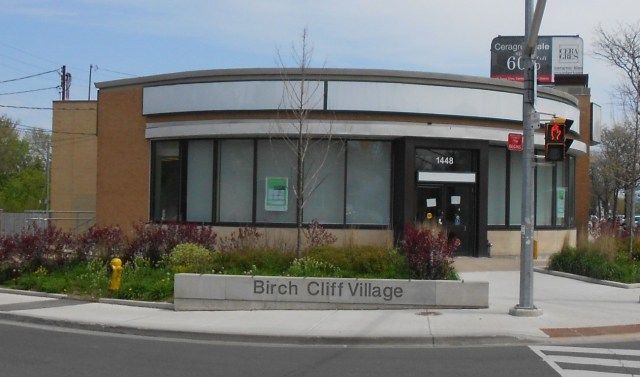
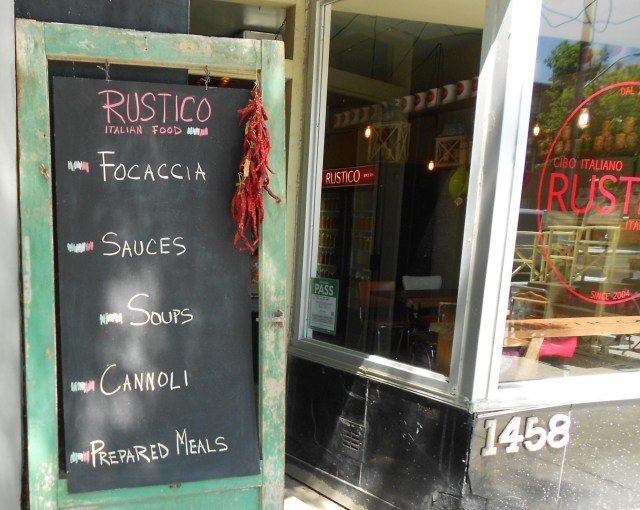
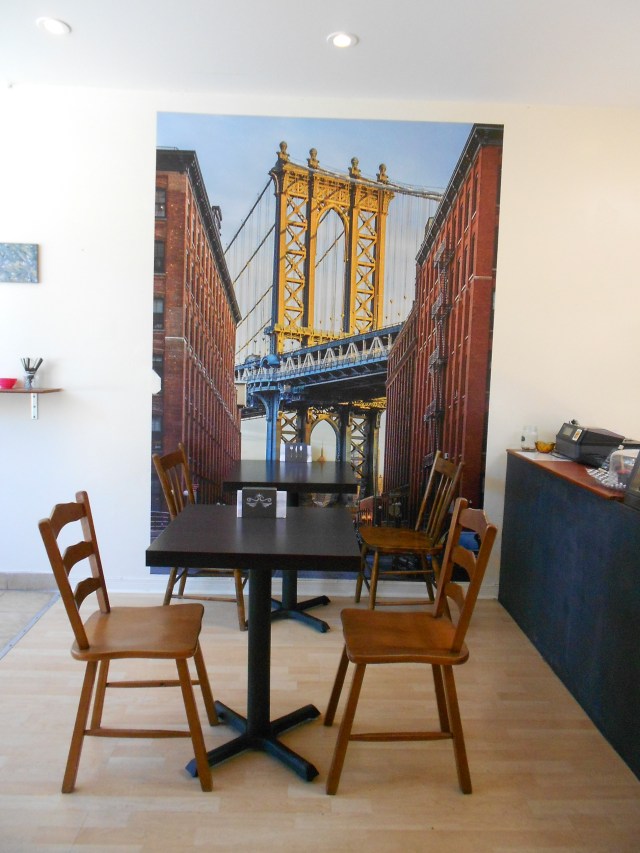
It’s not just the houses that are changing but the face of the Kingston Road corridor, the main artery out of the south-east end of the city. On the north side, new businesses have come. But the TD bank at the corner has closed and I wonder what will become of the round-shaped building. The Dollarama store next door is practical. Rustico  is a fabulous Italian restaurant-café run by a beautiful and charming young couple, Joe and Julia. When it opened, we were overjoyed to have another option in the neighbourhood.
There are two other restaurants on the block: Wimpy’s Diner for hearty old-fashioned breakfasts and Jatujak  which has the  best Thai street food in Toronto. Interspersed between these restaurants are old-time antique shops like the Salvage Shop (and a chat with Roy makes  Saturday afternoons a delight) along with a newcomer, The Nice Nook  that replaced the old A Nothing New Shop that had been there since 1965, but it’s already closed in less than a year, perhaps in anticipation of the new plans to replace the block with more condo development. And now, the Salvage shop will soon be closed too, forever erasing more of the neighbourhood’s charm.

Is there a future for the Salvage Shop?

A few blocks east, there’s a new coffee shop, The Birchcliff, as trendy and cool as any found in other popular areas of the city.  The House and Garden shop is in a beautiful brick building where once a CIBC branch made my banking life easier.

To the west of Warden, on the south side of Kingston Road, there’s The Kingston Social  showcasing local artists and serving pop-up dinners; a new deli, M&J’s  run by a wonderful young couple, Michele and James, offers delicious breakfast sandwiches, homemade burgers, and the best bagels anywhere.
On our weekend walk around the neighbourhood we buy something at each place, and by the time we get home our cloth bags are full of all that our neighbourhood has to feed us. What all these places have in common is wonderful staff/owners who provide a great sense of community.

Despite living in a neighbourhood where not all services are provided, there’s enough here for me. I’d rather have to trek out of the neighbourhood for some necessities rather than have them all at my doorstep.  Think Bloor West Village or the Beach: crowded, congested. I don’t want that here. But I am resigned to know that it’s coming. And sooner than I’m ready.

But the culminating treasure of living in the Bluff area is the Bluffs itself, the paradise that is Rosetta McClain Gardens, offering views of the lake below us, where there is accessible terrain, unspoiled, un-“parked” wild nature still there, deer and rabbits and hawks and other wildlife that pass through our ravines on their way along the eco-system.

I love my neighbourhood, where a walk or a bicycle ride still allows me to be out in nature, while knowing that I still have quick access to the wider city. It’s having the best of both worlds. But I am protective of where I live — and, for a long time, I would not sing its praises to those I knew, for fear of drawing attention to this best-kept secret. But nowadays, with everyone Googling everything in sight, I have no control over the thousands who are discovering this great place to live, so I might as well write about where I live.

I just hope that we don’t lose the feel and spirit of this special place as change imposes itself on us. I am ashamed and embarrassed to admit that I don’t take kindly to seeing new people move in, regardless of who they are. It’s not that I won’t welcome them, it’s the suspicion that I fear they will want to have their big imprint on the neighbourhood by, sadly, reshaping it and redefining it with monster homes or even worse, bland, ubiquitous retro designs. It’s fair to say that the neighbours I like the most are all those who have come and who have not torn down their houses to build so-called better homes, but have instead maintained the integrity and beauty of the old houses. Perhaps what I like the most is living in a community of like-minded souls. What you do to your house, to your environment, to the space around you, how you treat your community tells me more about who you are than anything else.

We, in Birch Cliff, are one of the many great, eclectic and unique neighbourhoods that make up this vast city we call Toronto. I am proud to live in mine.

An eager family waiting for their condo to go up!

Posted in Uncategorized | 5 Comments

The Anglo-Saxon-Canadians gave me the Algarve

Growing up Azorean-Canadian, mainland Portugal was foreign to me until my first visit several decades ago.

I did not go to the Algarve then. It was only when I met my partner that the Algarve became a place of destination one March Break. His aunt, who had been spending the winter months there with her husband, spoke so enthusiastically about its charms and beauty when she returned to Canada that we finally went to see it for ourselves.

And we liked the visit so much that we have been back twice already. On both return trips, his aunt, already there again before our arrival, played a major role in helping us discover new places to see and restaurants to eat in. She took delight in introducing us to her favourite haunts and beaches and, as always, she was surprised that I had no idea about the places she showed us.

“But your family is Portuguese,” she’d say to me in disbelief. It took time for her to accept that my Portuguese roots were Azorean and, as such, I had no special knowledge about the Algarve.

“In fact, you know more about the Algarve than I do,” I’d said to her. Yet, her eyes showed me that she didn’t quite believe me, but simply humoured me in my impression that I was more of a tourist in this land than she was.

One night she took us to a poetry reading. One of the poets read, “Nesta Hora, Agora, Nesta Hora,” a rhyming poem about time in the here and now. I had to translate the words for her, but that did not matter. She had taken pure delight in the sounds and cadence of the poem, and she luxuriated in the words without knowing their meaning but was thrilled, nonetheless, that I was there to share in the discovery.

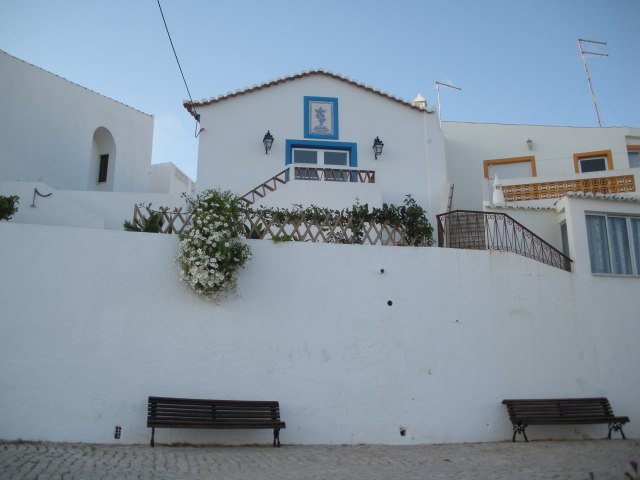
The last time we went to the Algarve we visited Aunt Cathy and her husband Ron, and my partner’s mother with her husband. The four of them had rented a house in a very tiny seaside place called Burgau. It was through their eyes that I saw the Algarvian coast and towns. I walked everywhere with these fair-haired, fair-skinned people who had accepted me as one of their family members, and who took so much pleasure in assuring me how much they loved my culture.

I take delight in this humble truth: that it wasn’t “my people” but my partner’s family, who showed me and gave me a love for this part of Portugal that I had ignored on my own.

That last visit in the Algarve would later become more significant than I could have ever imagined, for it was the last time we were all there together.

A few years later, we lost my partner’s stepfather and his aunt to the wretched cancers that have taken so many others from our lives, including my father. That the three of them all went in different Aprils lends painful credence to T.S. Eliot’s classic line that “April is the cruellest month.”

And I must remember how warm and welcoming and loving these four Anglo-Canadians had all been towards my father. “Antonio, how are you, Antonio?” they would utter with genuine warmth in their anglicized pronunciations.

All this to say that there is no such thing as a monoculture in my private world. Regardless of my Portuguese connections, with family in both the mainland and the Azores, it was the Anglo-Saxon Canadians who gave me the Algarve.

In memory of

               Catherine Moore                                 Edward Wells

                                                            and

                                       Ron Moore, April 2017

                                                                       Almancil

                                                                        Alvor

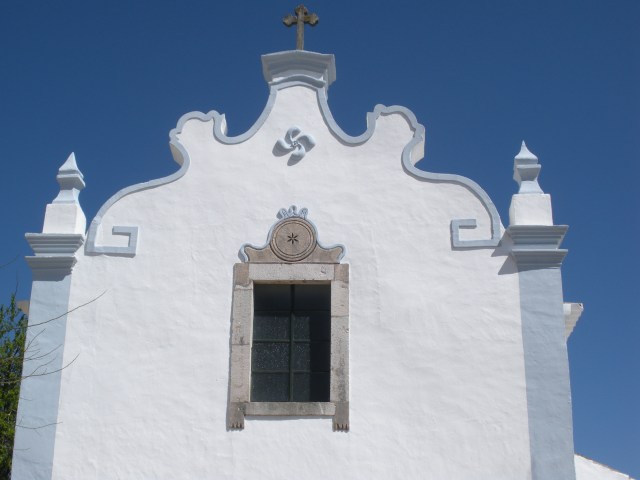
                                                            Church near Estoi

                                                                  House near Estoi

                                                                          Estoi Palace

                                                                           Luz Church

                                                       Abandoned house near Luz

House near Monchique

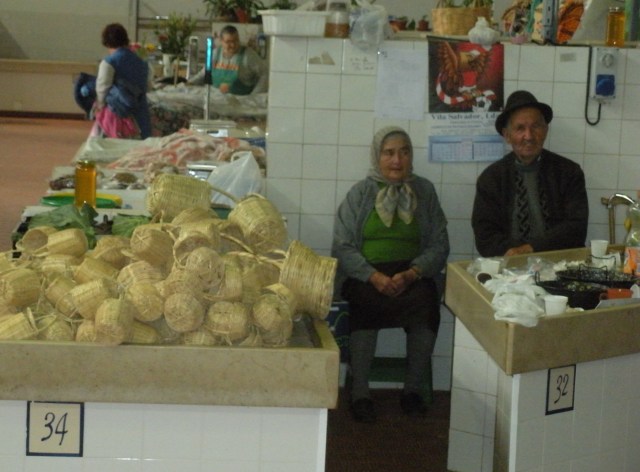
Market in Vila Real de Santo Antonio

Vila Real de Santo Antonio

Vila Real de Santo Antonio

Burgau

Monte Clerico

Alvor

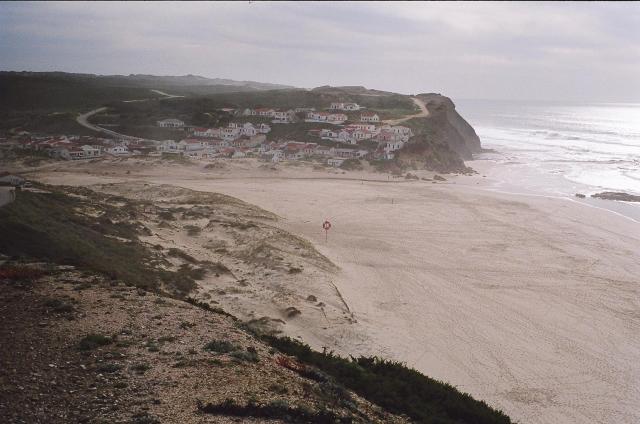
Praia do Mós

Praia do Mós


Posted in Uncategorized | 4 Comments

Searching for home in the Algarve

In an age of globalization and ever-expanded connectivity with our world, I search for a way back to a singular place, a single point in time where I might connect with my deepest experience of change and loss: the moment of leaving my island home of São Miguel in the Azores.

This happened a lifetime ago, after my father, who had already immigrated to Canada two years prior, came back to get my mother and me. My parents’ failure to prepare me for the act of leaving for a foreign country scarred me forever. The move shattered my magical world, lived in a pre-modern mid-Atlantic insular island in the late 1960’s. This act of uprooting drove a wedge between me and my father. It was only many years later that I made my peace with him; something I’m relieved I did, because when he passed away, I had no remorso, as the Portuguese say; no remorse over how I had treated him in those long-ago years of adolescence.

The experience of coming to a new country where the English language dominated, and where I have lived most of my life, has shaped how I see the world. I still feel the blue-grey ocean with its saltiness on my lips as much as the taste of snow on my tongue, which I found magical when I arrived in Canada. And it’s been the snow of Toronto winters, and not the wildness of the Atlantic waves that has been a constant in my life, not just in memory. As much as snow, beautiful, tranquil, silent, has been a comforting presence in my life, the deep mystery of the eternal ocean still keeps running through my veins, aligning my heartbeat to the rhythm of the tide coming in and going out. My longing has always been to find a way to mix the snow of Canada with the great ocean surrounding the Azores.

Sometimes I stare at the computer as I look for something that I ultimately can’t find through a Google search. It’s not there. And then I feel disappointed because the internet is not as wide as it claims to be. What is it that I want it to show me? I long to find what I hope will be there – a link to my past. My intuition knows that this is unrealistic, yet I stubbornly type in a few words that don’t, in the end, reveal anything.

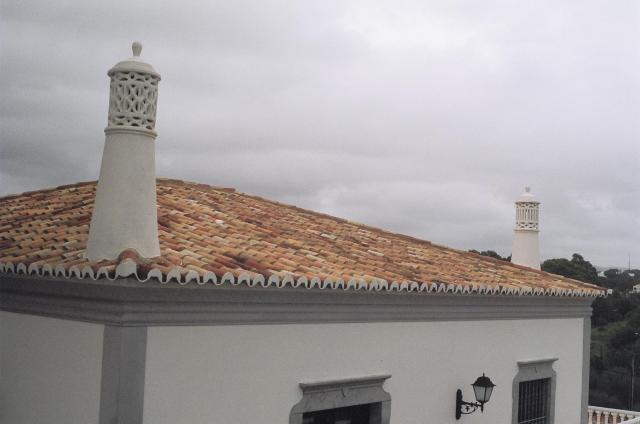
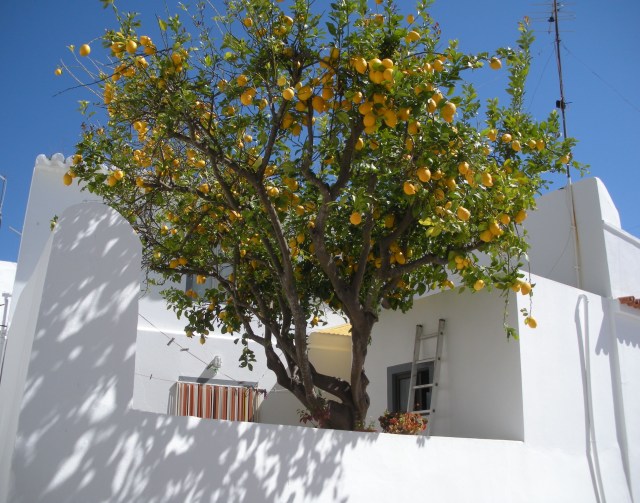
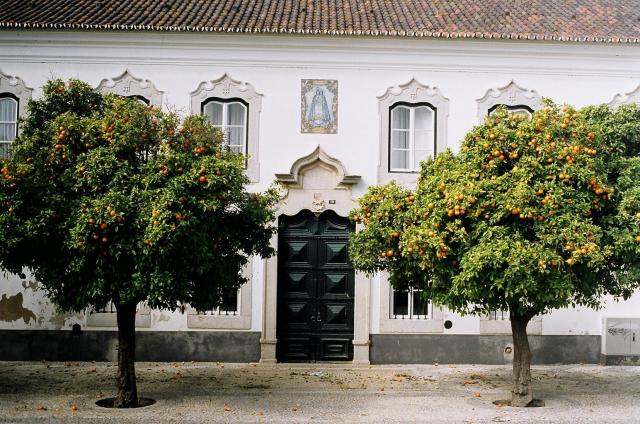
And so, from time to time, I travel to places that, although so different, somehow evoke for me the geography or feeling of my island home. One year I found it in the Algarve (from the Arabic Al-Gharb, meaning The West), the most south western part of Portugal. As my partner drove west from Faro airport towards our hotel, I was quite taken by the closeness of the ocean to the little towns along the way, all with white painted houses with blue trim and decorative Arab-influenced chimneys. There were also beautiful orange groves everywhere as well as almond trees.

We stayed in Praia da Rocha, near Portimão. Luckily, in March, it wasn’t so full of tourists. Waiters and shopkeepers warned us never to go there in July and August when the hordes descend on the beautiful sandy beaches. The Portuguese only go to the Algarve in the summer; but the Germans and the British go all year round. There is little of historical interest in Praia da Rocha, not even one old church to visit, only a closed little chapel in the old fort at Miradouro de Santa Catarina, with a magnificent view of the ocean. It’s a seaside town full of hotels and restaurants and gift shops. More like Niagara Falls or Quebec City. Yet the ocean views, the long and wide sandy beaches, the massive rock formations along the shores delighted my soul and somehow connected me to my memories of the Azores. From our hotel balcony I could see the immensity of the ocean in front of me, and from my bed at night I could hear the enormous sound of the waves coming in through the open window and overpowering all other sound. I took walks along the beach where I breathed in the sea air, took in the colour of the sky at sunset, and felt comfort in being so close to the edge of the immense Atlantic Ocean.

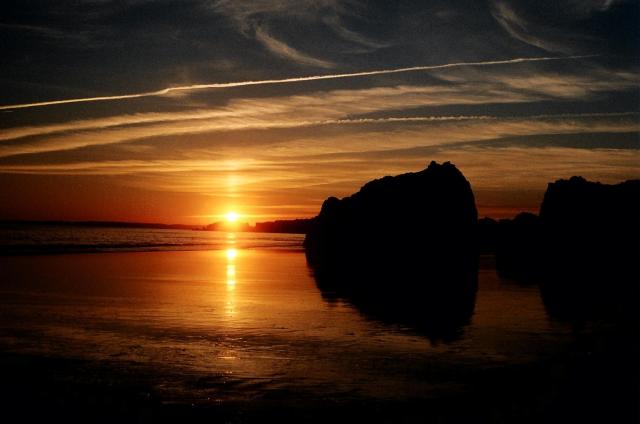
 Sunset at Praia da Rocha

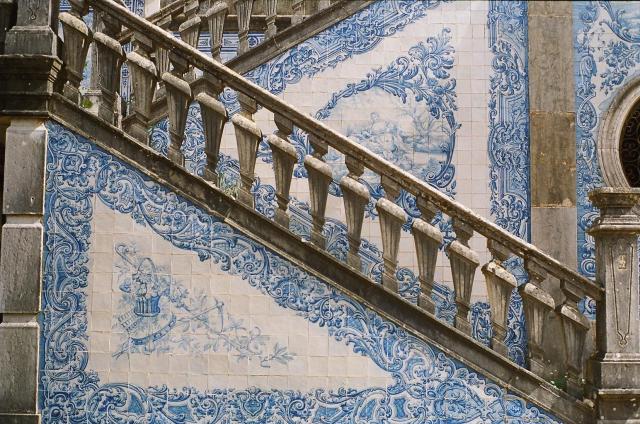
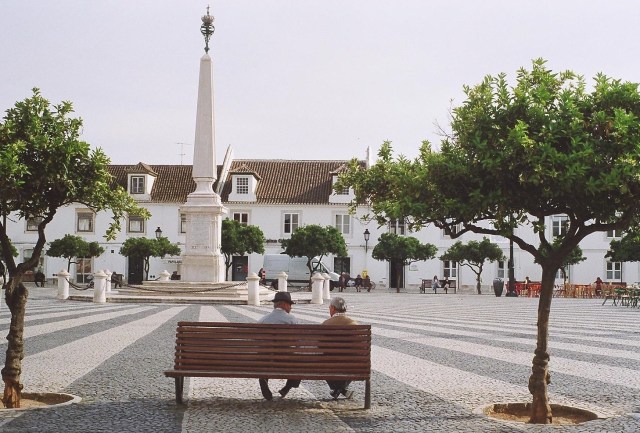
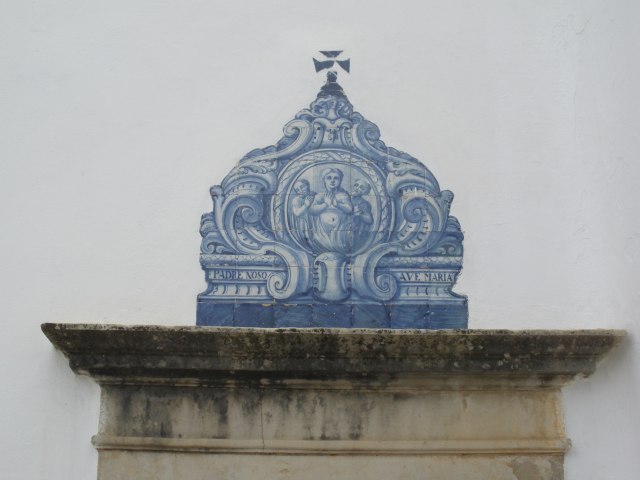
We explored many other towns, both along the coast and inland: Cabo de São Vincente and Sagres, at the most western tip, famous for its association with Portugal’s golden age of navigation; Lagos, a quaint old town with a large square carpeted with intricate black and white cobblestoned designs and people sitting in outdoor cafes having lively conversations; Silves, a bit to the north with an interesting old cathedral and fort high up on a hill; the Monchique Mountains, one of the highest mountain ranges in Portugal, arrived at by a narrow old winding highway to breathtaking views; Almancil, where you can visit one of the most precious architectural gems of Portugal, the church of São Lourenço, with its interior completely covered with blue and white azulejos, survived from the 1755 earthquake.

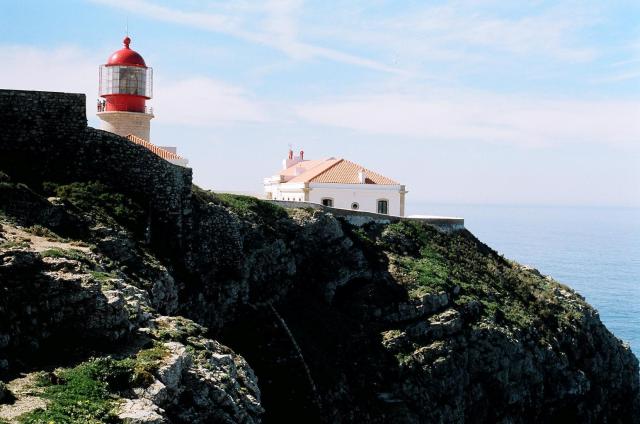
Cabo de São Vincente

Fortaleza de Sagres

Sagres

Lagos

Almancil, Church of São Lourenço

Silves

Faro

Faro

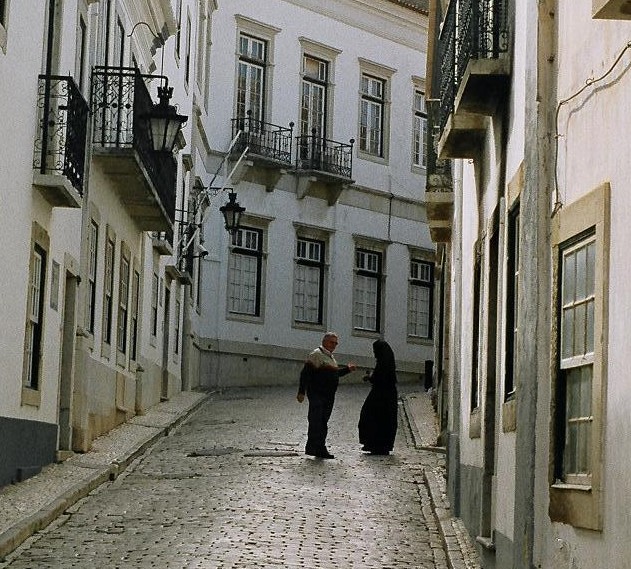
We visited Faro, the capital of the Algarve, on a quiet Sunday morning. It was half-abandoned, half-lived-in, and I saw the ghost of Miss Havisham there: lingering and holding on to the past with little life left, a ruin trying to fit in with modernity.

There were so many old houses locked up and in various stages of decay, abandoned by their owners, who probably would never return. And so, with time, the roofs cave in, the colour on the walls fade with the rain and the wind, erasing all trace of their former life. There was one particularly beautiful, large abandoned house where I peeked in through a tiny slit in the old keyhole and saw what was once an elegant home; now achingly empty.

Out of nowhere, the sounds of an old Shirley Bassey tune played out of a hidden speaker attached to the top of one of these houses, her voice haunting and melancholic, strange to hear, so out of place, but in an attempt to, perhaps, deceive the casual passerby into believing that this old and empty street was very much of the here and now.

Faro Cathedral

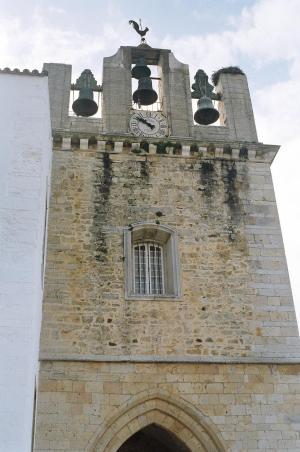
I went inside Faro cathedral. The squat tower, all that was left from the time of the destructive Lisbon earthquake of 1755 that reached all the way down the Algarvian coast.

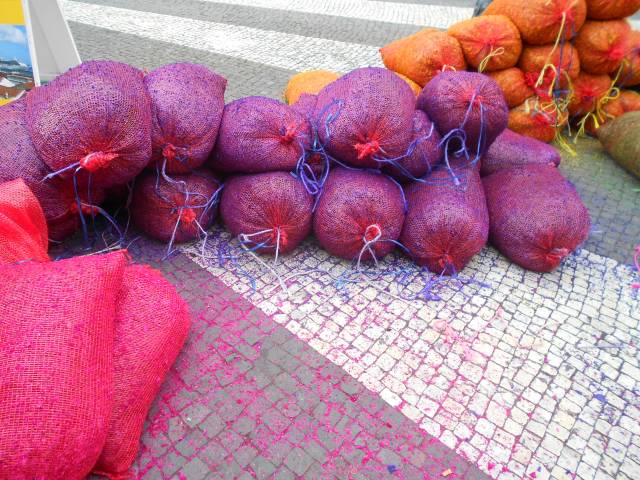
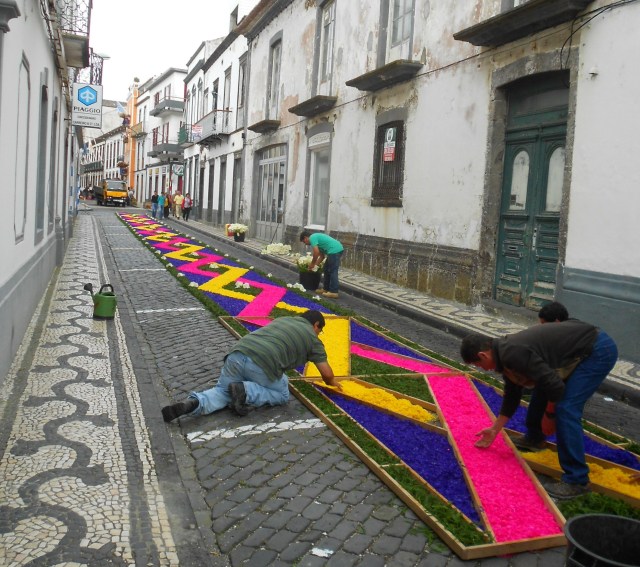
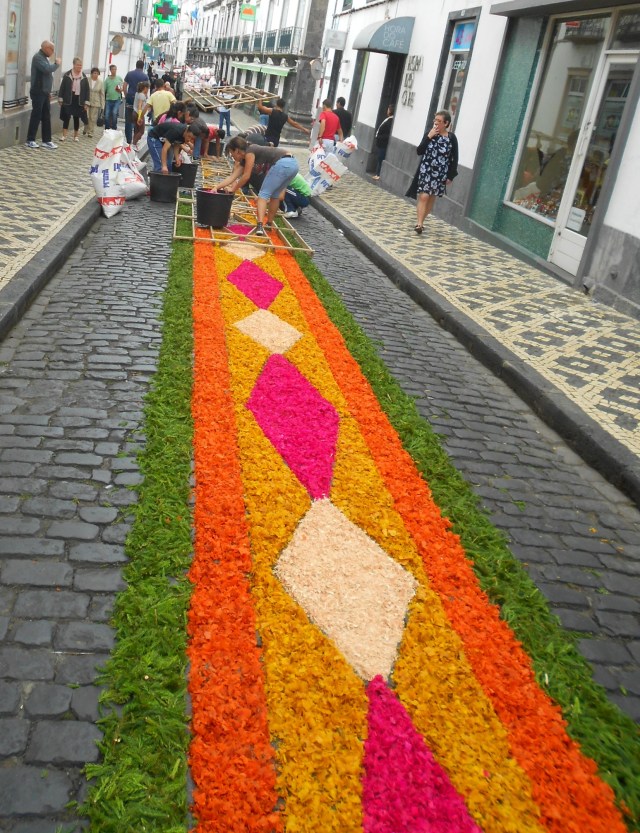
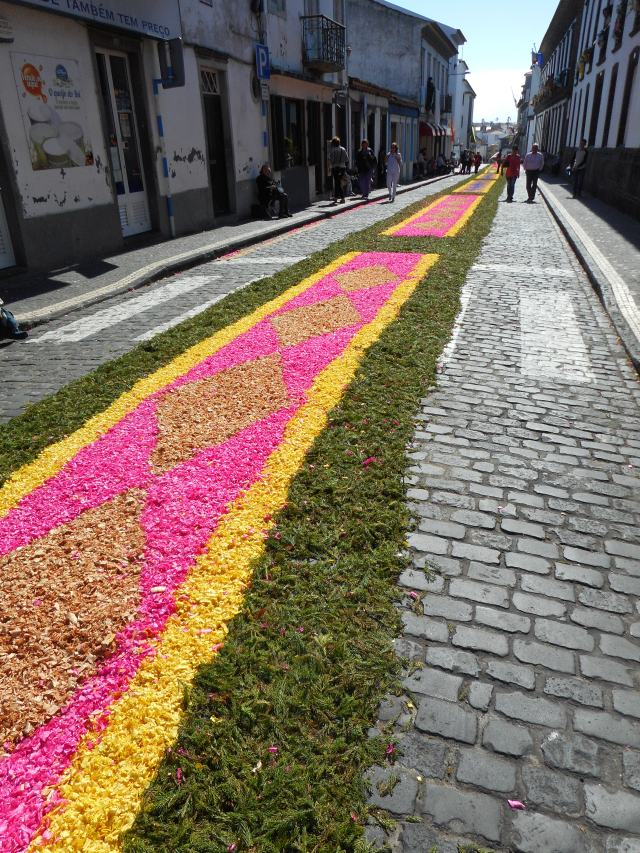
As I stood in front of a gold-gilded altar covered with intricate splendour, I looked up to the face of a small statue of Our Lady of Sorrows, dressed in a purple gown with gold trim, a thick black wig covering her head. Below her, a bloody-crucifix that did not fear to show the baroque pain of her Son. I gazed into the pained face of the Virgin, and the little-boy spirit within me awakened and cried out with a longing for a way back to my childhood: the altars, the statues, the flower carpets that adorned the cobblestoned streets before a Sunday procession, the smell of incense mingled with that of the island’s salty air.

I know this is the language of “saudade” gone wrong. But it’s been my struggle; never quite feeling a sense of belonging anywhere and yet finding landscapes of connectivity, hoping to somehow integrate my Portuguese soul with my Canadian mind.

Travel for me is a way to explore and understand another piece of the puzzle of who I am. Each journey is unique, bringing me a bit closer to who I am. This is, I think, part of the immigrant’s struggle: to search for that illusive home that’s no longer what you experience in your mind but a moving and ever changing reality that you need to reconcile with. If you are an immigrant, and most of us in this wonderful city of Toronto are, you might sympathize with my meandering thoughts; if you aren’t, you might wonder what all the fuss is about. But the reality is that the immigrant is always in the act of immigrating – just at a different stage of arriving.


Written on April 21, 2006, on the one year anniversary of my father’s death, and revised for the 12th anniversary of his passing. If not for him, for his own journey of immigration to Canada, the richness that is my life today would have been severely diminished.

 Originally published as “Searching for Identity in the Algarve” in “TWAS Review (Toronto Word Arts Scene), Volume 3, issue One, July 2006

 I have been to the Algarve two times since, but will save my impressions of those visits to another time

Posted in Uncategorized | 4 Comments

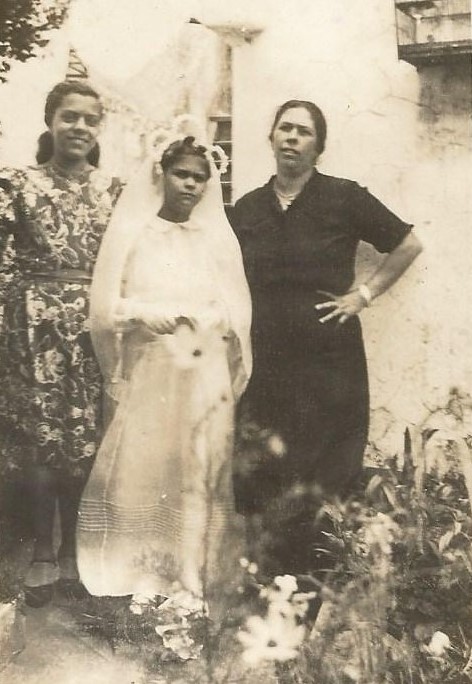
The First Communion

The taxi had finally arrived. The driver watched Eulália Dias as she descended from her front porch one heavy step at a time. He got out of the cab to open the back door for her, smiled an apology for being late, and asked where she was headed.

“I go to St. Helen’s Church on Dundas, you know where it is? But I need to sit in the front seat because of my legs. Please, you have to hurry. I’m going to be late for my granddaughter’s First Communion.”

Read the full short story in Cleaver (Philadelphia’s International Literary Magazine)

Reposted in Filamentos (artes e letras)

Read review by Susan Riggs

Posted in Uncategorized | 2 Comments

Thread of Tenderness/Fil de Tendresse

drawing-by-jamey-mcdonaldDrawing by Jamey McDonald

Today marks my 49th anniversary of emigrating from the Azores to Canada. This past week I have spent time in Montreal, the first place I set foot on North American soil on a cold February day in 1968. The memory of this date came to me in the middle of doing an interview for a radio community program, Palavras Partilhadas, at Radio Centre-Ville 102.3 FM., on yet another February cold Montreal day.

I took delight in the significance of the coincidence of time and place, as I was in Montreal to attend the reception at the Centre d’histoire de Montréal for the new exhibit, Fil de tendresse/Fio de ternura/Thread of tenderness.

Joaquina Pires, the curator of the exhibit, explains how hearing a reading of my short story, Avó lives alone, inspired her to discover her community’s experience of grandparents-grandchildren. The result is a well thought-out, important document that, although rooted in Luso-Montreal families and their stories, speaks truthfully of the experiences of other communities. The themes of loneliness and isolation, inclusion and participation in family life, transcend specific cultural groups.

Regardless of the name given to our parents’ parents, avó, avô, abuela, abuelo, nonna, nonno, grand-mère, grand-père, grandma, grandpa, all cultures share one essential thing: no matter how small or tentative the connection and depending on health, ability, temperament, physical distance, among other factors that are usually beyond their control, most grandparents want to have a relationship with their grandchildren.

The exhibit invites us to pause and consider the value and place of grandparents in the lives of their grandchildren and to find ways to integrate them into the fabric of the family. Often, for shut-ins, living alone, a simple telephone call is enough to sustain them for days. These are threadbare relationships that are completely at the mercy of time-running-out, either because grandchildren grow up too fast or because grandparents almost always die first and, indeed, for most human-beings it is the loss of a grandparent which introduces them to grief.

The families who participated in the project through photographs, interviews, videos and texts, reveal a vast array of experiences, many of them positive and giving us reason to celebrate the fact that so many grandchildren value their grandparents and make them an integral part of their lives. The memory of a special relationship between grandparent and grandchild can live on forever. I have come across many young adults who tell me, often with a “thread of tenderness”, about the place their grandparents have in their lives; and how, when the grandparent is gone, they cling to the memory of a story told, or a simple embrace, a smile, or a kiss given, as threads that bind their memories forever. Indeed, a “thread of tenderness” as the title of this exhibit shows, is often all we have to cling to.

Photos of exhibit

More information on Fil de tendresse project.

Posted in Uncategorized | 2 Comments

Crashing into waves of existence

post

It seems to me that in our lives we only experience a few moments of clarity, lucid glimpses of events, emotions, and feelings that impregnate our consciousness and surface in-between moments of distraction or absentmindedness; when we are lost in a sunset, observing bright light dappling through foliage, walking in deep woods, or watching ocean waves galloping madly to shore. It is in these rare moments that we become fully alive and then, tired of the exhilaration of awareness, we collapse back into our dormant dreamlike state of existence.

Posted in Uncategorized | 1 Comment

Christmas Mourning

post-19-christmas-mourning-1

I came across this discarded tree with wreath on my walk the day after Christmas.

This year, we did not get a Christmas tree. In fact, last year we didn’t get one, either. But I do love a Christmas tree, a real tree. In years past, we normally get the tree on the first week of Advent and decorate it with ornaments collected over the years, so full of memories and meaning, each bringing back a moment of joy, and then we wait until the Feast of Kings before undressing the tree. I always feel saddened as we carry it out our front door into the cold, after so many weeks of receiving pleasure from the scent and presence of the Spruce next to the warmth and glow of the fireplace in our living room.

The day after Christmas, early in the morning, I went for a walk and was shocked to see our neighbour’s still healthy green tree already tossed out into the sidewalk. There was something sad and forlorn about it: Christmas cast away, ended, disposed of, no longer wanted or needed, after the stroke of midnight; the celebration over with one of its ubiquitous symbol thrown out in a hurry. But why the rush to get rid of it? On that same walk, I came across other trees that, equally loved until Christmas Night, were now lying naked, cut, abandoned, and already waiting for Pick-Up day. No doubt they will be shredded to provide good mulch for the soil, but the thought of these trees, grown explicitly for one night of glory, unsettles my conscious.

Perhaps I am too sensitive to the plight of Christmas trees, but maybe my unease comes from seeing something much deeper and disturbing about human behaviour: our ease and ability to proclaim undying love one day, to praise with a sense of wonder, and then to quickly cast off, or even destroy, the very person or thing we no longer need or want the next day because we are fickle and tire easily of sameness.

My mother tells me the story of an old neighbour, a Senhora Conceição, who in those old days, would knock at the door and remind my grandmother to save the Christmas tree trunk for her. “A vizinha há-de me dar o tronco.” She asked for the trunk so that she could make little vases out of the wood, which she would then paint and give to friends as decorations. It was a kind of artesanato, my mother reminds me – folk art. And I felt glad to know that my family’s Christmas tree had been, so long ago, transformed into something new, something of whimsical beauty to last beyond Christmas day. I admired Senhora Conceição, even though I don’t know who she was. If she was my neighbour, I would surely save my tree for her transformational magic.

I am thinking that maybe, despite my ecological leanings, I might just feel enough nostalgia next year to get another tree, but I know that I will never be able to toss it out unceremoniously, not without a feeling of regret that I am discarding something beautiful. Perhaps this is the lesson the Christmas tree exhorts me with: to hold on to the good things of life and the beauty therein, until the end, the very end.

post-19-christmas-mourning-2

Posted in Uncategorized | 6 Comments

Visiting the Azores now

visiting-the-azores-1

I went to the Azores in late September for seventeen glorious days. As with all my previous visits, I go to the island of São Miguel. It’s not that I don’t want to see the other eight islands that make up this mid-Atlantic archipelago, it’s just that I still haven’t had enough of São Miguel to explore Pico, Corvo, São Jorge, Faial, Flores, Santa Maria, Graciosa, Terceira. One day I will, but for now I keep returning to my island, and especially to my city, Ponta Delgada.

I always start my visit with the city. It’s a duty and a sign of respect for the place where I was born. How could I arrive at the airport and just bypass it? Not with my history of leaving it as a child. The city would feel jilted, once again, and so I start there and stay for a respectable four or five days before moving on to the countryside.

Every time I go back, there is always the familiar waiting for me, but each time I also discover something new: a place, a different perspective, a revealed detail. These become part of my soul, my consciousness, and memory. Retracing my steps is my way of making up for those long years of absence. After immigrating to Canada, there were no further visits back. Leaving had been a permanent and final decision, one that had not been mine to make. Going back feels like a rekindling of that old strained relationship, a mending of a misunderstanding, a healing of a wound, and an awkward sense of wondering if the city and I can reconcile.

I’ve gone back several times over the last sixteen years, and each new visit brings me a little closer to a feeling of familiarity and belonging to the city of my childhood.  I’ve developed certain routines when I am there: where I stay, what I do, and who I visit. I am fortunate to have a long list of people to see, and they treat me with kindness and welcome me with open arms; the years of absence never an obstacle to a kiss on the cheek as if they see me always.

visiting-the-azores-2

There is only one place I will stay in Ponta Delgada, despite the sincere offer of relatives who would welcome me into their homes. At A Comercial, I am greeted by the staff like an old friend. My room is familiar and welcoming. O Torreão, the Tower Room, is on top of this charming two-story house, impeccably kept and infused with silence. My room has three windows, each providing distinct views. It has the best view of the church of São Sebastião and old terracotta roof tops, stretching out unto the doca and finally the ocean beyond it. I could not ask for better, nor is there better, in my opinion. It’s my home away from home and the owner and I have chats over a galão in the restaurant next door, where the best traditional meals are served cafeteria-style by a cheerful and hardworking group of beautiful women who indulge me by remembering my favourite dishes.

visiting-the-azores-3

I love this city, Ponta Delgada. When I leave my room each morning to go walking its streets, my past becomes alive. I still marvel at the beautiful churches, so many for such a small place, each worth a visit, each a part of my childhood. I admire the beautiful old houses with traditional trim in grey and windows with shutters and ironwork motifs.

But as much as I am taken by the charm of the city, with each new visit, I have started to see it less from the heart. All of a sudden, I am aware of the chinks on the walls. It’s like a love relationship that’s lasted beyond the romance stage. I now see a city that, in some ways, feels abandoned, let go to deterioration, desprezada.  The number of houses and buildings  still standing in various degrees of decay, often right next to very well kept houses, is painful to see. And each time I go back, even years later, the same houses are still there, just more neglected, more abandoned. There is a beauty, too, to these abandoned walls and broken windows, but a romantic take on decay can only go so far, and it would be wonderful to see these houses and buildings restored and lived in once more.

visiting-the-azores-4

“Houses are people, too. And they need people to live in them.”

visiting-the-azores-5

I see a city that is trying to adapt and change, to be modern. There are new hotels, slick and sophisticated, rising above the decrepitude and neglect around them. There is also some restoration work being done to old historical landmarks. For example, the Carlos Machado Museum. It had been closed for over ten years and I was lucky enough to be there for the much anticipated reopening this past September. It’s a beautiful treasure of a place, which includes the old convent church of Santo André, a church we used to go to for mass in the old days, now preserved as a museum space. I also visited the oldest Portuguese Jewish synagogue in the Azores, the Sahar Hassamain (Gates of Heaven), also newly restored and beautiful to see.The old Jesuit church of Todos os Santos was restored several years ago and houses precious art and artifacts worthy of the best churches in Europe.

visiting-the-azores-6

visiting-the-azores-7

There is much to celebrate about Ponta Delgada. Its cultural heritage is quite impressive and unique for a remote city on an isolated island in the mid-Atlantic ocean. But I find walking its narrow cobblestone streets more annoying than pleasurable. I am always jostling to get by parked cars where many sidewalks are so narrow that only one person can walk, single file. These streets were built before the automobile and could have never anticipated the ugliness of today’s oversized cars. The wheels rumble noisily on the street where I stay, the sound is like thunder hitting the pavement.  The sound disappears at night when I sit by my window and listen to the church bells chime the hours. The church tower becomes lit up and I remember with joy that this is the church where I was baptised, had my first communion, and attended all the feasts.

It’s a gift to return often to my city of birth, and to watch it from the window of my room, after a day of wondering the streets and visiting those wonderful people who are still there, connecting me powerfully to my past.

On my last day in the city, I stop at the market, O Mercado da Graça, and drink a glass of freshly squeezed pineapple juice from an entrepreneurial young man who has found a delicious way to entice tourists. He transformed the old market concept into something new, at par with what I might find at the St. Lawrence Market in Toronto.

visiting-the-azores-8

After drinking the locally grown sweet pineapple, there is nothing left for me to do but head back to my room to pack and head out to the next part of my the journey, to the sossego do campo, the quiet of the countryside and the ocean, where I walk along black sandy beaches or sit on rocks, and gaze out into the infinite distance, comforted to know that my life in Toronto, a five hour flight away, is there on the other side of the ocean waiting for me.

visiting-the-azores-9

For more images of S. Miguel, scroll down past Toronto pictures on my Photos page.

Also on Comunidades Blog.

Posted in Uncategorized | 7 Comments

Coming to Canada: Part 4, To the Azores and Back!

Cows Across the Street by Emanuel Melo

When we arrived back in São Miguel, my mother quickly learned that my grandmother was now in good health and did not need looking after.  She became very angry for making this unnecessary trip and vowed that we would go back to Canada as soon as possible.

We stayed in Ponta Delgada until late-June while my father tried to come up with the money for the return air fare. Until then, I went back to my old school to finish the academic year.  However, the six weeks spent in Toronto had already changed me and I felt like a stranger in my old classroom.  Because I had already learned some English, I found it confusing when we had English language lessons as the English teacher in São Miguel was not pronouncing words the way I remember hearing them in Canada.  Years later, I realized that she was speaking British-English and this explained why, at the time, I did not believe she was speaking English at all.

We finally said goodbye to my grandparents and returned to Toronto several days before my 10th birthday.  My father was overjoyed that we were going to be together again.

Towards the end of July, a letter came to inform us that my grandfather had died of a heart attack seventeen days after my mother and I left the island. I was the one who opened my grandmother’s letter and read the sad news.  It was very hard for me to tell my mother, when she got home from work, that her father had passed away. My grandmother was very sad living alone and decided to come and live with us in Toronto. She arrived in September of that year. Since there was no room available in the Euclid house, my parents’ bedroom was partitioned off with a temporary wooden wall to create a long, narrow corridor with two beds, back to back, for me and my grandmother.

During that first summer in Toronto, my cousins and I explored the city. We collected pop bottles that could be exchanged for a penny. We always made enough change to buy some liquorice sticks or a very sweet ice called a “Lola” which would take a long time to suck on, so you really got your money’s worth!  One day, we made it all the way to Alexandra Park on Bathurst Street, south of the Sanderson Library, and begged the ice cream boy to let us have some ice cream for free.  We teased him, laughed at him, and made lots of noise. He was very annoyed indeed and said, “I wouldn’t give you any ice cream even if you paid me.” A few minutes later one of our relatives walked by and he bought us all ice cream. The boy looked really upset that he had to sell it to us.

Inside the Sanderson Library, newly built around the time of my arrival in Toronto, I began to choose new books to read – English books!  I read all the Dr. Dolittle books, fascinated by the little man who spoke to the animals.  My cousins and I got involved in doing puppet shows in Portuguese at the library.  Our parents came to see us one day performing Snow White.  There was a Portuguese librarian and she helped us to find books in our mother tongue while introducing us to books in English.  Now that I look back, I can see how good it was to have that transition from the only language I knew to my newly acquired language. I never lost my love of good books, and I still read novels in Portuguese.

We also went over to the local fire hall to watch the fire trucks leave the station.  One day, we were standing by the entrance, trying to have some fun with the firemen, when their fire truck blasted loudly, scaring us so much that we jumped up in fear and ran away.

While we were having many adventures that summer and causing mischief whenever we could, our parents were busy working to make a living and to save money to someday buy their own houses.  My paternal grandmother and my youngest aunt went to work at a jeans factory called Carhart’s.  Every kid wore jeans back then but not the Portuguese children.  Our parents would not allow us to wear them because no one wore jeans back home and, according to them, only “bambos,” bums and teenagers with long hair wore them in Canada. Later, my mother and my paternal grandmother went to work at the Irwin Toys factory.  My mother was proud of her job placing wire strings inside the Etch-a-Sketch frames and the white knobs on the outside.  But working in a factory was hard for her because back in São Miguel she had been a housewife and she was very shy around people. However, she understood, as did the other women of my family, that in Canada everyone had to work to make a living.

The good thing about my mother and grandmother working in a toy factory was we kids all had our very own Etch-a-sketch and other toys.  My father worked at Neilson’s Chocolate Factory on Gladstone Avenue in the Shipping and Receiving Department.  He didn’t make the chocolates himself but every Halloween and Christmas he would buy boxes of all the varieties of chocolates they made at the factory and gave them to me and my cousins as presents. My father was known as the chocolate man.

Living in the same house did not last very long for our big family.  Within a year, my parents and I started to move around, staying in several flats in other Portuguese peoples’ houses, until we could afford to buy our own house on Atkins Avenue, near Brock and Dundas.  My youngest aunt and her husband bought a house in “Corktown” at the east end of the city. Sometimes, on Saturdays, I would take the King streetcar on the long ride to go visit my cousins.  They were now truly far away from our Portuguese neighbourhood. On the other hand, my grandparents bought a house on Manning Avenue, right behind the Euclid Avenue house where now only my eldest aunt and her family remained.

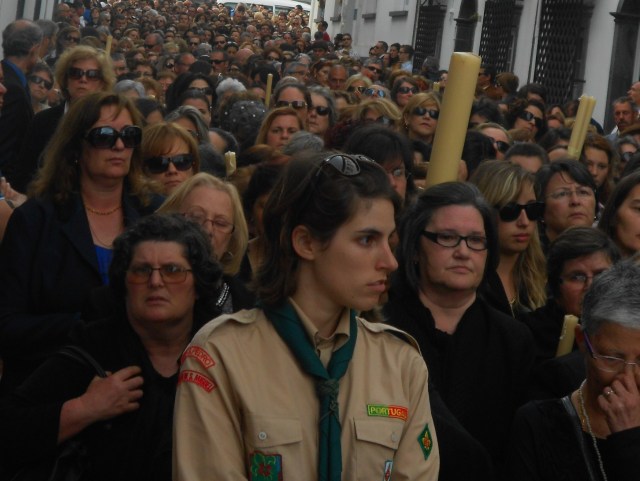
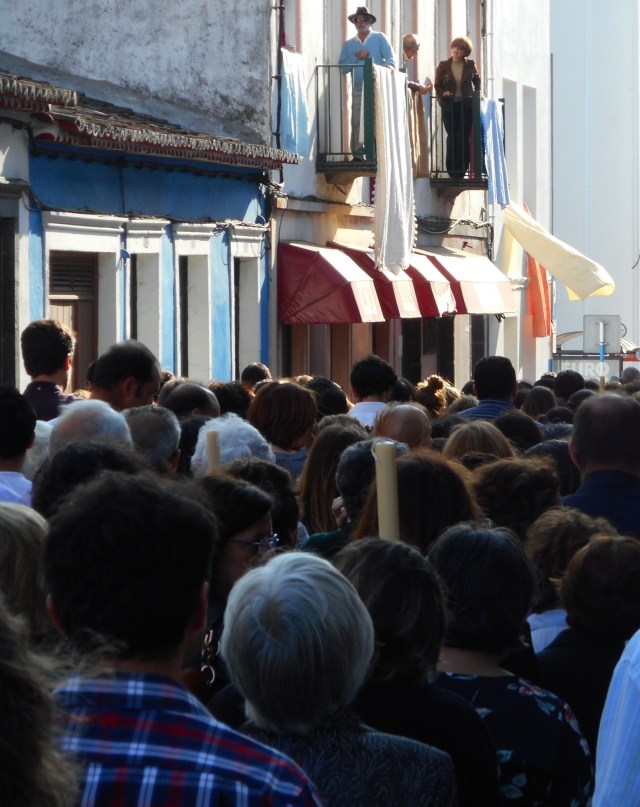
Every Sunday our parents would take turns entertaining the family. There was much laughter and fun and great food all the time, especially when it was my paternal grandmother’s turn to host.  She always had a tray full of biscoitos (biscuits), malasadas (a kind of doughnut), and other treats ready for her grandchildren, and she was only happy when her tray of goodies was empty.  Our parents tried to keep all the traditions of their island home alive. They still cooked with chouriço (sausages), morcelas (blood pudding), couves (collard greens), pão de milho (corn bread), and vinho (wine).  We also attended all the festas and processions at St. Mary’s Church on Bathurst Street, where all the Azorean families congregated to relive all the traditions of home, including the most important one of all, “as Festas do Senhor Santo Cristo.”

We children spoke Portuguese at home and English at school.  My cousins and I had fun giving Portuguese titles to all the pop tunes we’d hear on the radio. We renamed all the songs we liked. Curtis Mayfield’s Superfly became “Super Mosca”; Stairway to Heaven became “Escada para o Céu.” We slowly, and without knowing it, learned to blend the tongue of our birth with the language of our adopted land. In time you would hear Portuguese conversations about the “streetcarro” and then we forgot that the word for garbage is not “garbicho” but lixo.  We began to form a new language, a mix of the old words with the new words, and if people back home were to hear us, I am sure, they would have been shocked and disappointed, thinking that we were trying to show off.  What they would not have known is that we began to forget some of the old words as we stopped using them.  But it would take me a few years before I stopped thinking completely in Portuguese, and when that happened, the English language became the most prominent way for me to communicate and express myself to the world.

We all made Canada our permanent home.  I remember how proud my parents were when they became Canadian Citizens and to this day my mother praises this country for giving our family the best lives possible.

I still live in Toronto, now in the east end, near the Scarborough Bluffs. Often, I walk the short distance down my street to the edge of the Bluffs where I can look down below and see Lake Ontario with its vast gentle waves. And when I lean on the fence, overlooking the lake, I am transported back to my childhood home – an island surrounded by an ocean that is wild and vast – an island with magical lakes, hot springs and geysers – an island with green gentle hills and roads overflowing with blue hydrangea bushes – an island rich in religion and colourful feasts – but most of all an island where I remember laughter and joy amongst family and friends in those early years of my childhood.

And every time I gaze out over the lake, I can almost smell the salt sea air of my mid-Atlantic Ocean home, and I wonder if those black and white jersey cows across from our old house are still there.

  Written in 2008 to commemorate the 40th anniversary of my arrival in Canada.


Posted in Uncategorized | 2 Comments