Coming to Canada: Part 3, Arriving in Toronto

Family Reunion by Emanuel Melo

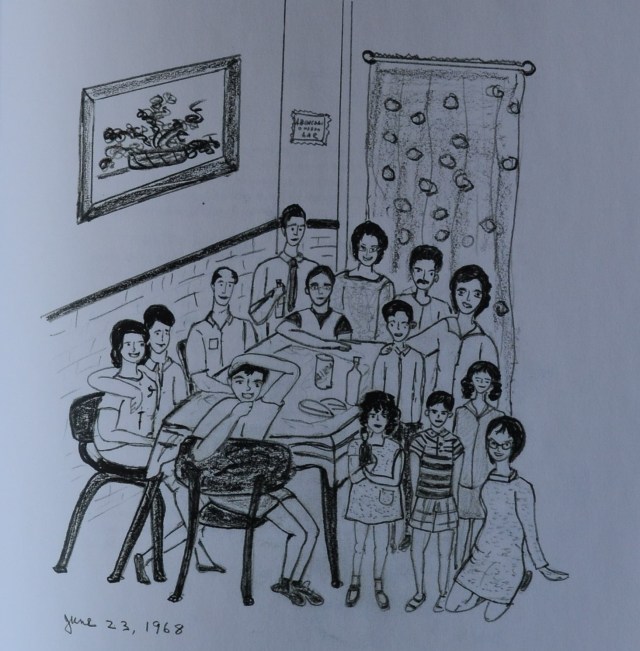
When we arrived at my aunt’s house, there was no place for us to stay but the basement. She, her husband and two children lived on the main floor. Upstairs lived my younger aunt and uncle with their three children and my paternal grandparents. That made a total of 14 people in one house! Yet, we somehow managed to get along very well. I think all our parents were so happy to be together again that they did not mind living in such close quarters.

Within a few days of arriving in Toronto, I was sent to school. Luckily, Charles G. Fraser Public School was just a few steps away from our house on Euclid Avenue. My cousins did their best to teach me some English so that I could get by on my first day. Once I arrived in the classroom and the teacher began to ask me questions, all I could answer in return was, “My name is Emanuel Duarte Cabral de Melo.” He kept asking me over and over again and the children were laughing at me. During recess I asked the other Portuguese children what was so funny and they said, “Well, the teacher was asking where you live, how old are you, where do you come from, and all you kept answering was your name.” I was sent to special English classes for new immigrants so that I could learn to get along in my new country. I had to learn to make the “th” sound and learn about the letters w and y. It was all very confusing but after a while I began to understand English.

When my class went out into the school yard to play baseball, I tried very hard to hit the ball with the baseball bat, but no matter how much I tried and no matter how hard the other kids encouraged me to hit it, I never did. We didn’t play baseball back in São Miguel. I had never seen a baseball bat in my life and, besides, I never cared for sports that much anyway. After that first try at hitting the ball, I didn’t go out to play baseball again.

I will never forget how I learned the meaning of “I Love You.” One night, my cousins and I had watched “Whatever happened to Baby Jane” on TV, where frightening Bette Davis, crazy eyed, shouts up from the bottom of the stairs to her bedridden sister, “I LOVE YOU.” I kept thinking of those mysterious words. The way she said them, I thought, they must have meant something awful, and so the next day I asked my cousins what the words meant. They said that if I wanted to find out, I should go up to my oldest cousin and tell her, “I Love You.” She was sweeping the front yard at the time and when I said it to her, she hit me over the head with the broom and my cousins laughed so hard that they were doubling over with laughter. After that, I could not say “I Love You” for a long time.

I was mesmerised by television as this was the best thing about Canada. I was fascinated by all these little people, buildings and cars that somehow fit inside that little box, all in black and white. Every night, after dinner, we would all sit together and watch shows like The Avengers, The Red Skeleton Show, and The Ed Sullivan Show. On Sunday afternoons we watched The Lawrence Welk Show and Tiny Talent Time. Every Saturday night my father, my grandfather and uncles enthusiastically watched Hockey Night in Canada while the women were in the kitchen cleaning up, baking, talking, and sewing. As I spent more time watching television I discovered other shows like Bewitched, Gilligan’s Island and I Love Lucy. These were some of the shows that captured my imagination. The most magical TV moment of all was when we all sat hushed together in awe and watched the first landing on the moon in 1969.

At the end of winter, I liked going outside into the garden to watch the snow start to melt. Snow was still mysterious and wonderful to me and I tried to taste it, surprised by its lightness and blandness. Snow muffled and hushed all outside sounds, creating a silence unknown to me back in São Miguel where street sounds were always loud and alive with the clicking and clacking of animal hoofs and people’s footsteps on the cobblestones. In Canada, all you heard was the muffled swish of cars going up and down the streets through the snow and slush.

Less than two months after our arrival in Canada, my mother received a letter from her brother, who was about to leave São Miguel with his family for a new life in the United States. He wrote how my grandmother was very ill and that my mother should go back to take care of her. My mother was heartbroken. She had spent three years away from her husband and now she was forced to leave him. It was the last day of March, a Saturday, I remember, and my father cried and cried, inconsolably, at the prospect of living without me and my mother again.

I felt stunned, finding myself back at the airport and getting inside an airplane to go back to the Azores without any guarantee that I would ever come back to Canada. This time, the magic of flight was gone.


coming-to-canada-part-3-word-cloud

Word Cloud created by Stephen Dow


Written in 2008 to commemorate the 40th anniversary of my arrival in Canada.

Posted in Uncategorized | 4 Comments

Coming to Canada: Part 2, Leaving for Toronto

Campo de Santana by Emanuel Melo

When my father arrived in New Bedford, Massachusetts, he lived with his aunt and uncle and their son. While there, he found a job pressing suits during the day and, in the evenings and weekends, he took it upon himself to organize his uncle’s warehouse. His uncle was so impressed with how tidy and clean the place looked that he wanted my father to stay a bit longer. However, my father’s US visitor’s document expired after seven months, so he crossed over the border with Canada to live with his older sister, her husband and their two children in the city of Toronto. They had been the first of our relatives to leave the Azores and establish a new life in Canada.

In Toronto, my father did various jobs, including work in construction and other backbreaking manual labour such as jack-hammering concrete near streetcar tracks. He even worked for a time on a tobacco plantation near Georgetown – a town several hours from the city. After three years, my father returned to São Miguel to be with my mother and me. My father had been away so long that I almost did not recognize him. He was like a mysterious stranger from a faraway place that I knew nothing about except for what I saw in the photographs he had sent me over the years.

Two months later, he brought my mother and me to Canada where we joined my cousins, paternal grandparents and my two aunts and uncles. When the day came, we left our house through the darkness of early morning, without even saying goodbye to my maternal grandparents. It was raining hard and we carried suitcases down the wet cobblestone street. I thought we were on our way to visit relatives in the country, but it was only then that my parents told me we were going to Canada. I was so shocked that I wanted to run away. I didn’t want to leave my home, my friends, and my grandparents. I wasn’t even given a chance to choose a favourite book or toy to take with me.

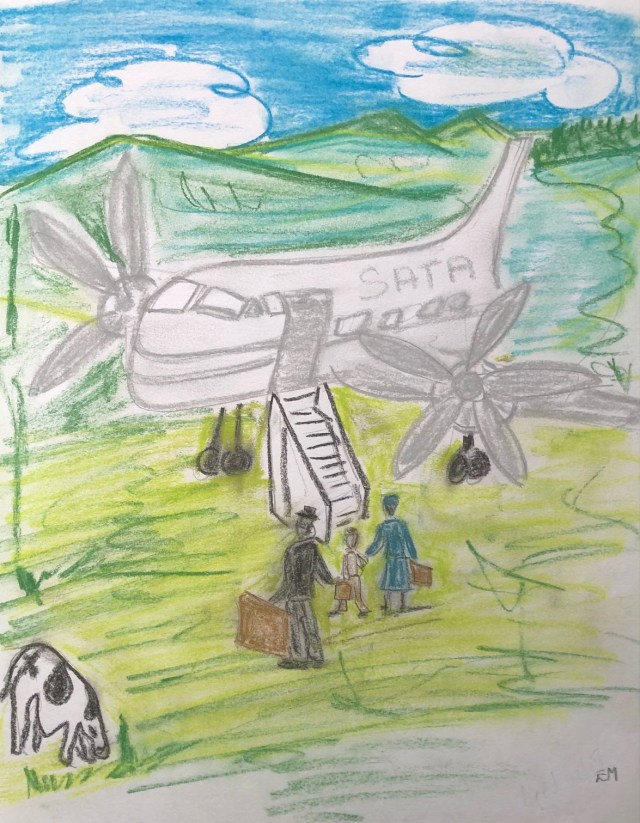
We walked to my mother’s best friend’s house where we changed from our wet clothes into our travelling clothes. My mother had sewn a brand new dress for the trip and a new suit for me. From there we travelled to the airport. In those days, the local people jokingly called the airport in São Miguelaero vacas,” as it was nothing more than a big field where cows grazed nearby. There was a small shelter room where we waited for the SATA airplane to come and take us away. I watched people saying goodbye to each other with only their tears and embraces.

It was my first time seeing an airplane up close. Up until then, an airplane was a thin matchstick moving across the sky once a week over our house. But now, I walked toward the grass runway and climbed the stairs to get inside a real airplane. It was so small that it could only carry twelve passengers. I was so nervous about this new adventure that I wanted to stay by my parents’ side for the flight. However, the stewardess escorted me to the very front where I was to sit by myself behind the cockpit. “O menino fica aqui,” she told me, “Little boy, you stay here.” As soon as her back was turned I ran back to my parents, but was sternly brought back to my solitary seat where I could see the pilot and his panel full of strange instruments. I was very scared, indeed.

Soon, the engine began to roar and the small propellers began to spin round and round. The airplane started to move and then, without any warning, the little aircraft lifted from the ground and made its way up, up into the blue Azorean sky. I was mesmerised by the view out of the small round window as I watched the greenest parcel of earth get farther and farther away from me until the sight of the blue hydrangea, marking the highways and fields, blurred with the blue of the vast sky and ocean below.

We landed very shortly on another island, Santa Maria. This was the island where the big jet airplanes landed and took off with immigrants to Canada. There must have been some engine trouble, or some other reason to keep us there, because we had an unexpected stay on this island for several days. We stayed in a hotel where there was a large dining room with big round tables decorated with linen tablecloths and napkins and plates with rolls and butter. Every night, after dinner, all the children would leave their parents’ tables and go sit on the floor to hear a singer and a band play.

The day finally came for our departure. The Air Pacific airplane was a hundred times bigger than the little SATA one that brought us to Santa Maria. I was given a window seat next to my parents where I could always see a bit of land outside the window until I realized that what I was looking at was only the long wing of the airplane.

After many hours flying across the Atlantic Ocean, we first landed in Montreal. It was February and we had to walk down a flight of stairs onto the tarmac before heading for the shelter of the airport. In my little cotton grey suit I could feel a cold that I had never felt before. And I saw something so foreign to me: snow! It was like a beautiful blanket covering everything in white. In São Miguel our winters were only rain and damp wet weather. But here, there wasn’t a sign of green anywhere at all. To me, Canada was just grey and white and that was very strange to see.

From Montreal we took a connecting flight to Toronto. My cousins, aunts and uncles, and my grandparents were waiting for us at the airport. I had not seen my little cousins for a long time, but they still looked just as I had remembered. I was so glad to see them that I almost forgot how much I missed my home in São Miguel. I also met my other two cousins who had come over to Canada when they were very little. Now, I would be living in their house along with the rest of the family.

I found myself very far away from my green island home, and suddenly in the middle of a vast city, made up of tall buildings and long wide streets, all spread out in a perfect grid going far into infinity.

coming-to-canada-part-2World Cloud created by Stephen Dow


Written in 2008 to commemorate the 40th anniversary of my arrival in Canada.

Posted in Uncategorized | 5 Comments

Coming to Canada: Part 1, My Azorean Childhood

Ponta Delgada by Emanuel Melo

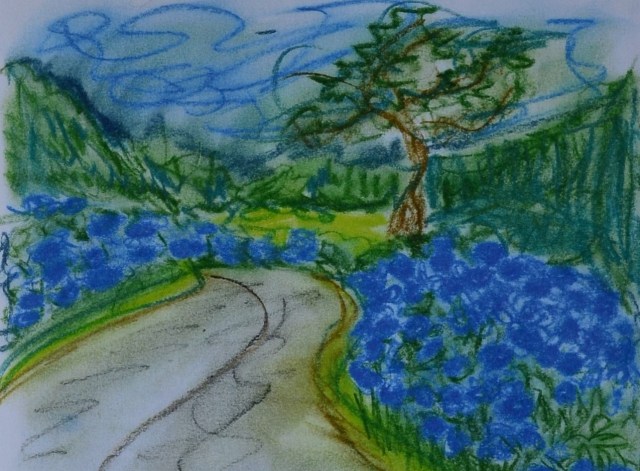
A long time ago, I was born on an island, right in the middle of the great Atlantic Ocean. My childhood years were spent on São Miguel, the biggest of the nine islands that make up the Azores. My family and I lived in the port city of Ponta Delgada, where Portuguese explorers arrived and began to populate the island in the 1430s. Our house was on the outskirts of the city, away from the ocean view and up toward the road leading out to other towns with names like Arrifes, Fajã de Cima, Fenais da Luz, Ribeira Grande, and far away Nordeste, home to my father’s family. Travelling along these country roads you would see miles and miles of blue hortênsias (hydrangea bushes), or nevelões, as we locally called the flowers that graced the sides of our dirt highways and overflowed from the black stone walls that separated the fields from one another.

Across from our house there was a small farm with a cow pasture surrounded by a wall made of black volcanic stones. As a little boy, I loved leaning on my parents’ bedroom window sill on sunny days and watching the white and black Jersey cows graze lazily on the field grass. In September, the time of the harvest, I would lean on the same window sill and watch the farmers cut the wheat and corn that had grown all summer long. Then, it would be taken away in big wagons drawn by sturdy oxen that swayed from side to side, chewing and drooling while carrying their big loads down to the busy market in the heart of the city. Every Friday in the early morning, our street would come alive with the sounds of the visiting farmers who came down from the other towns with their cattle, sheep, horses and carts filled high with hay to take to market. Again, I would watch from the window. Our sidewalk was so narrow that with all the animals and carts and the farmers with their black-shawled wives walking down the street, it was impossible to stand outside our front door.

Cascading over the volcanic black stone wall across the street were beautiful small white roses with prickly green leaves. Sometimes I would walk over and pick some to decorate my little shoe box altar to the Blessed Virgin Mary. These I would place in little vases on either side of the tiny altar. I made candles by rolling a long strip of coloured paper into tight round circles and then by pulling the paper up, I would form a candle. Flowers in place and candles made, I was ready to play church. I tried to make my altar look just like the one in the Matriz (parish church) of São Sebastião where I went to mass every Sunday. This beautiful church was many centuries old and still had its handsome Manuelino style doorway from the 16th century. The arches inside the church were made of caramel coloured stone set against stark white walls. The main altar was a magnificent baroque treasure. On either side of the nave there were several small side altars, all with niches elaborately carved out of rosewood with gold leaf and beautiful statues of saints showcased in them: Santo António, São José, and the loveliest of all, Nossa Senhora de Fátima, with a cascading array of roses on her altar, and tall candle sticks rising above the flowers, just like my little shoebox altar at home.

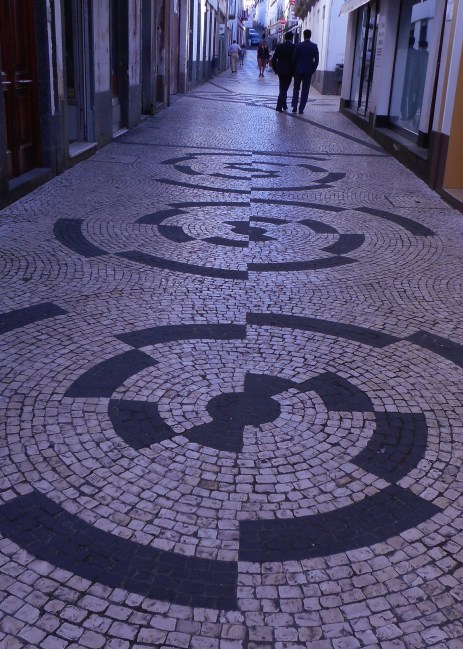
Every year, on the Monday after Easter, the Procissão dos Enfermos (Procession for the Sick) would pass by our street. The neighbours got up very early in the morning and made beautiful “carpets” out of flower petals and an assortment of coloured sawdust in intricate designs in the middle of our black cobblestoned street. This was to honour the Blessed Sacrament, carried by a priest who went to visit the sick of the parish to give them communion at home. He stood under a gold embroidered canopy carried by four men. The priest had a liturgical shawl around his shoulders made of fine silk and gold, and he covered the base of the gold monstrance while he held it up to show the host inside of its round centre, radiating the Divine Presence. People would stand on the street to watch the procession then kneel as soon as the priest would pass by them. An altar boy would lead, incensing the Blessed Sacrament, and the clouds of smoke would envelope the canopy and the priest within it. It was all very sombre and magical.

There were many other processions, where groups of men wearing red capes called “opas” would carry the “andor” (a litter) on their shoulders supporting the statue of the Virgin Mary on it or other saints that were being honoured. Little girls dressed in angel costumes with big white feather wings attached to their back always took part in the processions. All the houses displayed their best colchas (bedspreads) made of silk or linen which would be draped over second floor window balconies, decorating the houses in an array of beautiful colours and designs.

Once the procession passed by, and the people went back into their houses, I would go out into the street and gather as much of the coloured sawdust from the trampled decorated “carpets” as I could carry. Afterwards, inside my enclosed yard, I would make my own “carpets” of sawdust and play procession with my little primos (cousins) who lived with me. I would take the lead role and carry a big banner at the head of the procession, then they would follow me in great solemnity as we sang hymns to our Blessed Lady.

A treze de Maio, na cova da Iria,

apareceu brilhando, a Virgem Maria,

Ave, Ave, Ave, Maria,

Ave, Ave, Ave, Maria.

The biggest feast on the island was always after Easter when the procession of O Senhor Santo Cristo would go through all the city streets followed by the “arraial” (fair) in Campo de São Francisco in the evening. That’s when the filarmónicas (big brass bands) played into the late hours in the “corete” (a bandstand) and all the streets were decorated with colourful lights and garlands made of fresh flowers and paper lanterns. People came from all the towns of the island to attend the “festa” and to show their great devotion to the statue of the miraculous Christ, a gift to the island from Pope Paul III in the 16th century. The statue of the “Ecce Homo” is a bust of Jesus, with a crown of thorns made of gold, his bloody face looking at you with tenderness, his shoulders draped in a red fabric cape with gold embroidered on it, holding a golden sceptre in his tied hands.

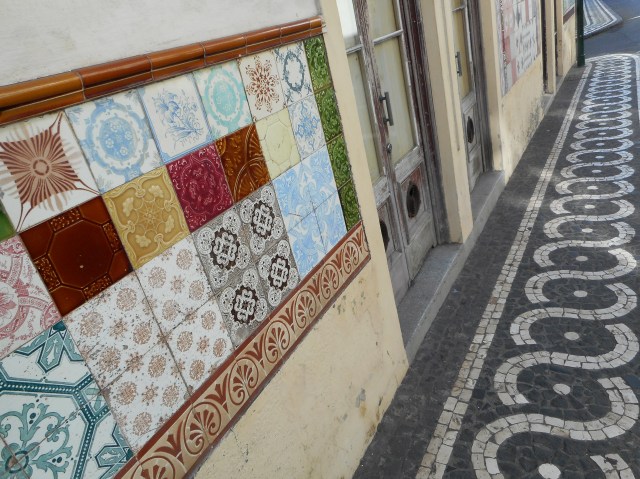
The people look up to the statue with devotion, begging God to grant them healing and to cure them of all sorts of illnesses. Many women and men would crawl on their knees around the Campo de São Francisco, carrying tall círios (candles) in their arms to “cumprir uma promessa” (to fulfil a promise) they made to Senhor Santo Cristo, if He granted them their wishes. The statue is kept in a beautiful convent covered with Portuguese blue and white azulejos (decorative tiles), showing the life of a saintly nun, Teresa da Anunciada, who promoted the cult of the Holy Santo Cristo back in the 17th century. The last time I saw this special procession in São Miguel was when I was nine years old with my mother and my maternal grandparents.

Everyone who immigrated from the Azores, and especially from the island of São Miguel, brought their love and devotion of O Senhor Santo Cristo to wherever they went, especially to Toronto, where at St. Mary’s Church there has been an annual feast and procession of O Senhor Santo Cristo since the 1960’s.

Another important feast was that of São João Baptista, which took place every twenty-fourth of June. Each neighbourhood would celebrate the feast with street decorations and huge fogueiras (bonfires) lit in the centre of the street at night time. The boys and men jumped over these fogueiras for fun. I was never allowed to join in. But one thing I could do on the feast of São João Baptista was to gather hortelã (mint) and alecrim (rosemary) and other fragrant herbs and add them to a bowl of water that would be left outside overnight for St. John’s blessing. In the morning we would wash our faces with this cool soothing water and feel clean and fresh and holy.

When I wasn’t playing processions, attending festas, or going to church, I tended to my silkworms, kept inside a shoebox, where they built their cocoons. I would walk up the street to a house that sold the right kind of leaves for a silkworm to eat. Hanging outside the door was a leaf to let people know that you could buy it there. Other houses might have a “couve” leaf hanging outside the door to let people know that you could buy collard greens to make “caldo verde” soup. After bringing the fresh leaves home, I would freshen up the box and watch the silkworms take little bites out of the tender green leaves. But it was the cocoons they made that were the most interesting to watch: round yellow cocoons, hidden in a shroud of sticky gauze material that the silkworm wove around the cocoon before it would break open to reveal the delicate butterfly inside.

I had a pair of white rabbits given to me every summer. Every day I had to make sure that they got enough carrots and other vegetables to eat. I also had to clean out their big cage, which was always full of small black pellets. My two rabbits entertained me for hours and I even learned how to twitch my nose just like they did. My mother told me to stop doing that. Every year, in December, my mother would take me to the Convento da Esperança, where we delivered my poor little rabbits as a spiritual gift offering for the nuns in thanksgiving to St. Lucia who had cured me of an eye infection when I was a baby. I wished I could have kept my rabbits but I had no choice but to give them up and wait for new rabbits the following summer.

I remember once when I had to be taken to the hospital to have my chin stitched up. It was laundry day and I was playing with the dirty sheets. The washing was done in the yard, inside a big tank where clothes got scrubbed by hand and then hung up to dry. The ground was all cement. I took a big white sheet from the dirty pile, wrapped it around my shoulders like a cape and twirled myself around, faster and faster, while the sheet floated in the air and I became very dizzy indeed. Boom, I fell down face first and cracked my chin open. I ran upstairs yelling for my mother. It felt like my chin was this big gaping hole, blood flowing everywhere. My mother panicked. “Ai, Jesus,” she screamed. My father drove me to the hospital where they stitched my chin.

On the way home, to make me feel better, my father stopped the car, and walked across the street to a toy shop where he bought me a little iron I had wanted for a long time. I liked to gather all the little scraps of fabric from my mother’s sewing kit and I made little dresses and pants for my cousins’ dolls. The toy iron was needed so that I could press the brand new clothes. I knew how to use a needle and thread because I watched my mother make all kinds of home-made clothes, like dresses, shorts and shirts. In those days, most of the clothes you wore were made at home and not store bought. My mother was a great costureira (seamstress).

School was a very serious place. We sat in neat rows of old-fashioned desks that had a hole on top of the desk which held a porcelain inkwell. In those days, we learned to write with fountain pens and would always get our fingers stained with black ink that spilled out from the nib. In drawing classes we used aguarelas (watercolours). A special uniform called a bata was worn and every morning we would stand at attention and sing the national anthem – Heróis do Mar – before saying our morning prayers. We learned that the most important thing to do was to respect and obey our Pátria (our Country), and our Santa Igreja Católica (Holy Catholic Church).

I loved books and very often had new ones bought for me. One day, when I was seven, while in a book store with my mother, I wanted her to buy me a particular book that she could not afford to buy. I got really angry when she said “não” so I stormed out of the store and walked all the way home from downtown to our house. On the way, I walked past my paternal grandmother, who was shocked to see me walking alone without my mother on the busy streets of Ponta Delgada. “Onde está a tua mãe?” where is your mother, she asked. I lied and told her that I was sent home to get her rosary while she stayed in church waiting for Mass to start. My grandmother’s mouth dropped for she could not believe my mother would ask me to walk home alone. I kept on walking, never realizing that my mother was following me as fast as she could. When she got home, my mother was very angry and wanted to hit me with a sturdy clothes brush. But my maternal grandmother stood in her way, protecting me as I hid under the table.

All my avós (grandparents) lived with us. Upstairs, there were my maternal grandparents. Avó stayed at home and took care of the house. Avô was a serralheiro, a blacksmith. I loved to stop by his oficina, his shop, after school to see the red hot iron tongs go up in smoke as they were plunged in the water to cool them down. Downstairs lived my paternal grandparents. They came from the country, from far away Achada, in the district of Nordeste. Avó made delicious country soups with feijão (beans), couves (collards greens), and other wonderful vegetables, with a touch of chouriço (sausage) added to the soups for flavour. I had a set of clay dishes that I bought during one of the festas and I would go into her kitchen and ask her to fill up my little pot with her hot fresh soup. Avô had been a barber back in Achada and a carpenter on the island of Terceira at the American Military base.

One of my aunts, with her three children, also came from Achada to live downstairs in our house on Caminho da Fajã de Cima, while their father worked on the big cruise ships that left the doca (the dock) of Ponta Delgada every few months. When they came to live with us, my father had already left the island. He had owned Mercearia Esperança, a grocery store, right across from the old church of Santo André and sometimes I would stay with him at the store and watch him work. One day in November, when I was six years old, my mother told me that he had gone away to America. I was so upset that I hid under the skirt of my mother’s Singer sewing machine table. I didn’t understand why my father had to leave. My mother tried to explain he went away to find work so that we could have a better life. Why did we need to have a better life than the one we had already? I just wanted to be with my pai. But with time, I learned to live with the idea that my father was gone.

I liked school and playing with my friends. I had a pião, (a top), and I would wind it up with a special string and then let it spin on the ground. This was fun. Or we would play with marbles. But at home I would sit by myself and do drawings with my aguarelas or I would read one of my favourite books, A Gata Borralheira, A Herdade da Branquinha, O Touro Azul, A Branca de Neve, all in Portuguese. In the Azores we spoke only in Portuguese. Sometimes, I would hear English music coming from the juke box of the café across from my school. The same year that I left the island, it was “We all live in a yellow submarine” that was being played. At that time I did not know who the Beatles were nor did I know their music. That came later when I went to Canada. My friends and I liked to sing along to that English song even though we did not know what the words meant; we just liked the melody.

While my father was away, my mother and I would go out on Sunday afternoons to visit her fine lady friends. At these parties I had to wear my best suit and bow tie. Her friends’ tea parties were very proper and grown up. I didn’t mind going to them because there was always a table covered with delicious treats: everything from pastéis de nata (custard tarts) to bolas de coco (coconut balls) and marzipan shaped into peras (pears) or laranjas (oranges) or morangos (strawberries). Every kind of cake imaginable graced the table, like bolo de ananás (pineapple cake) and bolo de laranja (orange cake). It was all there for me to try, except the licores (liqueurs) made of varied fruits. Those were only for the ladies to drink. One time, I was given a tea cup, a proper china tea cup to drink from. My mother taught me the proper way to hold it with my fingers and not my hands. The cup was very heavy and my fingers were very tiny. I almost let the cup fall down along with the hot tea but I tried really hard and was able to lift it up to my lips and take a sip without spilling a drop. And, even though we had eaten so many sweets by the end of the party, my mother always stopped on the way home at the pastelaria to buy some hard sugar coated biscuits to share later with our evening chá (tea).

And so, for three years, while my father was away working hard, I continued with my studies, did my drawings, read my books, and spent time with my friends. Finally, the day came when my paternal grandparents left for Canada, followed by my aunt and my little cousins. On the morning they left, I lay very still in bed fingindo (pretending) to be asleep. I could hear them approach my bed, trying quietly to give me a goodbye kiss without waking me. After their departure our home felt empty with only my mother, my maternal grandparents, and me waiting for my father to come back.

Coming to Canada WORD CLOUD Word Cloud created by Stephen Dow

In 2008, to mark the 40th anniversary of my arrival in Canada, I wrote this story of the journey from my place of birth in the Azores to start my life in Toronto, as a gift for my family; especially for the younger generation. It was and is my hope that, through my writing, this Canadian-born generation will have a tiny glimpse into a faraway world that still resides inside of me.


Posted in Uncategorized | 4 Comments

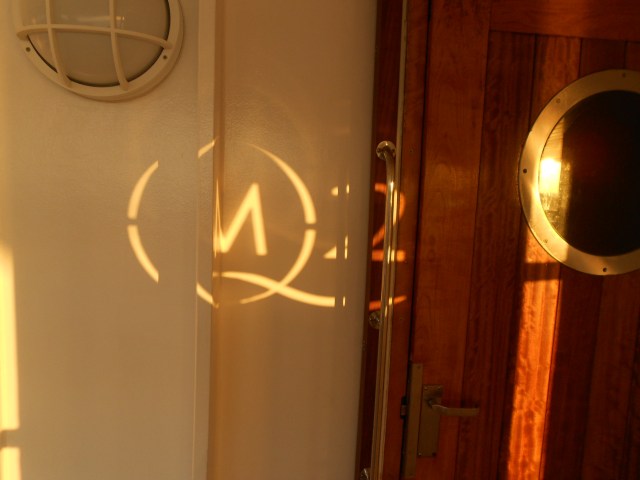
Coming to America on the QM2

I embarked on Queen Mary 2 in expectation of twelve glorious days of ocean crossing from Southampton to New York. Travelling to North America on this magnificent ocean liner made me think of the immigrants of long ago who had crossed the ocean to the New World. It was, however, disingenuous of me to find kinship with them, for I was on this voyage, not to find a better life, but to celebrate my already better life.

I leaned over the railing of the open air deck, looked down, mesmerized by the swelling waves, and I thought about my Portuguese ancestors; a people once enticed by the sea to discover new lands. In the last century, so many left the Continente (mainland Portugal), and just about depopulated the Azorean islands; eager to make enough money to buy the American dream.

The Saturnia brought many to North American shores. Families had saved up enough escudos to pay for one passage fare for a father or a brother to make the journey. These men crowded the steerage below, felt sea sick, withstood the roller coaster ride of rough waves, and longed for their wives and children. They arrived tired and weary in Halifax, Boston, New York.

Later, when air travel became accessible, the ocean crossings were abandoned for the convenience of a seven hour flight to Boston or Montreal. But the journey out, whether by long days at sea or short hours in the air, always meant a tearing apart, a leaving of a home. The only contact with family was through the anticipated weekly letters sent back and forth, to share news and saudade. I am old enough to remember the letters my mother received from my father, telling strange tales of a world I could not imagine. It was only years later, when I came by airplane from the Azores that I saw Canada for myself.

It surprised me to have these thoughts as I explored QM2, where there were no signs of immigrants or hardship. But then I met the most extraordinary young couple, who were emigrating from the UK to Queen’s, New York.

I was intrigued by Michael and David from the moment I first spotted them during the pre-sailing ceremony on the uppermost deck where we had all gathered to watch the Irish Guard performing a ceremonial marching display. The young couple, perhaps in their late twenties or early thirties, clung to each other in a closeness that even in the thick crowd, implied a loving intimacy. The dark wavy haired one, wearing glasses, reminded me of me at that age, while his blond partner reminded me of my partner, who stood next to me, snapping photos of the guards marching back and forth in a display of rhythmic synchronicity. I envied this younger version of “us” for doing something that would have been impossible for me to experience decades ago: having my partner put his arms around me while standing on a magnificent ocean liner.

Two nights later we docked in Liverpool to the sounds of Ferry Cross the Mersey from the quay, where people waved up to the ship, as we, the lucky ones, waved back from our cabin balconies. The next day we were in Liverpool Cathedral for a commemorative concert to celebrate Cunard’s 175 years of service. The Triumph of a Great Tradition – two hours of readings by dignitaries, solo performers, The Royal Liverpool Philharmonic Orchestra and Choir, The Liverpool Cathedral Choir, and the Band of the Welsh Guards. It was an emotional event that dispelled any notion of British coldness. The singing of Jerusalem, Rule Britannia, and a boisterous singing of God Save the Queen by everyone, floated up to the cathedral’s vaulted sky.

We all enthusiastically waved our Cunard and British flags, and for a moment I felt a knot on my throat and a tear welling up, emotions that betrayed loyalty to my very own Pátria. Ah, to be British! And finally, the somber entrance of the Band of the Welsh Guards playing Finale 81, a hauntingly beautiful, ethereal piece that confirmed my love for “This blessed plot, this earth, this realm, this England.”

Later that night, hundreds of Liverpudlians crowded the quay, singing and waving flags, to see us off. Firework lit up the sky. As QM2 sailed on towards the ocean I could still hear Time to Say Goodbye sung by Andrea Bocelli and Sarah Brightman. Soon we were out of hearing distance and I felt a lonely silence around me. I went down to the King’s Court to console myself with a late night “snack” of a little sirloin steak. Our lives on board returned to normal but everyone still talked about Liverpool for days after.

By now I had almost forgotten the young couple until I finally got to meet them at the Friends of Dorothy LGBT cocktail hour in the Commodore Club, where a group of men mostly from Germany, Australia, UK and USA, socialized. My partner and I were the only Canadians. Michael introduced himself to me when he heard my name, curious about confirming my ethnicity. He, too, was Portuguese, originally from Lisbon, with family still living there. He and David, his British spouse, were celebrating their one year wedding anniversary, as we, by coincidence, were also doing. Perhaps it’s a generational thing but the word spouse still sounds unreal to me, growing up during a time when even the hint of my sexuality was unthinkable.

They married in Portugal, in a Palácio in Sintra, with most members of their families present. They were both graduate students who had chosen this ocean liner as their preferred method of moving their belongings to North America. They had, Michael said, boxes and boxes stacked up in their cabin, since Cunard allows passengers to bring on board as much luggage as they can fit in the cabin. They were excited about starting a new life in Queens, New York.

It gave me great satisfaction to know that two Portuguese men, of different generations, are now living at a time when they can marry their male partners and afford to travel in luxury. I suspect that Michael comes from a wealthy family and that for him to travel this way is not something extraordinary. But mine had been a family of poor immigrants who paved the way for me to, 50 years later, have the opportunity and the means to travel the Queen Mary 2.

My modest success is due to my parents’ daring, a long time ago, when they left their home and embarked on a life changing journey. I wished my father, my aunts and uncles, and my grandparents, who are all now gone, could have seen me on board, waving from my balcony cabin, sipping champagne in my tuxedo after a formal dinner. I know that if they could have seen me, they would have shaken their heads in disbelief and wonder how much the trip had set me back, and what a waste of money it was. A good down payment on a house back in 1973. But I think that they would ultimately smile with triumphant happiness. Sim senhor, Yes, sir, I could hear them saying, nodding their heads with pride.

QM2 made pilgrimage stops at famous ports, a homage to all this immigration of the past: Halifax, Pier 21, where so many Portuguese immigrants had once arrived; and Boston, where that night 2, 500 passengers stood on the various decks, in their finest formal, drinking champagne to watch a spectacular firework display before heading out to our final destination: New York.

It was early morning when the QM2 crossed beneath the Verrazano-Narrows Bridge, surrounded by serious helicopters, homeland security at their tightest; I am not sure if to protect us from the enemy or if they assumed we were the enemy. Even on the water, police with big guns rode little speed boats, escorting us to our final docking and disembarkation. We finally saw the iconic Statue of Liberty greet us into Lower Manhattan and the voyage was over.

We had a few hours left for a final breakfast, and goodbyes to people we had met. I did not see Michael and David again, but I could imagine them fussing with their boxes and wondering how they would transport them to their new home. They will face challenges, but they have the protection of privilege on their side to help them make it, unlike the uncertainty so many other immigrants face when they arrive at their destination with nothing but perhaps their souls intact. The leaving of home and those we love, the challenges of starting a new life, are what we share in common. What we don’t all share is the luxury of taking the Queen Mary 2 to get there.


Also posted on Comunidades

Posted in Uncategorized | 3 Comments

To be Portuguese at Dundas West Fest 2016

Post 12 To be Portuguese at DWF

I felt energized as I listened to the sound of vibrant music played by local bands and watched thousands of people promenading leisurely back and forth, browsing through vendors’ tables, sitting in outdoor patios for a beer, or trying out the novelty of a few grilled sardines, all under a glorious sun.

But I had really come to the street festival to watch Nuno Cristo play the cavaquinho, to listen to poetry readings by Dolores Gontijo, Keyla Amorim (both from Brazil), and Gil Ventura (from Angola), as well as to join my Luso Vox writer friends, Aida Jordão and Humberto da Silva in a chorus rendition of paulo da costa’s poem, ser português/to be Portuguese.

We read to a small yet attentive group. A young Portuguese man wearing a soccer t-shirt stopped long enough to shout out a rebel yell at hearing us give examples of what it means to be Portuguese (loving your car more than yourself). He looked favourably surprised in hearing our words, and his pride at being Portuguese was vindicated by the loudness by which we shouted the litany of attributes.

Later, I meandered behind the festival tents, food trucks, and outdoor restaurant patios to revisit my favourite places, which were participating in the festival only on the fringes.

At Dundas Portuguese Bakery, the owner, a silver-haired man, stood by the front door of his darkened empty shop. I peeked inside and there they were, my favourite: bolos levedos languishing on top of the counter, unsold. I bought a bag to take home. I spoke to him and we reminisced about the old neighbourhood.  This bakery has been here for more than 30 years and he has seen many of his longstanding customers move away. Too bad that the new inhabitants of the area don’t know much about his massa sovada, pão de leite, suspiros, and more; all delicious to eat with a great big bowl of café au lait at home, especially the bolos levedos!

I was glad to see a barraca (stall) in front of St. Helen’s Parish Hall selling my favourite bifana sandwiches with sweet caramelized onions on a Portuguese papo seco. I sat on the lawn and while I ate with pleasure, I noticed the table of malassadas, still at $1.50 each, just like last year. The church ladies were just bringing fresh ones out, so warm from the oven that the sugar sprinkled over the fried dough didn’t have a chance to melt before reaching my eager hands. I ate one, and saved another to bring home, along with several freshly made rissóis de camarão.

I chatted with these lovely, warm and inviting women in our mutual Azorean Portuguese way of speaking. I felt at ease with them, for I know how they think, I know what to say to them. It was all so familial and comforting, giving me an intuitive sense of “we,” in our shared experience of the old world.

Post 12 To be Portuguese at DWFest

Satisfied with the conversation and my purchases I was ready to go home as I wished them well with an “Até à próxima, se Deus quizer.”

Posted in Uncategorized | 1 Comment

Dundas West Fest: Memória of a changing neighbourhood

Post 11 Atkins and Brock

Post 11 Atkins and B rock Avenue

This June marks the third anniversary of the participation by Memória Luso Vox Portuguese Canadian writers (Humberto da Silva, Aida Jordão, Irene Marques, Antonio Marques, Edith Baguinho, Emanuel Melo) in Dundas West Fest.

In the first year, we read on the street near the intersection of Dundas and Sheridan. Last year we read on the sidewalk in front of St. Helen’s Church as parishioners, mostly elderly, made their way to Mass, oblivious to our presence. Festival goers strolling up and down the street looked our way and kept on walking, but some stopped for a few moments to hear us read our stories and poems, shouted into microphones; yet the words were still carried off by the wind, drowned by several competing musical booths, until they vanished and blended with the sounds of the festival. But we were happy to be part of the cacophony of life on the street.

Perhaps some time later, a casual yet curious passerby, might remember having heard our words: the name Anita; or something about guns and a bird; or that eternity cuts and that words are dripping out of me and I need a bucket; and that a grandmother spent Easter alone. Perhaps then that person will seek out and look for MEMÓRIA: An Anthology of Portuguese Canadian Writers.

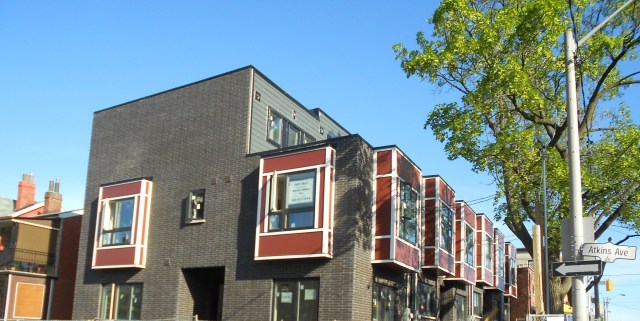
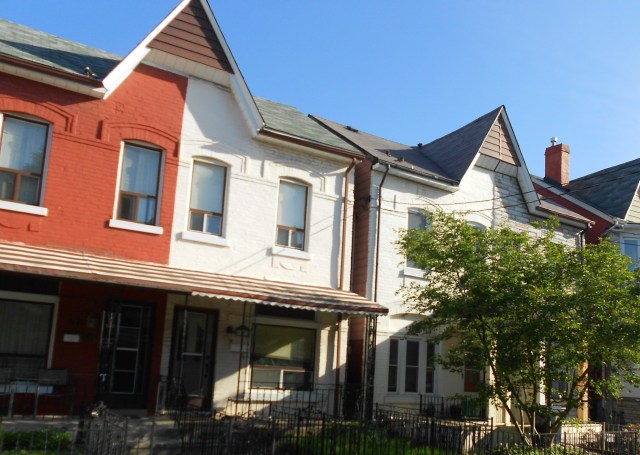
After the performance, I stayed behind to revisit the neighbourhood I had lived in decades ago. A time when mostly Portuguese immigrants occupied old Victorian row houses painted red or yellow. Now, there are condos going up, and a new cluster of townhouses has already appeared at the corner of Brock and Atkins, replacing an old evangelical church. There are fewer Portuguese businesses in the area. Some remain, crammed between new restaurants, coffee shops, bars, clothing stores. The sign for the Portuguese Barber shop is starting to fade, but at least it’s still there. With all these hipster guys moving in, needing haircuts and beard trims, maybe, just maybe, it will survive.

I saw gentrification asserting itself insidiously with the intent of staying. I observed young men with their tattoos and turn-of-the-century beards coming to and from apartments and houses long left by Portuguese families, who moved to Mississauga and Woodbridge and other suburban neigbhourhoods. It’s the old pattern of migration that is in the blood of all Azoreans, always looking away from their islands, whatever the definition of island may be, towards better and far off places.  Not all have moved away. Some are still comfortable staying in the “Dundash” area – their numbers in decline as they age and then…

What I found surprising was the effortless ease with which the remaining Portuguese were living side by side with the new immigrant group in their midst: the Anglo hipsters and the Vietnamese. I wonder what they think of each other and how they get along. Perhaps the newcomers are smug and proud of their ability to co-exist, to even learn to say, Bom Dia, to their elderly neighbour. Isn’t that the coolest thing?

There was a fundraiser in the lawn in front of the parish house; a maze of spread-out tables displayed the usual garage sale items. A young man whose facial hair would have won him a part in an Edwardian period movie, despite his green checkered shirt, shorts and tattooed leg, rummaged through bins full of kitsch, plaster figurines and colourful wall clocks in the shape of cats.  He smiled and waited patiently for his girlfriend to decide whether the glass grape cluster bottle full of some ancient liqueur was worth getting for their new apartment. In front of the church hall, a Portuguese brass band played, parish women sold homemade malassadas “yummy” at $1.50 each, (as written on the sign draped over the table), bifanas at $5 a sandwich, doce or picante, delicious! I ate two bifanas, the sweet juicy meat with sautéed onions on a bun dripping over my hands, sticky and satisfying.

Now I had enough of nostalgia for one day, and crossed town on the subway, feeling the long distance growing between the world I had just visited and the world I live in now. When I got home, I sat in my garden and ate the last of the malassadas, my fingers sticky from the sprinkled sugar that still reminds me of those days when my parents would come home with bags of these sweet treats, happy with their abundance and their life on Dundas.

Luso Vox Memória reading series launch at Dundas West Fest, June 7, 2014 and June 6, 2015 

Dundas West Fest June 11, 2016

Luso Vox writers Aida Jordão, Humberto da Silva and Emanuel Melo will be reading paulo da costa’s poem “ser português/to be portuguese” at 6 PM in front of the Toronto Housing Building at 1525 Dundas, just west of Dufferin.

Posted in Uncategorized | 1 Comment

Embrace the Island for Me

The Azorean poet, Gabriela Silva, had come from the island of São Miguel to speak to the students of the Portuguese Culture Course at the University of Toronto. I was anxious to see her, a writer I did not know, but who I hoped would bring the humid sweet air of the green and wondrous island of my childhood; hidden as it is in the immensity of the Atlantic.

I assumed I would hear Silva speak in the local dialect of my place of birth. However, the poet spoke in English so that everyone could understand. I became sad, to hear her in translation; disappointed that no word of my maternal tongue fell from her lips. Still, I thanked her, whispering in her ear, “When you return, give the island an embrace for me.”

It was autumn in Toronto. The sky was clear like a blue marble. I was sitting in the silence of my garden, looking at the luminous yellow and red leaves on the trees, caressed by the wind, dancing and falling to the ground, with a gentle swirl. The cold wind penetrated my skin, from tip to toe. I breathed deeply, taking in the frigid air like a chocolate ice-cream bar on a hot summer’s day.

I remembered the words of Gabriela Silva when she spoke about the weather in the Azores: its primordial mists, rain and humidity which leaves people with a heavy spirit that is the nature of these islands.

I had forgotten about the weight of rain and of fog. When I arrived in Toronto on a cold February day, I encountered snow: the Canadian winter stole my memory of the heaviness, darkness and fog of the island I had just left behind.

I have lived more than four decades in Toronto, yet there always remains inside of me a vague remembering of the ocean waves that both suffocates and liberates.

Gabriela Silva wrote that, “Wherever there lives an Azorean, whether he speaks bad English or poor Portuguese, he will always be a different being, distinct from others. He feels with the soul, has ocean in his guts, fog in his dreams, and longing in his gaze.” *

In these words I encounter my Self. When I walk the shores of Lake Ontario, with its gentle lapping waves, I hear an echo of the Azorean Atlantic Ocean. It’s an inexplicable connection that reminds me that no matter how much time I have been away from the island, those fogs, that rain and mist, continue to call me from the shore where I stand.

I wrote this reflection at the end of a cruel winter, with snow still covering my garden, despite the calendar indicating that spring had arrived, and I wondered, “What’s the weather like, right now, in my far away island?” And on a whim, I googled the airline that could take me back, SATA International, and booked myself a flight. I’m going to Ponta Delgada, and the anticipation of that encounter already gladdens my soul. I will go back and, myself, embrace the Island!


* Quote from Dizer Adeus, in “Abraço de Mar.” My translation.

Embrace the Island for Me is my translation of the Portuguese text I wrote for Mundo Açoriano, Dá um abraço à ilha por mim, published in 2014.


Posted in Uncategorized | 1 Comment

Dá um abraço à ilha por mim

Chegando à ilha de São Miguel                                                             Photo by Fernanda Sousa


A poeta Gabriela Silva tinha vindo da ilha de São Miguel, para falar aos alunos de português na Universidade de Toronto, e corri ao seu encontro, cheio de saudade para ver e ouvir uma escritora que não conhecia, mas que pensei me viesse trazer um pouco do cheiro marinho e húmido da ilha verde e deslumbrante da minha infância, escondida na imensidade do mar dos Açores.

Pensei que fosse ouvi-la falar, com o sotaque da minha terra natal. Todavia, a poeta falou em inglês para que todos pudessem compreendê-la. Fiquei triste por a ouvir em tradução, esperando que saísse da sua boca alguma palavra na língua materna. Depois da sua palestra, aproximei-me da poeta para lhe agradecer a sua presença, e, murmurei no seu ouvido, “Quando voltares, dá um abraço à ilha por mim”.

Seria outono em Toronto. O céu estava límpido e azulado como um berlinde. Sentava-me no silêncio do meu jardim e olhava as folhas luminosamente amarelas e vermelhas das árvores, que, acariciadas pelo vento, dançavam e caíam ao chão numa languidez suave e final. O vento, gélido, penetrava-me a pele, das pontas dos dedos das mãos e depois, descendo até aos dedos dos pés. Respirei fundo, chupando o ar frio como um sorvete de chocolate num dia quente de verão, caindo no meu estômago com um frio arrepiante.

Lembrei-me das palavras de Gabriela Silva sobre o tempo nas ilhas açorianas, das suas brumas, chuvas e humidade que deixam as pessoas com o espírito pesado da natureza primordial que são as ilhas dos Açores.

Nunca mais me tinha lembrado desse peso da chuva e dos nevoeiros. É possível que tivesse sentido esse peso dentro de mim quando era criança, mas a verdade é que, quando cheguei a Toronto, com os meus nove anos, num dia geladíssimo de Fevereiro, encontrei-me com a neve branca dos invernos canadianos que me roubaram a memória daquele peso e daquela escuridão entre brumas da ilha que deixei.

No entanto, apesar de viver há mais de quatro décadas em Toronto, sempre permanece dentro de mim uma lembrança vaga do mar que afoga a alma e ao mesmo tempo a liberta.

Gabriela Silva escreveu que “Onde estiver um açoriano, quer fale inglês escorreito quer fale português espúrio, estará um ser diferente, distinto dos outros. Que sente com a alma, que tem mar nas vísceras, nevoeiro nos sonhos e lonjura no olhar.” (Dizer Adeus, página 72, in Abraço de Mar)

Nestas palavras me encontro, me identifico, e apesar de estar longe da ilha onde nasci, quando vou à beira do lago Ontário, com as suas ondas suaves, ouço um eco das ondas bravas do mar dos Açores. É uma ligação inexplicável que me ajuda a lembrar que por mais longe que eu esteja das ilhas, aquelas brumas e chuvas e nevoeiros continuam a chamar o mais íntimo do meu ser da margem onde estou.

Escrevo esta reflexão no fim de um inverno rigorosíssimo, com neve ainda cobrindo o meu jardim, apesar do calendário indicar que já chegou a primavera, e pergunto-me, “Como será o tempo agora na minha ilha longínqua, mas sempre dentro de mim.” Um impulso leva-me à Internet e marco um voo com a SATA International. Vou a Ponta Delgada, e a emoção deste encontro já alegra a minha alma. Desta vez, não precisarei de portador, serei eu mesmo que darei o meu abraço à ilha.

Originally published in Mundo Açoriano, 2014


Posted in Uncategorized | 1 Comment

My father’s 25 de Abril


      Antonio Cabral de Melo

We remember 25 de Abril as a nation’s embryonic struggle towards freedom. But for me, the Portuguese day of liberation took on new meaning when my father was buried on April 25, 2005. The dual commemorative celebrations, one cultural, the other personal, intertwine and cannot be ever separated in my mind.

My mother tells me a story of how my father wrote to Salazar when he was a young man, newly married and full of debt. There was no one to turn to for assistance, and my father, I don’t know with what tenacity, sent a letter addressed to the Portuguese leader, to complain about the economic woes he faced and to ask for any form of financial help. I suppose he believed in Salazar as a caring father figure, and did not hesitate to send his plea, the way an innocent child will turn to his father for assurance.

My father must have not been afraid of repercussions. Perhaps he wasn’t aware of PIDE, that secret police service of o Estado Novo. But my mother assures me everyone was aware of them and of people spying on each other, so my father must have known, too. Still, so dire was his economic trouble that he sent his plea, with trust, to the highest authority of his Pátria.

Implausible as it is, my father did receive a letter from an official, informing him that the government did not interfere in the private lives of citizens, and were not in the business of giving out handouts.

I am relieved that my father was not put under surveillance for his indiscretion. Perhaps if he had written from Lisbon or some other place in O Continente, the secret police might have taken the time to seek him out to be interrogated for communistic inclinations or for instigating crimes against the regime. But my father wrote from so far away. This Azorean island of São Miguel might have been from another word; a place so remote that electricity did not arrive in my father’s village until the mid-nineteen seventies. So they did not bother to pursue him, either out of laziness or embarrassment of not knowing how to get to the island.

My father, my mother adds, also wrote to a couple of famous Portuguese movie actors, asking them, too, for financial assistance. What led a young man, in his late twenties, with only a rural Azorean quarta classe, to think of writing to such people?

I see in my father’s picture, which I include with this story, someone who dreamed bigger than his insular upbringing. He had left his village at the age of fourteen to work in a variety of mercearias in Ponta Delgada, and eventually opened up his own store for a while. But he was not a good businessman, he gave out too much credit to people who could not have paid him anyway, and soon his debt load increased to such a level that only, he believed, Salazar, could have helped.

The letter he received must have discouraged him, and he could not wait for a revolution to come. Instead, he immigrated to Canada in the early sixties to find work and to better his life.

I am sure that in 1974 we heard about the Revolução dos Cravos but by then life was good for my father and I am sure he gave no thought to it, just as he would have given no thought to Salazar’s passing a few years earlier. Both events were part of a world far away, just as the Azores had been far away to some bureaucrat who had put my father in his place with a stern letter.

The archivist in me would be delighted to have the letter in my hands; the one my father wrote, that is. As for the reply, I asked my mother about it but she assures me that my father just destroyed the letter. “Que disparate,” she says and then adds, “Como é que o teu pai foi pensar que o governo o ia ajudar?” (What nonsense. How did your father ever think that the government was going to help us?)


Originally in TWASMagazine Spring/Summer 2014

In Filamentos (artes e letras)

Posted in Uncategorized | 3 Comments

On the Old Ontario Strand

        Sheet music published by J.H. Peel Music Publishing Co., Toronto. Cover   by Virginia Boake ‘48 and Music arrangement by Joyce Belyea ‘46

As much as my writing reveals a nostalgic longing for the place and time of my childhood, I must acknowledge the importance of the last 25 years working as Associate Registrar at  Victoria College.

The best years of my life have been spent on another island, the Victoria Campus within the University of Toronto. This place has been a home, a shelter, a family, a gift, where I have been able to be myself, supported, accepted – even loved.

After graduating from university, I started full-time work at the Office of Admissions in the University of Toronto. Several years later, I walked over from Admissions on Bloor Street to Victoria College on the outer edge of the north east campus. The journey along those few Toronto city blocks felt like going to the ends of the earth. Waiting to greet me was then President, Dr. Eva Kushner, who made a point of offering me a gracious welcome as I started the newly created position of Assistant Registrar.

Her humble welcome was a template for all the people I would come to meet and work with over two and a half decades: professors, administrators, custodians, librarians – to name a few. In fact, all the Vic family, regardless of rank or position, treat each other as equals in our common mission: to be of service to students in our various capacities.

I found refuge in the “Old Ontario Strand, where Victoria evermore shall stand.” Every year, I join the Men’s Traditional Ceremony during Orientation Week. These beautiful September nights are full of promise as we welcome our first year students. We always end the ceremony by singing this traditional song with deep rich voices; years ago echoing in the cathedral-like Burwash Hall and, in more recent years, in the cocoon-like Chapel in Old Vic.

Today, the voices are still strong, and as we sing together, the little boy still inside of me, used to solitary gazing out into the world, finds warmth and a belonging in this company of young lives that makes me grateful for having found my place in this beloved institution.

Over the years I have had the honour of being in the same room with famous people: intellectuals, academics, even film directors. But the only one I remember distinctly is Northrop Frye, quietly standing, lost in the weight of his regal academic robes, waiting for the academic procession to start the year before he died.

In the yearly cycle of convocations and awards ceremonies I have listened to much wisdom and wit but all this pales when I consider the students I have met throughout the years. I have had the honour of listening to them, their dreams and hopes, their confusions, their fears, sometimes despair, sometimes joy, and I have tried to do one thing above all else: listen and acknowledge their life stories as authentically as I can.

As I receive a 25 Year Pin of Service, I am accepting and acknowledging a tangible sign of the best time of my life. Despite the ups and downs that inevitably mark a quarter of a century, Vic has been a constant source of stability and, above all, a home. Even though my time at Victoria is surely closer to the end than to the beginning, the physical space and the spirit of what is Victoria College will forever be a part of my inner landscape.

The little boy who came to Canada from the Azores found a new and welcoming home in Toronto, a city that has nurtured me and embraced me as one of its own native sons, as has Victoria College. I know that when the time finally come to leave Vic, I will most certainly look back on my time there with the same loving gaze which I normally reserve for looking out across Lake Ontario towards the Atlantic Ocean, hoping to still see that place I used to call home.

Posted in Uncategorized | 2 Comments