Beyond Bullfights and Ice Hockey: A Reader’s Response

“Tourada à corda” in Terceira Island, Azores


I overheard a conversation between a father, his wife and daughter while at lunch at Le Petit Château in Quebec City the other day.

“What are you planning to do this afternoon?” he asked.

“We’re going to the Museum of Civilization.”

“Great. That’ll give me time to watch the game and then we’ll meet up after.”

I could say that I found it shocking that someone would take the time to come all the way to Quebec City to stay cooped up in a hotel room to watch a game while ignoring the charm of the city, but I won’t. This retelling of the dialogue I heard from a family on holiday is an observation, not a judgement. For some, the world of sports and easy entertainment is all they want or need; for others, it takes a little bit more to satisfy the soul. I am one of the latter and have no further comments to make on the former. Let those who wish to sit on their couches during long Sunday afternoons cheering their favourite team do so, undisturbed. I have no quarrel with them.

However, bullfighting, well, this is more problematic for me because I am willing to be judgmental on the issue of cruelty to animals. Years ago I watched a Tourada à Corda on the island of Terceira, and although this is a gentler form of bullfighting, in fact, it’s not a fight at all, just a teasing of the bull, I found myself unable to stay and watch the humiliation of the majestic black beauty running in confusion to the sound of the shrieking delighted mob spectators. I am someone who won’t even visit a Zoo. I’d rather live without ever seeing tigers and bears, oh my, up close; I’d rather watch nature documentaries on television where I can enjoy watching creatures in their own habitat instead of in the caged prisons people willingly pay money to show their kids the cute little darlings (not the kids but the animals).

And I would rather walk in a forest, afraid to crush a blade of grass, in awe of the privilege of just being there, entering its life without disturbing it or destroying it.

Now you know, I hope, where I stand on Life, and it is in the context of who I am, that I read and connect with your essays.

On Identity and Language
I suppose I have the advantage, Dear Writer, because I know your name and you don’t know mine. If you did, you would not have referred to me as Dear Reader, but would have instead used my name. Emanuel Duarte Cabral de Melo. Well, you would not have used all those names in-between the first and the last. We are not in Portugal, after all. You would just know me as Emanuel Melo. I diminished my full name, naively, in my eagerness to comply with Canadian standards when I filled out my application for Canadian Citizenship at the age of 20. In my zeal to please, I even dropped the “de” and by doing so stopped belonging to the Melo family; I made myself an outsider with the simple striking out of a preposition that signifies belonging to someone or something.

“Oh Canada! My home and not native land…” That’s clever of you. Insightful. Yes, Canada became my home but I have always subconsciously found it disturbing and disingenuous to think of it as my native land. There should be a National Anthem version for immigrants turned citizens. Just insert “not” in exchange for my deletion of “de” in my name and we might just call it even.

I was born in the Azores and came to Canada when I was nine, on a cold February night. I experienced the shock of arriving at a place that was white and gelid (I could have just written the word “cold” but the Portuguese word gélido lingers in my mind, even after all these years, and inserts itself into this sentence unceremoniously). I remember that I wore a linen suit, adequate for leaving the island on that morning’s rainy damp day, but no longer effective protection by nightfall when I landed on the place I eventually came to accept as home.

Within a few short years of living in Toronto, the language of my birth, mostly stagnant since the age of nine, faded behind a heavy hazy cloud. Entre as Brumas da Memória…..
Contrary to the popular belief, absence makes the heart forget, and without awareness, English seduced my young Portuguese soul with its swanky cool sounds, a foreign language that became more intimate to me than the heavy somber words I brought to “this country,” as I referred to Canada at first, until I gravitated towards the Anglo world and found a home there. As a teenager, I abandoned my cultural past for many reasons, none of which I will go into here, unless you want to hear about them another time. Suffice it to say that I felt welcomed in my adopted home and soon forgot the heritage of my childhood. Not that I completely forgot, I just let it be on the periphery of my existence, a mere nostalgic reference to a long ago past.

Years later, when I went searching for vestiges of any withered roots left inside of me, I discovered Palavras onde me Perco by Avelina da Silveira. As I read her tri-language poem describing the fate of those who leave their roots and establish themselves elsewhere, one crucial line stabbed my hardened heart and tore open a memory so painful to me that I had not even realized I carried this ache until I read the poet’s lament: “Já não sonho em português.” As I felt a jolt shake my body, I remembered exactly when “I no longer dream in Portuguese” ended my Portuguese world of childhood in exchange for the beauty of English.

Yet, I have never been able to feel completely at home in either language. I find myself moving interiorly from one linguistic room to another. My inner house is not an open concept where dining room and living room and kitchen and perhaps even bedroom are all part of one big living space. I live compartmentally even as I search for, but yet have to find, a third inner room where my Portuguese-English selves can co-exist fluidly and naturally. Recently, I have begun to build a room in my mind’s house where I hope the two can be together as one. Until then, I continue to move from one room to the other, always leaving a part of me outside the door before I enter each separate space.

Words are the conduit that give meaning to my understanding of self. When I want to experience myself, or remember myself, as the Azorean child of long ago, I suspend thinking in English, and in my mind, I return to um outro lugar geográfico and I think in Portuguese words, the portal to my world das procissões, dos tapetes de flores e do farelo que cobriam as ruas para a passagem dos andores da virgem e dos santos, das loiças de barro vendida nas barracas durante as festas, da pureza e frescura da àgua da Noite de São João, dos foguetes, do Hino do Senhor Santo Cristo, do som e cheiro do mar. There are many other recordações that I still carry inside myself; memories that eu trouxe comigo, and that, despite all the love and good life I have experienced in Canada, continue to pull me back to a clichéd saudade.

If I think or write about these same memories in English, the essence of what I feel vanishes in the translation, just like the words I just wrote in Portuguese will have no meaning whatsoever to an English reader. The memories I reflect on, like all memories, are deeply personal, and because they happened to me when I lived exclusively in a Portuguese world, I have to go back to that language to give them true life. In English, they are no longer my true memories but rather something different. I am reminded of how Jesus tried to convey meaning through parables. He would say, “The kingdom of God is like… a mustard seed, a vineyard, a found pearl.” And I say, “Saudade is like…” but I have to settle for metaphors and images that can only offer the “likeness” of the untranslatable.

Sometimes, I wish I could dive into Portuguese letters and swim in Portuguese words, luxuriate in Portuguese sounds. Alas, I live and breathe in a foreign/no longer foreign language that is as intimate to me as the core of my being, yet I can still be easily seduced back to Portuguese and then fico perdido nas palavras da minha infância, mergulho no mar infinito das palavras, nado nas ondas de saudade que perseguem e torturam a minha alma, faminta pelo passado longuínquo. Mas quase que já não me lembro das palavras, tão longe que estão de mim, neste mundo inglês que seduced and raptured my portuguese soul.

This is enough rambling for someone who never quite adjusted fully to change of place, language, and culture. And yet in many ways I also feel myself a citizen, not just of Canada, but of the world; so my struggle with belonging and identity is perhaps disingenuous. My home and native land…..not.

————————

Four am and I’m up, stirred from sleep by the anticipation of getting back to you in the next room. I sneak quietly out of bed, leaving the warmth of my partner’s body under sheets to be with you, this time in Review the Reviewer. The lamp light is spot-on in the otherwise darkness and as I read, I am conscious of the fact that I have gone from just “hanging out with paulo” to falling in love with you. Maybe it’s the feeling of vulnerability upon waking in the dark quiet stillness of the ending night that makes me feel so tender and raw but the words you whisper into my ears almost sends shivers up my spine and I am having a Tantra experience. You planted that word in my mind and now I can’t ignore it as you touch me, subtly, but like touching a live electric wire, I feel a jolt of energy run through my body when your words enter my consciousness. “Sensual strokes…the touch of beauty, the attention to language or the existence of phenomenological insight, intercourse with literature, literary Tantra.” Keep talking.

By the time I read that “The universe of silence is an endangered experience across every continent on this planet.” and that, “It is rare to find a person who reads the silence with the fluency of stone angels,” I feel myself surrender into emotional literary orgasm and I wonder if my partner in the next room will suspect that I am now with someone else. Is it cheating? Is it unfaithfulness if it’s just words?

————————

(paulo says the things I want to hear. He knows what I like, and even though he casually calls me Dear Reader, we both know that I have a proper name. I wish he had the guts to use it. “In my books language occupies space… The language is not shy. It dresses up to accentuate the contours of that body. It enjoys the attention…” My God, make him stop. Yet, I can’t put the book down, I need, I want more. He has a way with words that makes my head spin and my heart flutter. And his self-assertion in defence of his beautiful collection of short stories, The Green and Purple Skin of the World, is sexy. No self-effacement modest humility here. He know who he is, he defends his under-the-radar writing style, and he shouts it up more dramatically than the ludicrous mob yell in a hockey arena when some overdressed bull-in-a-china-shop player manages to score. He is like Yasujirō Ozu, the slow master of cinema. You can fall asleep, wishing you could fast-forward to the end of the two excruciating hours of nothing really happening, but you are watching him at Harbourfront during a Japanese Film Festival, and so you have to breathe and count the minutes until it’s over because it’s impolite to leave, unless. Unless you surrender to the quiet undertow of his images and then you experience the charge and the beauty of life below the surface and two hours will be like two minutes. Cinematic experiences can also be contemplative and moody and full of beauty but they, like paulo da costa, are not for everyone. No Oscar nomination, no Giller Prize.)

————————

I wonder if you were able to read my mind just now. I hope not, because my thoughts are too embarrassing to share with you, my dear Writer. For a moment I forgot myself and gave in to dreaming. Must be the morning hour and I probably should get back to my cozy bed. I’d like to, but your words keep pulling me back to stay with you. Your voice trances me. How could you have known that I am such a sucker for words; that I can melt at a beautifully phrased thought written on paper.

The Casual Reader
Now I feel embarrassed. I have read the part where I sense you are putting me in my place, disguised in your almost academic dissertation on the role of the Reader verses the Critic. The casual reader. Is this what I am to you? I feel a slight pang of hurt when I realize you have turned harsh and analytical. “By and large, the casual reader is distanced from the core and the mechanical aspects of the art… the casual reader approaches the work without gloves, tweezers and magnifying glass…in general, this reader opts for an emotional encounter with the word, foregoing cerebral, dissecting and analytical approaches.” I guess you did hear my professing of drunken love for the word, your words, and now you want some distance, you want to sober me up. You chastise me even more when you say “The casual reader tends to feel captivated by a work within their preferred aesthetic language and accessible to their personal framework of values, reflecting their experiences and interests.”

I understand what you say but you can’t persuade me to ignore my deeply personal connection with your point of view and ideas on topics dear to my heart. Yes, as a “reader” I know my place. Obrigado. But as a reader I am also drawn to what I like based on exactly all those attributes you mention. Does it mean that I can be a critic of what I read? Alas, I lack the skill and the interest, so I must concede that you and I are indeed not in the same league. You write literature, and you write it well. You have honed your craft admirably to the point that you have the confidence to out those who are just trying to get their words out on blogs and writing contests and win local literary prizes, anywhere where they can gain that 15 minutes of fame you would deny them because they don’t practice the craft with full seriousness and the skill of the writer as sacred prophet and priest, which, of course, you are. At least in your own mind you are. You should not have made such a fine-line distinction between who you are and who you take me to be. Truthful as it is, it’s still hard to be put into one’s place.

So, I wasn’t going to bring this up, but since you want honesty in your communication with others, not that I want to be petty or to take you down from your writing pedigree, but if I were you, I would not be talking about Jian Gomeshi the way you do. “I regard (him) as a thoughtful human being who reveals the candour of his spirit and the sensibility of his heart….”

This is not Victoria, 2011 anymore, my dear Writer, and you did have the opportunity to edit that reference from your essay, in light of more recent events. Have you heard…? Or are you too lofty and pure in your understanding of what a real writer is to care that most people will be horrified to read your praise of the man in light of certain allegations against him.

I should have stopped reading you before I ventured into The Word in Sword. Such a sibilant phrase foreshadowing the end of my honeymoon period with you. And I thought we were soul mates. In the beginning, you enticed me with your talk about identity and language and I felt we were sharing something beautiful but then you showed your true self and I don’t know if I want to go all the way with you now. But there’s just one long essay left, The Story. Alright, I’ll be civilized about this, even analytical and somewhat critical, so I will hear you out before we part our separate ways.

————————

Backtracking. You mentioned the sacredness of silence: “Silence should only be interrupted with great humility and only when we have something relevant to contribute to the conversation.” Oh, boy. I wish I had remembered these words before spewing my word diarrhea all over the page because of one touchy point you raised about my place as a reader. It’s still not too late to erase my embarrassing rants (but then you would not see me in all my vulnerability, so I’ll let the words stay and take my chances with you). I do love silence and I connect with what you wrote in a personal way: “The silence surrounding words highlights their importance, assures us that the word was weighed, polished, contemplated, and deserves the light of day. Words without such reins are excessively dumped in the sea of everyday life, such as one purges interior contaminants—dumped far away from us into an atmosphere that we unconsciously pollute and which we all share. Such words exorcise our private dementias but ironically saturate the art until it risks drowning in a bog of mushy cacophony.”

There is nothing I can add that would be as eloquent and profound and true as these words.

————————

“The relevant writers touch the wounds.”

I once wrote a short story that, unbeknownst to me, revealed a painful truth and even though it was written in a gentle manner that was not condemning or finger pointing, it stirred the anger of some who saw themselves in the story and in their outrage and anger, crucified me and banished me from their lives forever, taking down innocent lives as collateral damage. I paid the ultimate price for writing and revealing my truth.

If this can happen at the personal level, how much more insidious is it when a writer’s words offends not only a few individuals but entire nations. Yes, indeed, “my courageous writers” are all those who speak truth, whether it disturbs and offends those in political power and large corporations or even just individuals who, frightened by the revelation and possible exposure of their dark secrets and desire to control the lives of others, will use the same tactics to silence the truth tellers. Such has always been the power of the word that those who don’t understand it, don’t want to see it, fear it, are willing to kill, destroy, and crucify the spirit (and usually the body, too, of storytellers) in order to keep complacency, lies, deceptions, errors, ignorance, under cover.

It is true that often hate seems to conquer and crush love, but I will always be on the side of love, raw and honest, like Cordelia’s love in King Lear. And look at the price she paid because the foolish king was blind to truth and in love with his vanity. We are banished when we reveal truth to those who are incapable of accepting it, incapable of a change of heart, of redemption, of change, but it doesn’t mean that we must silence ourselves because of their ignorance and perhaps genuine inability to feel empathy. There is always hope, even in the face of the impossible. Words, like the proverbial seeds, can grow, but the pace of that growth, the direction of where it goes, is not ours to control. We may never see the fruit ourselves but knowing that we have planted the seeds should bring comfort in itself.

————————

Writers who write thoughtfully, be it through fiction or fact, offer the world substance and nutritious mind food in a much depleted diet-on-offer by mass produced ideas and mindless slogans.

There is too much confusion today with competing technologies bringing us ever more ways of accessing and gathering information. There is plenty of information everywhere, but almost no knowledge. But we have convinced ourselves that the more information we acquire, the wiser and more knowledgeable we become. We urgently fill our minds and our time with endless internet searches, countless blogs and websites enticing us with their offer of what we are supposed to want, of what we believe we desperately need to consume. There are thousands of writers hawking their wares in the sinister cyberspace market fairs where we can shop without leaving the comfort of our living room sofa, our fingers gathering the information with convenient taps and key strokes of the pick me, pick me, competing websites, clever designs promising more enlightenment than the previous one.

How do we discover those who are showing simple truth (and they do exist) when flashy entertainment sound bites of information are so much more convenient and accessible? Who has time to read your essays, paulo? Your triptych of Identity, Language, and Writing Culture, gives the reader much to think about, to experience and savour, but you are relying on readers who are willing to put down their IPhones, their internet suite of Facebook, Twitter, Instagram, Pinterest, You Tube, Snapchat, Flipboard, Wattpad, (and more), and instead pick up your book and spend time reading it. I know that there will be many, who, like me, will make time for you, and these are the “courageous readers” of our time, those I want to meet, have time for, and call kindred spirits.

————————

I wish that we had been friends since childhood, even though we are of different ages. But in this great cosmic space we inhabit, the past and the present and the future interlaced into one seamless-world-come-alive through the magic of language, the words that bind us, we could be friends in a secluded place, let’s say the Queen Charlotte Islands. I’ve never been there, but in my ideal dream, I would want to be stranded there with you, two little boys gathering stones and shells on the shore and throwing words around like a soccer ball, scoring every time.

Oh, but don’t get the wrong idea, paulo, it would not be just a world for two. As much as I admire your fine mind and could live off your words, eventually I would get bored, for even beauty tires us out, and then, for relief, I would conjure up all the other misfits and outsiders of this great Luso Canadian/American diaspora who, like you, are writing and searching for communion with other kindred souls; and I would transport them all to our great big dream world in this Haida Gawii paradise. We would gather around a great camp fire and eat sardinhas assadas and azeitonas and laugh and smile radiantly, our voices sending word-stars up into the silent dark sky, words from the old country as well as the new, taking us home, my Writer.

Originally posted on paulo da costa’s blog January 29, 2016

——————-

Today marks the 50th anniversary of my arrival in Canada on Sunday, February 4, 1968. Thank you, O Canada, for being a place of welcome and, ultimately, of home.

Photo taken by my father, Antonio Cabral de Melo, of the airplane that brought us to Canada from the island of Santa Maria to Montreal where we transferred to a flight to our final destination, Toronto.

Posted in Uncategorized | 2 Comments

The Guest who refuses to be polite – My first impressions on Beyond Bullfights and Ice Hockey: Essays on Identity, Language and Writing Culture

I’m hanging out with paulo da costa these days. On the crowded subway ride to work in the morning and again in the evening on the way home I listen to him; those around me don’t. But I prefer listening to him when I get inside my solitude, sitting on my sofa, in the quiet of my library, where I can be attentive without the pull of people’s chatter. Even at four in the morning, when I cannot sleep, he is still talking. Non-stop. He is the guest who refuses to go home at a decent hour and so, to be polite, I let him speak his words. He gives advice, reflections, meditations; he tries out his thoughts on me, even though too late to change his mind for they are all written down permanently on paper and can only be left alone or ignored or forgotten, if I simply turn the page.

paulo, in the minúscula, is easy, lightweight on my hands, malleable and fluid to the touch, a pleasurable sensation to flip through pages whose words jump out, making my fingers stop the flipping before moving on to the next page, to ponder, read again, turn the page back even. Did I miss the meaning of that sentence? Can I savor the pleasure of repeating that phrase? He says things that I wish I had said. Perhaps I have thought about many of the points he makes, his observations, his conclusions, but he does it so much better and I have been too lazy to give life to my thoughts, I have left the words unwritten, floating in my memory, in chaos. And I find them coherently plagiarized by osmosis. My thoughts are not your thoughts, cautions Jesus. His thoughts are words written down, but he speaks them to me: stories in more than one language. He assumes that I understand. And, of course, I do. That’s why we can hang out together before the dawn breaks. But that’s not the point. He inhabits several worlds, at least two that I am familiar with. I can follow his português side by side with his inglês train of thought. I don’t need the translation even when he, thoughtfully, explains the context of one lexicon to another.

I get up to make tea and when I return he’s still there on the sofa, waiting, alert, eager to keep talking, to keep showing me words, and I sit again and listen some more. My eyes, getting blurred with exhaustion, take in the letters and translate them into inner linguist sounds in my head, heard in his calm, mellifluous, slow voice, with a hint of an accent, foreign yet not foreign.

It all depends on which side of the accent you find yourself. I finally tell him to stop, for now. My brain is fatigued and I need to be alert to grasp the meaning of what he says. I tell him; no, I don’t really tell him anything. I just close him up tightly inside the smooth blanket parchment cover with the drawing of a hockey player and a Palaeolithic bull against a clean white background. BEYOND BULLFIGHTS AND ICE HOCKEY Identity, Language and Writing Culture paulo da costa.

I will open him up again later, and listen some more. We’re not done yet.

Originally posted on paulo da costa’s blog, December 20, 2015


Posted in Uncategorized | Leave a comment

Presépio

Presépio by Dinis Cabral

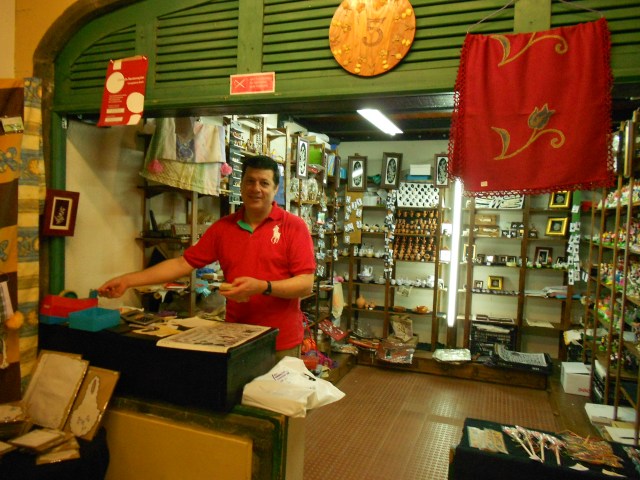
Each time I travel to Ponta Delgada, I look forward to stopping at the Mercado da Graça to visit Sr. Dinis Cabral in his small shop along a row of merchants who sell souvenirs to tourists. He is an engaging artisan who cares deeply about preserving traditional ways of making presépios (crèches) and Nativity figurines. Sr. Dinis also works with escamas de peixe, fish scales, transforming them into beautiful delicate flower petals and floral arrangements, as well as creating decorative ornaments out of conchas (scallop sea shells). Both crafts are very popular in the Azores.

He sells clay figurines as well, representing the famous “Romeiros,” the men who walk the island of São Miguel in pilgrimage during Lent wearing shawls and carrying staffs and rosaries, singing and praying at every church along the way. They are an integral part of the traditional Azorean presépio composed of not only of the Nativity Scene of Joseph, Mary, Jesus, the Three Wise Men, and the shepherds with their flocks, but also elaborate representations of various scenes of village life, especially the “matança do porco” (the annual tradition of the pig-killing, a two-day event held in December involving the making of sausages, smoked hams, and salting the rest of the meat for family use during winter). The little streets of the presépios also include a re-enactment of a religious procession with priests, altar boys and men carrying a statue of a saint on a traditional litter called an andor.

All this is to say that a visit to Sr. Dinis affords me delight and joy! He has a charming smile that accentuates his good nature as he talks to me about current political shenanigans both at home and abroad, as well as filling me in on local history. I love listening to him. I can tell that he is an avid reader, and has a curious and intelligent mind. It is always worth the trip to see him!

It was therefore with great sadness and disappointment that I discovered his shop was closed the last time I visited Ponta Delgada. I even went back a few days later full of hope, but found the shop still shut. After inquiring about Sr. Dinis, I learned that he was away that week and since I did not have his contact information, I had to resign myself to returning home empty-handed and without new stories or mementos.

The last time I had the good luck of seeing Sr. Dinis was on the final day of my previous trip. Not only was my luggage already full of books and souvenirs, I had also used up most of my euros, so were I to buy anything it would have had to be small. Sr. Dinis pointed to a little wooden crèche he had made and thought I would appreciate. He gave me the background story to his simple and beautiful triptych of the Nativity scene in the centre of two Azorean-style homes on each side.

The blue, pink, green, and yellow colours he chose all have interesting significance, and he described it to me at great length. At the time of the telling, I assured myself I would remember the details. Unfortunately, my memory failed me, so by the time I sat down to write up this fascinating information, I could no longer remember exactly what each colour represented. I have some hazy recollection of them being symbols for political parties of the past or even of a royal era when Portugal still had kings. I know that each of the nine Azorean islands is associated with a colour: São Miguel’s is green for its vast fields, forests and woods. But this was not the typical definition he referred to. It was something else, something more obscure and rare that is probably passed on by oral tradition and not easily found in books.

So it is with some sadness that now, as I try very hard to recollect these details, I find them missing from my head; all that’s left is a vague impression of his recitation on that day several years ago. I hope that the next time I go to Ponta Delgada he will be there so I can ask him to tell me again, but this time I’ll take a pen and notepad so I can write down every word while he speaks them.

For now, I will continue to treasure his presépio whose meaningful symbolism in colour, although not in my head, resides in my heart.

Posted in Uncategorized | 3 Comments

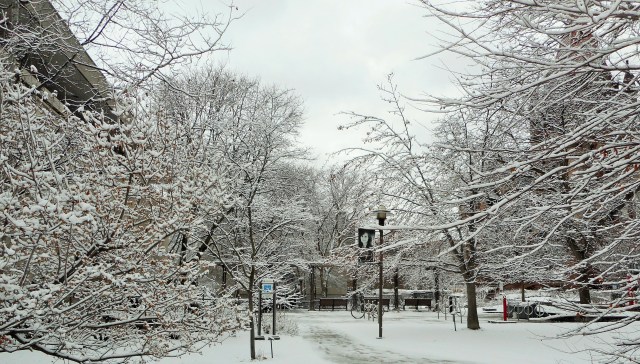
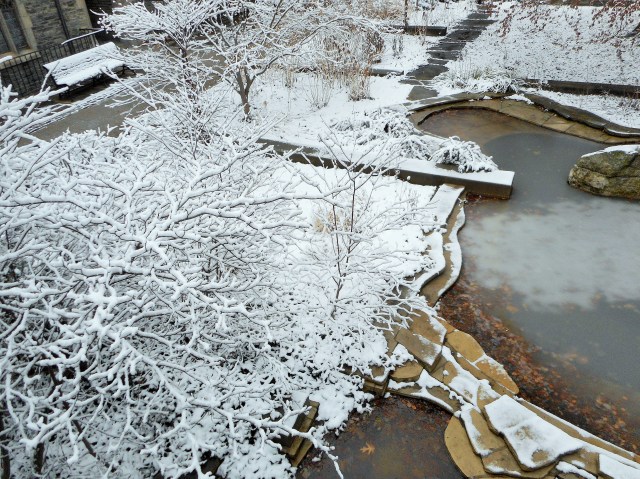
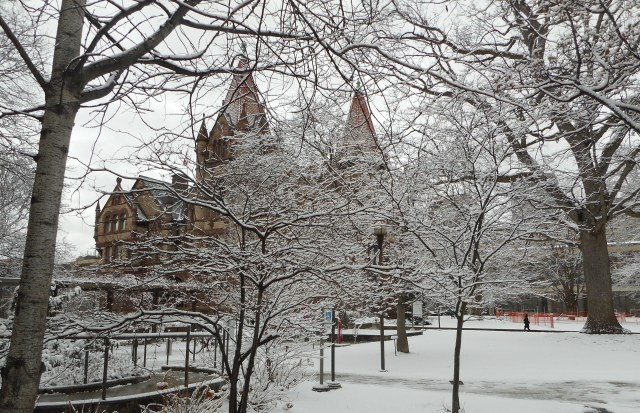
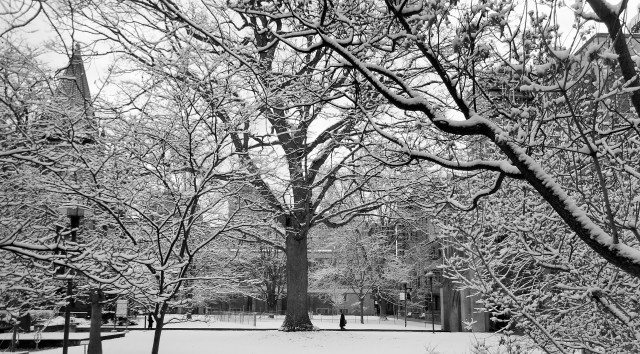
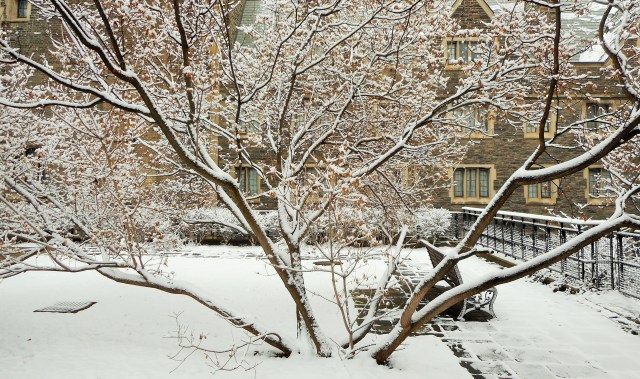
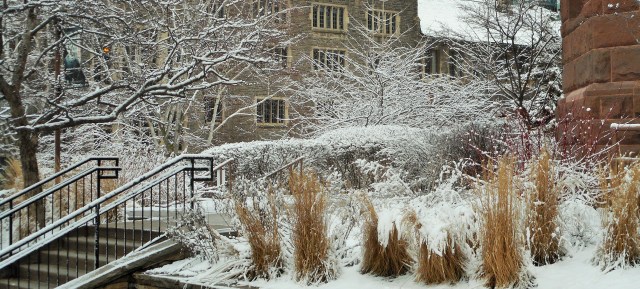
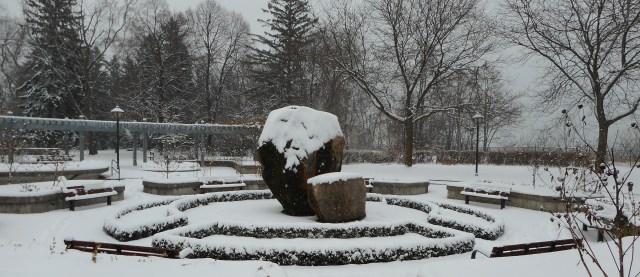
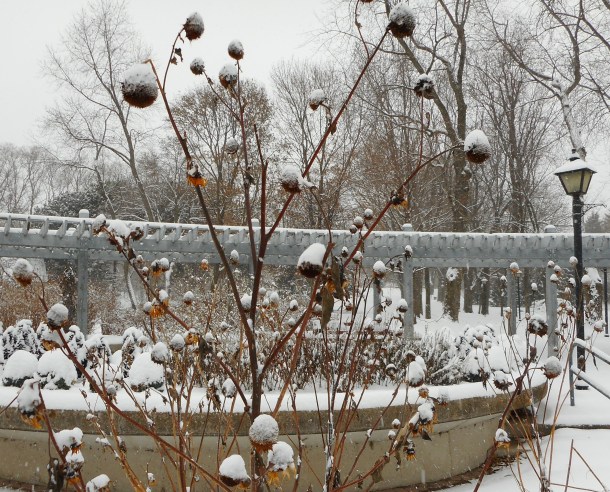
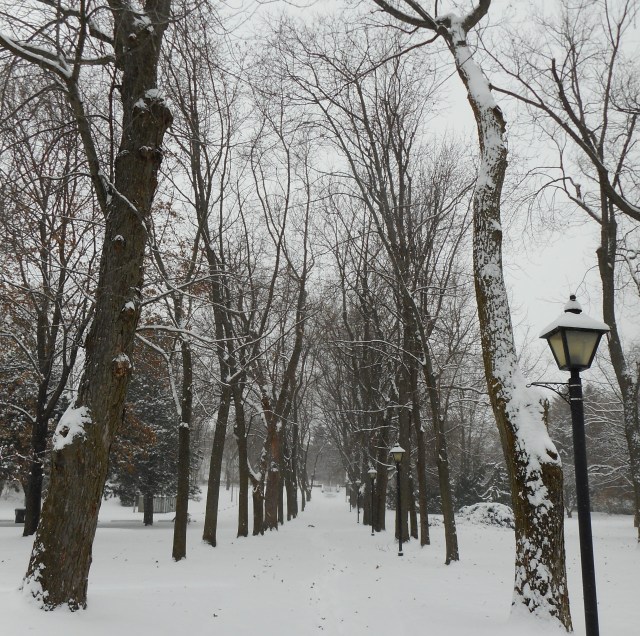
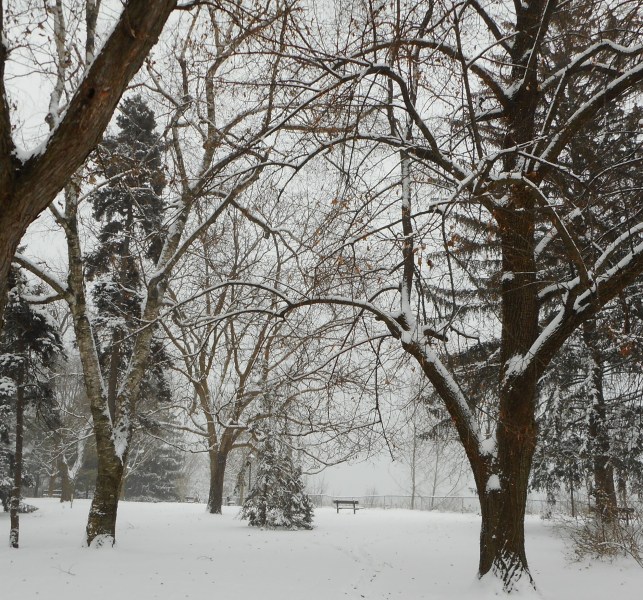
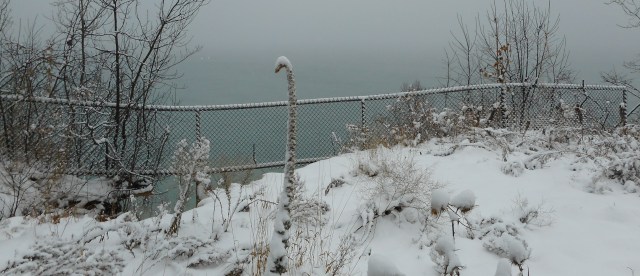
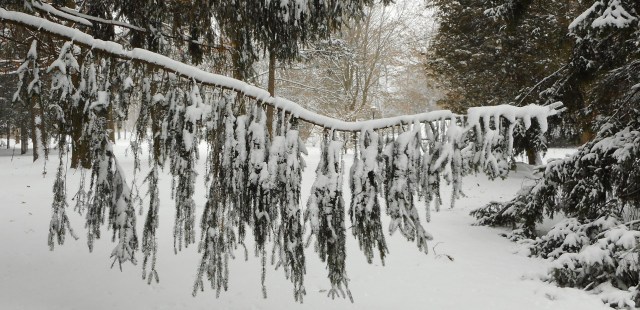
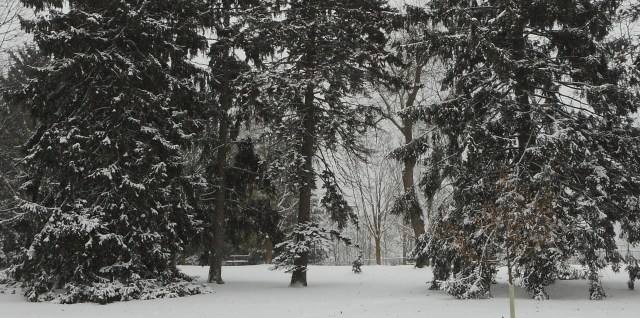
Rosetta McLain Gardens in winter

Our first snowfall. I just had to be with the snow and the solitude of this early winter’s day.

Posted in Uncategorized | 3 Comments

My Agustina Bessa-Luís

Agustina Bessa-Luís (1984) Photo: Emanuel Melo

This year, Agustina Bessa-Luís, one of the most important and significant Portuguese writers of all time, celebrates her 95th birthday.

Although her books have been translated into several languages, her vast work has yet to be translated into English. In 2016, the writer Inês Pedrosa, called the absence of Agustina’s novels in the English world a ‘scandal’.

There is, finally, however, good news. Margaret Jull Costa is in the process of translating Agustina’s most famous and early novel, The Sybil. Costa is a prolific translator of Portuguese literature who has already coordinated the publication of one of Agustina’s short stories,  Mushroom Weather, earlier this year. This is the first of Agustina’s short stories, translated by Victor Meadowcroft, we can read in English. The biographical notes following the short story in The Missing Slate will give you enough background to get you interested in knowing more about this writer.

I was also delighted to discover that currently there is a revival of interest in Agustina’s novels in Portugal, with new editions of her books coming out under the auspices of Relógio D’Água; each with prefaces from important writers such as Gonçalo M. Tavares, António Lobo Antunes, Hélia Correia, and others. There are also new publications underway of never-before-published material, starting with Deuses de Barro, a book she wrote at the age of nineteen, and now available for the first time. A recent article in Observador, updates readers on this renewed interest in Agustina’s work, and is worth reading, if you can read Portuguese.

Although I have read most of her forty novels over the span of thirty years, I am only a devoted reader. I am not competent to critique them or to analyse her literary genius. However, it is my hope that, with the eminent arrival of English translations of her work, eventually others will start to give serious attention to writing about Agustina in the English language.

I like to read Agustina simply for the pleasure of her command of words, her often meandering thoughts, sometimes philosophical and reflective, but always to expand our knowledge of a character or a situation, weaving her storytelling prowess into an endless, intricate web of detail and background that leaves you breathless; the way she describes a world, whether interior or exterior, never rushed, and with the sense of having all-the-time-in-the-world to stay in it, like in a Proustian or Dostoyevskian world, and I lose myself in her words, as if hypnotized and seduced by the magic of her literary creations.

I had the great honour and privilege of meeting Agustina when I travelled through Portugal in 1984. I had gone there after completing university, and stayed two weeks in Porto, in my Professor of Portuguese, Laura Bulger’s apartment. She had been gracious enough to let me stay there, but even better, she considered Agustina like a mother to her, and was delighted to give me an invitation to drop by and meet the writer at her house, named Golgota. I remember approaching the gate, waiting nervously for it to open, and being greeted by a maid who walked me through the garden into the house where Agustina waited with the most welcoming smile. I was to return to her house several times, and we had simple conversations and shared meals. I was twenty-six then, and she, sixty-two. She looked so humble and unaffected that, at the time, I had no idea that I was in the presence of such an important person in the Portuguese Literary World. All I really knew of her was through the reading of A Sibila and Fanny Owen in a university course on Portuguese Literature. But she was so delightful and warm, treating me as if we were equals, that I immediately felt at ease in her presence.

In one of our conversations, I mentioned that I wanted to go to Fátima for the religous October 13 celebration and, without fuss and almost unoticed by me, she quietly arranged for a ticket for me to travel there by an excursion bus, which I thoroughly enjoyed with stops in Nazaré, Barcelos, Batalha, and other places. Imagine the reaction of the ticket agent when I showed up at the travel agency and told her that I had a reservation in the name of Agustina Bessa-Luís. I think the expression on her face and the fact that she whispered something to her colleagues while giving me a look of, what was it, respect? Envy? I got the sense right away that this writer I was visiting meant something much deeper to the people in her city.

A few days later, when I returned to Porto, she wanted to know everything about my trip and she asked me, with all seriousness and curiosity about human nature, rather than mere gossip, if I was religious. She really wanted to know. I saw it in the urgency of her eyes as she looked at me waiting for the answer. I almost asked her the same question, but out of embarrassment, or fear that I was prying too much into her life, didn’t.

During the days, I explored the city and discovered its great many bookstores. Out of interest for my new found friend, I sought out her books on beautiful old shelves. Later, when I returned to her house, I would show her my findings, and she would look at the book covers of Conversações com Dmitri e Outras Fantasias, Os Incuráveis, A Bruxa, with a big smile of delight as if she was seeing them for the first time and in disbelief that these titles were still available.

To my surprise, when I showed her my copies of Santo António and Sebastião José, without saying a word, she quietely took them from my hands, found a pen nearby on her desk, and without any fanfare, autographed them for me: para o Emanuel como lembrança da sua passagem pelo Porto. A couple of months later, when I was already back in Toronto, I received a copy of her then most recent book, Um Bicho da Terra, autographed on Christmas Eve.

One night, she invited me to have a formal dinner with her charming husband, Alberto Luís, an equally brilliant personality in his own right, who put me at ease with his grace and good humour while we sat in their elegant yet cozy dining room. Her maid brought out a platter of a famous regional dish that Agustina was proud to serve me and which she had prepared herself: Rice with Chicken Feet. Well, as luck would have it, I have never liked chicken feet and despite my wanting to, I could not bring myself to eat it. I picked at the rice and left the feet behind. I felt such relief when I heard her tell the maid to clear the table without ever drawing attention to the fact that I had snubbed her dish. I have never forgotten her kind gesture as she avoided humiliating her guest by changing the subject. I remember her smile then. A kind and generous smile that made me love her.

I came away from that two week visit with memories that have stayed with me to this day as some of my most sacred memories I will treasure to the day I die. But I never had contact with my generous Agustina again except through her prolific writings.

Over the years, I always looked for her books until the last one to be published in 2006, A Ronda da Noite. In the eighties and nineties, I would buy her latest books in a Portuguese bookstore in Toronto which no longer exists: A Monja de Lisboa, Adivinhas de Pedro e Inês, Prazer e Glória, Eugénia e Silvina, Vale Abraão, Um cão que Sonha, Memórias Laurentinas, O Comum dos Mortais, and others. In the last ten years, it was on trips to Lisbon that I found other books, usually in her editor’s bookstore, Guimarães, and when the store closed for good, I found her books at Babel, in the Príncipe Real quarter. Another book, in Ponta Delgada, in the Azores: Alegria do Mundo. I remember the joy I felt when I found the trilogy O princípio da IncertezaJoia de Família, A Alma dos Ricos, Os Espaços em Branco, in a bookstore in Vila Real de Santo António, in the Algarve. These are some of the books I have bought over the years. I have others, too, but I still search for others to complete my collection.

Her books accompany me like silent friends, and at any moment, I can retrieve them from my bookshelf and read them again, encountering my Agustina in their pages, just like being again in her presence during that visit of long ago. And when I read her, I can hear her voice in my head, with that musical lilt and the formation of a smile, and I listen to her again, just as if I was still sitting next to her in her Golgota home.


Posted in Uncategorized | 3 Comments

A Minha Agustina Bessa-Luís

Agustina Bessa-Luís (1984) Foto: Emanuel Melo

Este ano compartilhamos na celebração dos 95 anos da vida da escritora portuguesa, Agustina Bessa-Luís.

Apesar de já ter lido quase toda a sua vasta obra, não me sinto competente para falar sobre a sua escrita. Aliás, este artigo recente no Observador, outubro 8 de 2017, sobre Agustina, a grande rebelde da literatura portuguesa, é excelente e recomendo-o a qualquer pessoa que queira saber algo mais sobre esta grande escritora.

Digo grande, porque ela nos lega uma vasta literatura importantíssima, como explica o artigo. Fico feliz em saber que, presentemente, estão a sair não só novas edições dos seus romances, mas também obras inédita (para já Deuses de Barro), e que os escritores de hoje estão a apreciar o valor único desta escritora que tem sido a preferida do leitor perspicaz. Gosto de a ler simplesmente pelo prazer das palavras, da maneira como ela descreve um mundo, quer interior ou exterior, e nelas me perco, seduzido pela magia do que ela cria ao manipulá-las.

Tive a grande honra de conhecer a Agustina quando passei duas semanas no Porto em 1984. Estive várias vezes na sua casa, no Golgota, onde tivemos conversas amigáveis, trocámos ideias e partilhámos refeições. Eu tinha 26 anos e ela 62 quando nos encontrámos. Naquele tempo não sabia ainda, por ser tão singela no trato, que estava na presença de uma pessoa tão importante como é a Agustina. Tinha lido A Sibila e Fanny Owen num curso universitário, nada mais. Ela foi muito humilde comigo, tratando-me de igual para igual, respeitou-me como se eu tivesse algo de significativo a dizer, e nunca deu ares de pessoa célebre e importante.

Como queria ir a Fátima para as festas do 13 de outubro naquele ano, foi ela que me arranjou bilhete para o autocarro que, do Porto, me levou na excursão com paragens em Nazaré, Barcelos, Batalha e outras partes. Imaginem a reação do empregado de balcão na agência turística quando me apresentei para pagar o bilhete que estava reservado para mim no nome da Agustina Bessa-Luís.

Quando regressei ao Porto, ela quis saber tudo sobre a minha viagem e perguntou-me se eu era religioso, mas duma maneira que demonstrou a sua curiosidade pela condição humana acima de tudo e não apenas para fazer conversa. Eu compreendi que ela deveras queria saber. Quase que lhe perguntei o mesmo mas não me atrevi a fazer-lhe a pergunta.

Durante o dia descobria as grandes livrarias do Porto e procurava livros da Agustina. Depois, quando regressava a sua casa, mostrava-lhe as minhas compras e ela olhava para as capas dos livros, achando uma graça enorme aos exemplares que eu tinha encontrado, tal como: Conversações com Dmitri e Outras Fantasias, Os Incuráveis, A Bruxa. Mas foram os livros Santo AntónioSebastião José que ela, sem cerimónia, tirou das minhas mãos e, sem eu pedir, autografou com a dedicatória: “Para o Emanuel como lembrança da sua passagem pelo Porto”. Meses depois, autografado na véspera de Natal de 1984, mandou-me um exemplar do seu romance daquele ano, Um Bicho da Terra.

Uma noite fui convidado para jantar com ela e o marido, o Dr. Alberto Luís, uma personalidade igualmente brilhante e um homem de grande cultura, que também me recebeu com muita humildade e carinho. Jantámos na sua elegante mas aconchegante sala de jantar. A empregada serviu-nos um prato regional que a Agustina teve o gosto e o grande orgulho de me dar a conhecer: arroz com pé de galinha. Ora eu, que não gosto nada de pé de galinha, não consegui fingir gostar. Comi o arroz e fiquei aliviado quando ela, com gentileza e sem comentar, mandou a empregada retirar o meu prato. Foi muitíssima discreta ao não chamar a atenção para o facto de eu não ter comido o pé de galinha. Nunca me esqueci do seu gesto caridoso, o de não querer humilhar o seu convidado mudando de conversa, para encobrir a falta que senti ter cometido por não conseguir comer o que não gostava!

Foram memórias inesquecíveis que ainda hoje fazem parte das mais sagradas que guardo dentro de mim. Mas nunca mais tive contato com a minha generosa Agustina a não ser através da sua assídua escrita.

Ao longo dos anos sempre procurei os livros da Agustina até chegar ao seu último romance em 2006, A Ronda da Noite. Durante os anos 80 e 90 comprava os que iam sendo publicados numa loja em Toronto que já não existe: A Monja de Lisboa, Adivinhas de Pedro e Inês, Prazer e Glória, Eugénia e Silvina, Vale Abraão, Um cão que sonha, Memórias Laurentinas, O Comum dos Mortais, e outros títulos. Nos últimos dez anos era em Lisboa que achava outros livros, na loja da sua editora Guimarães, depois na Babel, perto do Príncipe Real, e uma vez em Ponta Delgada, nos Açores: Alegria do Mundo. Lembro-me da alegria que senti quando encontrei a trilogia O princípio da IncertezaJoia de Família, A Alma dos Ricos e Os Espaços em Branco, numa livraria em Vila Real de Santo António, no Algarve.

Estes são alguns dos livros que tenho da Agustina Bessa-Luís. Tenho outros mas ainda me faltam alguns. Os seus livros acompanham-me como amigos silenciosos que, a qualquer momento, retiro da minha estante e releio, encontrando-me com a Agustina nas suas páginas como se fosse naquela visita em que tive a honra de disfrutar da sua presença. Então, quando a leio, a sua voz risonha fala na minha mente e ouço-a como se ainda estivesse sentado a seu lado no Golgota.

Posted on Comunidades

Posted in Uncategorized | 1 Comment

My Autumn Landscapes

The prolific Azorean literary critic and essayist Vamberto Freitas wrote, “Our geographies are now interior and no longer have anything to do with physical distance, longing and absences.”* (My translation from the original Portuguese text.)

His observation on the immigrant’s state of being describes my own sense of place in the world, as defined by geographical locations and in the land of memory. For most of my life I could not reconcile or make peace with the longing I had for the place where I lived as a young boy and the place where I have come to live for the greater part of my life. It was always a matter of feeling that I had to choose one or the other, but never of being at home with both at the same time.

I am finally able to experience Toronto and the Azores, in my mind and imagination, in an interchangeable and fluid awareness that allows me to be simultaneously in these two places I love without having to be physically present in one or the other, or to feel the necessity to choose one over the other.

The trees suddenly shed summer’s deep green and put on yellow and red and brown, all flooded by the sun’s intensely brighter light; all the colours are filtered through vivid gold, better than any Instagram. It’s all breathtakingly spectacular. The air is crisp and cool, even when warm days still come. This year I felt the need to be home, here in Toronto, “the city within a park,” as the hundreds of park signs across the city remind us.

And yet, at the same time, I also miss an autumn visit to the Azores. I have been going there so often over the last decade, preferring the month of October over others, but at the price of missing out on my Toronto autumns. On the island of São Miguel, the days are still hot, and the fields are blanketed in lush green; the ocean is still a deep summer’s blue. I love the walks along the countryside; the descent down to the ocean by meandering trails that start high up on the cliffs, covered in lush moss and cane leaves and trees that whisper in the wind. The warm breeze is still full of humidity, making me sweat before I arrive at beach level, where I get cooled off by the ocean breeze. When I am on the island, I forget the crisp coolness of Toronto days, but when I am in Toronto my body senses something missing. It’s that time of year again when I wish I could be in two places at the same time.

This year I decided to stay in Toronto for autumn and I’m glad that I did; but a gnawing thought nags at my mind – I am wondering why I didn’t make the trip to the Azores.  But it’s alright because while I sit in my backyard in the coolness of the afternoon, with the sun shining brightly on a pale blue sky, I can picture myself at my grandparents’ house, sitting in the courtyard under a canopy of grape vines with the last of the season’s dark blue grapes, looking out into the ocean below, and then I am home without leaving home.

*“[A]s nossas geografias são internas e nada já têm a ver com distâncias terrestres, saudades e ausênsias.”  Vamberto Freitas, “Carta a João Brum: Daqui e do outro lado do mar” in Jornalismo e Cidadania: Dos Açores à Califórnia, edições Salamandra, 2001

Posted on Comunidades

Posted in Uncategorized | 3 Comments

The New Wave of Luso-Canadians

Normally, I don’t watch Saturday morning TV, but when I woke up today, I remembered that it was time for the start of the weekly Portuguese shows. They came on one after the other, each 30-minute show giving a different flavour and perspective on the diaspora continuum.

The first show, Canada Contacto, with host João Vicente, showcased two professional Portuguese women. The first, a very dynamic, articulate, and sophisticated business woman who founded two companies with celebrity chefs among her many other successful projects. It wasn’t until near the end of the segment that she acknowledged growing up Portuguese in her perfect English. She praised her hard-working parents and the sacrifices they made for their children. When she read that Portuguese students were the number one ethnic group not to pursue higher education in Canada, she devoted her time to support and encourage youth of Portuguese background to pursue post-secondary learning. She believes these students can be anything they want in life by thinking outside the box, while at the same time embracing the strong work ethic learned from their parents as the best tool for their success. I got the impression that this motivated entrepreneur probably no longer speaks any of the Portuguese she would have learned growing up. I was watching a fully-integrated, English-speaking Canadian. Her childhood photograph projected on the screen was the only item that indicated her Portuguese heritage.

The other woman was a successful journalist visiting from Portugal, her Portuguese sounding only the way someone who lives in the homeland could speak. Her interest was in literary journalism and writing. She had published a book about women in the Portuguese penal system as well as a photobook on hospitals seen from the patients’ point of view. She was engaging and just as articulate as the first woman, yet their experiences of being Portuguese were as diverse as their interests.

The second show, Nós, Portugueses, with Bill Moniz, dealt with the “nova vaga de emigrantes.” He asked, “Quem são os novos pioneiros?” It turns out that the new pioneers, are professional and educated people who want to continue their careers as doctors, lawyers and engineers in the countries that receive them. They are leaving Portugal these days, from “todos os cantos” from every corner, for the same reasons that the old wave of immigrants left: economic instability, the hope of a better life for families, and better career opportunities. But this is the only common ground they have with earlier generations of immigrants, who, unlike the “nova vaga” had been poorer and less educated. In those days, this country still needed a working class so the benefit to both the immigrant and Canada was enormous: construction workers, railroad builders, farmhands and cleaning women. Today, Citizenship and Immigration Canada is only willing to accept the highly educated professional applicant and without these skills, people from my parents’ generation would not have found the same open door they did over 50 years ago. The “carta de chamada” which was the popular way so many were allowed to come to Canada no longer exists, so to be advantaged in today’s new immigrant market, you must have higher credentials than a willingness to clean houses or build skyscrapers.

Moniz interviewed a couple, recently arrived from Portugal with their two young daughters. The husband found work similar to what he did back home and he is already doing well. The wife, however, a lawyer by profession, still needs Canadian certification. Until she finds her way into accreditation, she opted for the traditional choice of previous generations of women who worked as cleaning women “na limpeza” albeit with a twist. In this young lawyer’s case, she has not spent too much time cleaning bathrooms but has put her higher education to good use by forming her own cleaning company. That’s the difference between her generation and the older generation: EDUCATION! Even the children of these new immigrants have different aspirations from my generation. For example, one of their daughter’s dreams of going to New York to become an actress, having already experience performing in Portugal.

We watch the family in their new Canadian home. It’s somewhere in a nondescript suburb; the garage is the prominent face with the house hidden behind it and there are two cars in the driveway. They sit in a living room watching a big TV monitor, the walls are blank and a stark white. Perhaps they haven’t been here long enough to put up what’s important to them, but I wonder. The living room looks like so many other living rooms I have seen in the suburbs. So different from the homes of first wave immigrants who covered their walls with old black and white family photos and religious images. I see no similarities between the old and the new immigrants. They might as well have come from different cultures which makes me think that it’s not only a shared language and a way of life that keeps us similar, it’s in part a generational divide. Coming from Portugal in the 1950’s was very different from someone coming in the 2000’s. It surprises me that it was only watching this show that I became conscious of the role of specific “time spans” in determining how you experience, and acclimatize in, the diasporic world.

The last show was Gente da Nossa, with host Nellie Pedro. Her program is more about documenting the weekly social events of the Portuguese Community, mostly in Toronto and surrounding area: the various club dinners held in local church halls or community centers which always include local entertainers with music for old and young to dance to while children run between the dancing partners. Others watch, sitting around large tables where an entire family can be together and eat caldo verde and other traditional dishes. Today she announced the “tourada à corda” happening (not in its native island of Terceira) but in Cambridge, Ontario and somewhere else I can’t remember because this is when I turned off my TV. I can’t relate to this way of being Portuguese in Canada either. I realize that the old generation of immigrants still clings to traditions and ways that help them keep their past alive. Even had I stayed in the Azores I would not have been someone who enjoyed club dinners, folkloric music and dancing or any form of bullfighting. I must go my separate way without judging.

Watching these three shows was like watching three panels of cultural diversity, each trying to define and explain the Portuguese immigrant experience. My sense is that the new wave is made up of very different people than those who came during the old wave. The new generation of immigrants are accustomed to social redes, mass media, YouTube and iPhones and other trappings of imposed globalization. They will not miss these things from home because they find them right here, too and so they will adapt seamlessly, already familiar with the North American way of life. They will probably not gravitate to the existing cocoons of old world nostalgia, just like most recent generations of Canadians don’t go into old-timers’ legion halls, except at voting time. Ultimately, the new Portuguese immigrant’s experience of saudade will be quite extraordinarily different from earlier generations.

I wondered which of these three TV shows I identified with and yet I found myself in none. I have been wrestling for several years with the possibility of finding a place to belong within my ethnic community, looking for a place of re-entry. In recent years, I have fumbled my way back through the world of art and literature. I have tried hard to find a connection, and I’ll keep on trying. Yet the more I try, the less connection I seem to find, and the connections I make are, at best, tenuous. It’s always just a little bit not the right fit.

Posted on:  Comunidades and AICL Colóquios da Lusofonia

Posted in Uncategorized | 4 Comments

Rosetta McClain Gardens Remembers…

On one of my meandering walks through Rosetta McClain Gardens I came upon a bench where someone had left a pair of shoes neatly placed on the ground in front of it. The composition was too good to miss and so I photographed it.  The idea of an invisible person sitting on that bench where only her shoes were visible made me wonder who she was. Perhaps she was some carefree soul who decided to go walking barefoot or even someone who was taken away by the rapture.

It made me think of all the other souls who linger in the confines of this garden filled with old trees and flower beds. I know that they do. There are reminders of people everywhere etched throughout the garden by markers and plaques at the foot of trees and on benches.  Some have faded over time but many of them are recent. They are symbols put there by people who continue to honour a loved one who had some connection with the garden. People who probably loved coming to it as much as I do.

The garden is many things for those who come to spend time there. Depending on the time of day I see solitary people doing Tai Chi in the morning, while others stroll through flower beds, or jog along the winding paths; others photograph flowers or bird watch; a few come to paint or read; many just stare out into the lake; and some sit and do nothing but just be.  One day, I saw a woman drumming in front of an oak tree and it felt reverential and sacred.  On another occasion, I witnessed a congregation gathered around the stone water fall to celebrate a marriage between two men.  On summer evenings, the garden is crowed with families and groups of friends who come for a stroll. Children’s laughter breaks the silence when they spot a raccoon family on parade. There are smiles and relaxed faces mingling with the trees and the flowers. The gift of Rosetta to those who choose to enter this space is joyfulness and peace and tranquility and a connection to life.

So it’s indeed fitting that many people put up plaques of remembrance of a loved one or to mark a special occasion but I had not really paid much attention to them until I saw those black shoes with their missing owner. I walked around and was amazed by the beautiful words of remembrance scattered throughout the gardens.  Some have simple sayings:

Others reveal more fully something about the person remembered:

I was glad to see that Proud Canadians come from all ethnicities:

I remember this wonderful gentle man who I’d see every weekend surrounded by other bird watchers. He always said hello:

Sometimes the living are also remembered to commemorate a special moment:

A few are surrounded by extra beauty:

And some aim for poetry:

A few speak directly to the loved one in tender words understood only between them:

And then, amongst this array of ethnicity, a name that I am sure belonged to someone of Portuguese descent: Ferreira. My maternal grandmother’s surname was also Ferreira, and as delighted I was in knowing that someone with that same name already had a place in this garden, I could not help but feel sad when I saw how young this person had died.

One day, when I am no longer here to walk these gardens, I wish that someone who loves me will also add a plaque to my memory. I hope it will be placed closer to the edge of the garden where it meets the Bluffs and the view of the vast Lake Ontario where I always stop along my walks to gaze out into its almost oceanic size. It is while I stand there that I see what lies beyond: my other love, the Atlantic Ocean, and the view almost takes me back to the shores where I began.


A few more added here on March, 2020:

Posted in Uncategorized | 2 Comments

Trampled by Faith

Very early in the morning of the fifth Sunday after every Easter, people come together to create the long, beautiful flower carpets that are spread throughout the city streets of Ponta Delgada in anticipation of the afternoon procession of O Senhor Santo Cristo dos Milagres, the Lord Holy Christ of the Miracles.

Trucks and vans drop off burlap sacks full of flowers, leaves, and sawdust, as well as wooden forms with intricate, geometrical designs that will be laid down in the middle of the cobblestone streets, then filled with the fresh flower petals and variously coloured paper-thin wood chips and sawdust dyed in pink and yellow and blue. Incenso [sweet pittosporum] and criptoméria [Japanese cedar] evergreen leaves are used to trim the long thin borders of these flower carpets. By mid-morning the city streets are fully decorated and no one would dare trod on the flower carpets out of respect for the Christ who will pass by later on, enthroned and transported in his majestic and colourful andor.

The procession leaves the Convento da Esperança church across from Campo de São Francisco square around three-thirty in the afternoon and takes just over three hours to view from start to finish. However, the procession doesn’t completely end until ten-thirty at night, when the last of the filarmónica marching bands reach the church again after the long circular walk from one end of the city to the other and back.

Thousands of people line the streets to watch thousands more people who walk in this procession of faith. And along the route are those beautifully decorated flower carpets in the middle of the streets guiding the path of the procession from start to finish.

Wherever you wait to see the solemn procession pass, you know it’s coming when, still in the distance, you spot the guião, the large red banner carried by the head of the procession; and then you enter a sacred time and you will stay still until it’s over. Behind the banner follow so many hundreds of men of all ages and backgrounds that they have to be organized in doubles for each row; otherwise, the procession would take even longer. They all wear a red “opa”, and many carry a rosary, but none of them will dare step on the flower carpets.


After more than an hour of men filing by, interspersed by brass bands representing every town and village on the island, a host of angels appears: young girls with white feathered wings who are allowed to walk on the flowers with their light angel feet without disturbing the shape of the flower designs.


It’s an orderly procession of faith, meticulously organized and consciously orchestrated, with everyone walking in solemn quiet dignity, and all aware of the flower carpets they must avoid disturbing. Sometimes marchers will touch the edge distractedly, only to catch themselves doing so and quickly remove the offending foot back into the designated cobblestone.

Then the moment the viewer has been eagerly waiting for finally arrives: the Christ approaching. The clergy surround the statue of the Lord Holy Christ of the Miracles, carried by men whose honour it is to bear its weight enthroned inside a canopy decorated with an extraordinary colourful array of fresh flowers. People watching the procession don’t talk when the statue goes by. They will bless themselves with the sign of the cross, their lips quivering in prayer as they gaze at the face of the merciful Christ — and they will often, especially if an immigrant has returned home for the feast, shed a few tears. All the while, from the balconies above draped with colchas (bedspreads), people extend their arms gently down to throw rose petals with the hope that before fluttering to the ground they will touch their beloved Senhor Santo Cristo like a blown kiss.

Once the statue has passed by, in case you thought the climax of the procession was over, you are amazed to see a sudden outpouring of thousands of people who fill the street from side to side with no room for anyone to squeeze by. They follow behind the Christ to fulfill a “promessa,” and all that deliberate order and avoidance of disturbing the flower carpets is forgotten. It’s even unseen, hidden by this predominantly female ocean, although in recent times a few men walk with them either as a sign of solidarity or because the division of the sexes is not as strict as in the old days when only women would comprise this part of the procession.

The devout followers fill the streets with their faith and utter silence, and as they walk by you can hear only the shuffling of their feet. Most still dress in traditional black but without their heads and faces covered by the black lace mantilhas worn decades ago; sunglasses seem to be the new sign of modesty and respeito. They are young and middle aged and old; they represent all the women and men who carry with them the burden of pain, psychological or physical: an incurable illness, a spouse who abuses, a child who is a drug addict, an alcoholic parent, an estranged family member — everything you can imagine that ails the human soul is carried in the hearts of this multitude who gather either to thank their Christ for miracles that occurred or to beg for one. Some carry large heavy círios (candles) in gratitude for cures or thankfulness for some burden lifted from their hearts by the miraculous Christ. They all made a “promessa,” a promise that they would march behind the Christ in exchange for his gift of grace and courage to help them carry on with the burdens of their lives.

I was moved to my core and felt something akin to an electrical current going through my body as thousands upon thousands of people walked past me in their solidarity, and yet at the same time in quiet solitude. No one spoke of their ills, no one cried out their pain. They simply walked by in silence with such beautiful strength and determination in their faces, raw and real. They are strong, they survive, they persist, and they attribute their ability to face life to the intervention and guidance of the “Ecce Homo,” the Christ in his moment of suffering and pain. They can look him in the eye and he can look back at them, for he too once had prayed, “If possible, Father, take this cup away from me.” He and his devotees understand each other. This Christ, although enshrined in gold, precious jewels and flowers, does not deceive. Under all that pomp and regalia, his gaze is piercing and naked, and the scars of his crucifixion ordeal are there if you care to see them. And so his people come, they follow him, they meet him beyond the distraction of frills and sugar coated religion. They show this understanding by their demeanour as they walk on unwaveringly for those long hours, proud to stand together, embracing the messiness and chaos of life with the hope that they will have the strength to endure anything as long as the Miraculous Christ is with them.

It took more than fifteen minutes for this multitude to walk past, and I forgot about the existence of the flower carpets until after the last row of the faithful went by — and then, as the final part of the procession continued with more filarmónica brass bands and dignitaries, I could see that the flower carpets had been completely dispersed, crushed and pulverized into a chaotic impressionist painting of colour, worthy of a Monet. I understood this wondrous transformation, trampled by faith, as a deep symbol of their lives as they created a new kind of flower carpet with their feet, one that shows humanity in its brokenness and confusion — and yet, and yet… There was such beauty and movement in this disorder of scattered, shredded petals and leaves mixed together with the sawdust, redesigned by a living faith.

It was not the sight of the Christ’s image that moved me this time, but rather the sight of these pilgrims with their strong silent embodied testimonials of faith. Whether you are a believer or not is irrelevant. What matters is the miracle that human beings can find meaning and hope and courage and faith in something inexplicably bigger than themselves. The Senhor Santo Cristo of the Miracles graces the Azorean identity, especially of those from the island of São Miguel, where since 1700 it has been the soul of the islanders; and this tradition has been brought to the North American communities where Azoreans immigrated. You can find Senhor Santo Cristo dos Milagres in Toronto and Montreal, and in Fall River, Massachusetts, among many other places in the diaspora. It’s a symbol of deep religious faith irrevocably intertwined with cultural identity that has remained strong in the homeland and equally strong in the communities of immigrants.

As much as the face of the Christ has moved me since childhood, it will always be the image of the faces of faith I witnessed that will stay with me forever, long after the flowers are gone.

Also posted in Filamentos (artes e letras)

More photos of the procession:

Posted in Uncategorized | 9 Comments